



















Our experienced team works alongside organisations to help them design, deliver and communicate their listening programmes. From survey distribution to strategic guidance, we’re here when you need us
A quick insight:Employee experience and employee engagement are closely linked but different. Employee experience encompasses everything people encounter from recruitment through exit. It shapes how they feel, interact and perform at work. Employee engagement is the emotional connection that results from that experience. The post explains this distinction and offers practical ideas for mapping and improving both for better retention, productivity and motivation.
Organisations want committed, motivated employees; but that doesn’t happen by chance. What shapes how people show up, perform and stay at work is their experience. From onboarding to development conversations and the quality of daily interactions, the employee experience influences everything from productivity to retention. Yet all too often, experience still treated as an afterthought, or confused with employee engagement alone.
If you’re serious about improving outcomes across the employee lifecycle, understanding employee experience is your starting point. Let’s take a look at what it is, how it differs from employee engagement and how we can improve the experience for our people.
What is employee experience?
Employee experience refers to everything an employee observes, feels and believes about their workplace from recruitment to exit. It includes how employees interact with their environment, leadership, technology and communication. This experience shapes how they perceive their employer and directly influences employee engagement levels.
Unlike one-off engagement metrics, experience captures a broader ongoing view of the workplace. It is not a moment in time but a continuous journey.
Creating a meaningful employee experience involves considering employees’ needs at every stage of the lifecycle. From the interview process to the final day, every touchpoint contributes to how your employees feel about your organisation. This approach demands attention to culture, systems, communication and behaviour across departments.
Employee experience vs employee engagement: what’s the difference?
It’s common to see the terms employee experience and employee engagement used interchangeably, but they are unique, distinct concepts and need to be treated as such.
Employee engagement is the emotional connection employees feel towards their work, their colleagues and their organisation’s goals. It is usually measured through employee engagement surveys at specific intervals
Employee experience is the broader set of interactions and perceptions that shape engagement.
You can think of it as experience being the input, while employee engagement is the result. Employee engagement is a snapshot of employee sentiment. Employee experience is the full story. If your experience is poorly managed, employee engagement is likely to suffer.
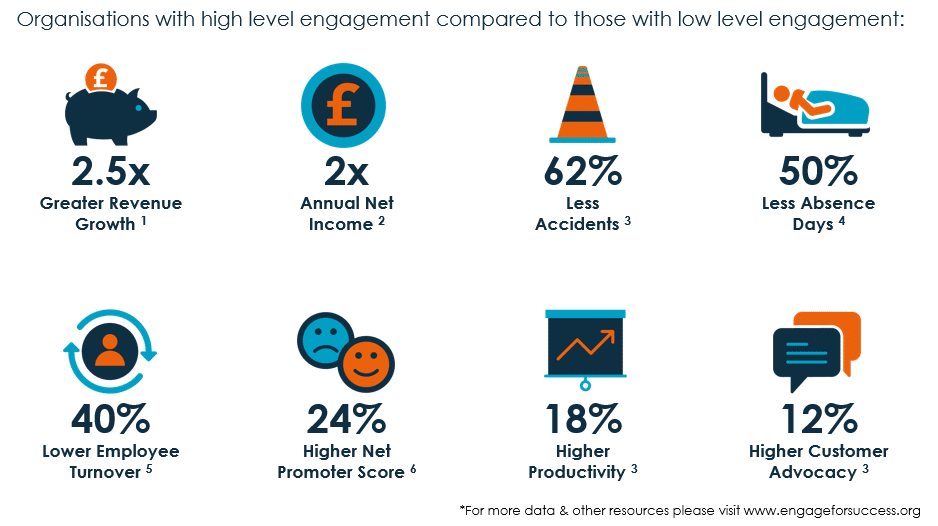
An effective employee engagement strategy should be built on insights from a well-rounded employee experience. By focusing on experience first, you create the conditions that naturally boost employee engagement, productivity and retention.
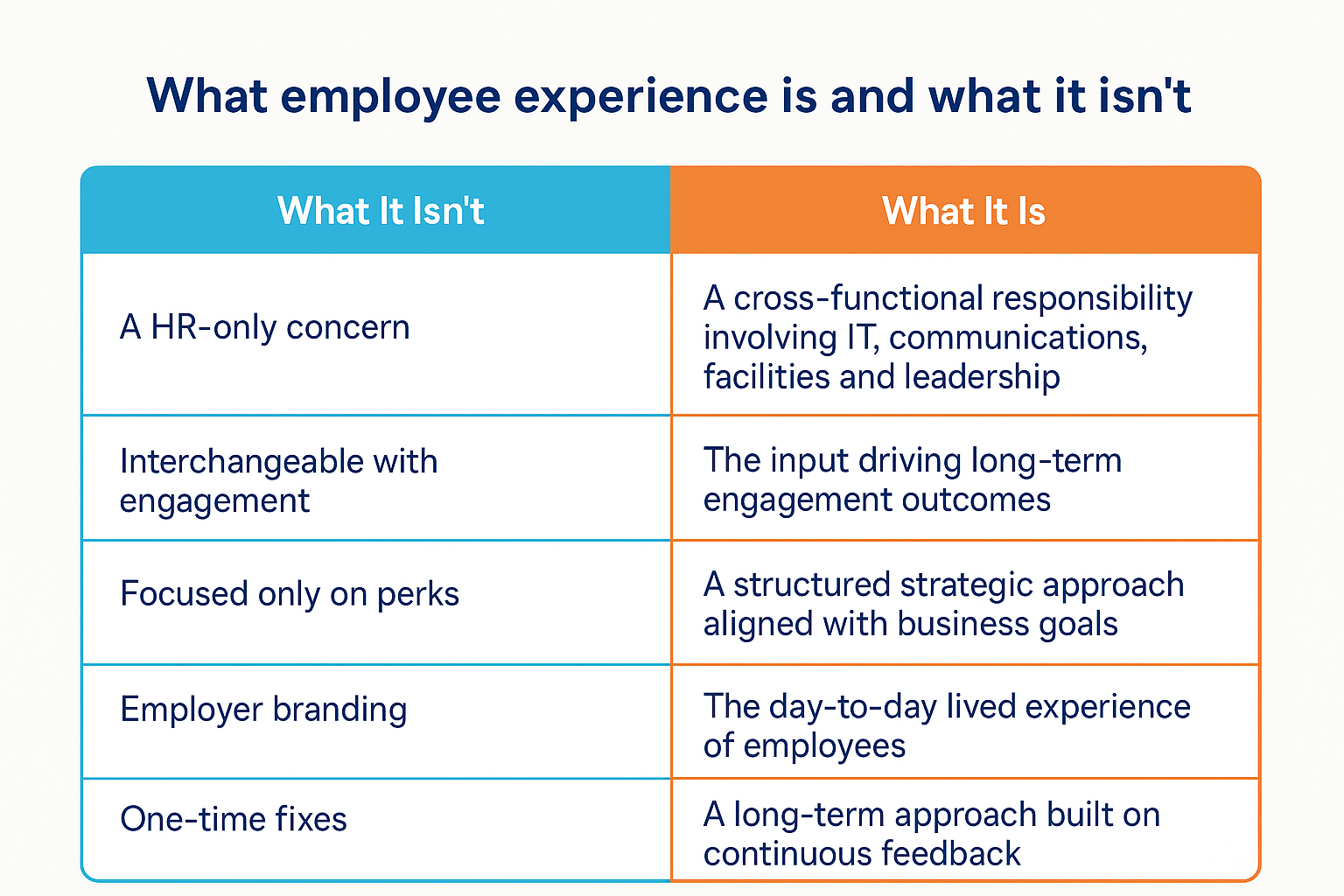
What experience is and what it isn’t
Want a deeper look at what experience is in practice? There are a lot of misconceptions that can do a lot of damage. Below, we’ve created a handy table, but the biggest takeaway we can give is that employee experience is everyone’s concern and everyone’s responsibility. And it’s something to be taken seriously.
Positive employee experience leads to higher engagement, but a company can only get there with honest insights and continuous listening. That’s where actionable surveys and feedback tools play such an important role.
To improve the experience for employees, you first need to understand it. That begins with mapping the employee journey.
This process involves identifying all key stages of the employee lifecycle, from application and onboarding to career development and exit, and evaluating how employees perceive their interactions at each point.
When done well, journey mapping highlights where experience gaps exist and helps prioritise improvements. For example, you might discover that while onboarding is strong, performance development feels inconsistent.
Mapping the journey puts you in your employees’ shoes and helps you ask the right questions and act on what matters.
How to map your current employee journey
Start by breaking the journey into these stages:
Attraction and recruitment
Are candidates treated fairly and respectfully?
Does the recruitment process reflect your organisation’s values?
Onboarding
Do employees understand how to use tools and systems?
Are they made to feel welcome and included from day one?
Performance and development
Is feedback frequent and useful?
Do employees feel supported by their managers?
Growth opportunities
Are career paths and development resources clear?
Is wellbeing considered during periods of challenge?
Exit
Do individuals feel recognised for their contributions?
Use an employee survey platform to collect feedback at each stage. Tailored pulse checks capture timely insight and pinpoint areas for actionable feedback. The result is a dynamic journey map that supports employee sentiment strategies.
Why does all this matter? Why should you be focusing on experience?
You’ll be unsurprised to hear that employee expectations are higher than ever. People want to work for organisations that consider more than just pay. They want purpose, flexibility and a sense of being valued.
Ignoring the experience of your employees can have measurable consequences. According to a report by CIPD, poor work experience is linked to lower motivation, increased absenteeism and higher turnover. On the other hand, a well-designed experience supports improved employee sentiment, retention and productivity.
And it’s not just about internal outcomes. Employee experience shapes your reputation. Negative reviews on platforms such as Glassdoor deter strong applicants. Conversely, positive experience stories attract high performers.
When experience aligns with customer experience, organisations benefit from improved operations and loyalty across the board.
How can you measure the employee experience?
To improve something, you first need to measure it.
Many organisations still rely on occasional engagement surveys. These, however, only capture part of the experience. To measure the full employee experience, use a blend of:
Actionable employee surveys at different lifecycle stages — we call these employee lifecycle surveys
Wellbeing surveys to make sure everyone is feeling and performing at their best
Diversity and inclusion surveys to ensure your workplace is fair and responsible
360 feedback tools to highlight leadership and manager support
The Pearl™ model created and used by us at People Insight maps all aspects of employee experience, from culture, communication and leadership to wellbeing and tools. This framework delivers impactful survey results and helps drive meaningful change.
Tips for delivering a great employee experience
Here are practical ways to improve the experience your employees have at work:
Think from their perspective. Consider not just what your organisation intends but how things feel in practice
Start at recruitment. First impressions matter. Make interactions fair, responsive and aligned with your company’s core values
Support your managers. Train leaders to listen, assess sentiment and coach effectively
Act on feedback. Use actionable surveys and make visible changes. Employees need to know their input leads to results
Offer flexibility. Support hybrid and adaptable working where possible
Consider wellbeing. A positive experience includes physical, emotional and mental wellbeing
Reflect your values. Every policy and interaction should be consistent with your organisation’s purpose and culture
What does the future of employee experience look like?
Employee experience isn’t a one-off project. It’s an ongoing approach grounded in listening and insight-led action. Organisations that build cultures of regular feedback and responsive change gain a competitive advantage.
By bringing together employee journey mapping, sentiment measurement and leadership accountability, employers can turn potential into performance. With modern employee survey platforms, you can embed listening into everyday workflows, capture meaningful insight and track improvement over time.
Concerned about where your employee experience stands? Contact us today to explore how our actionable surveys and expert consultancy can enhance your experience, drive engagement and deliver meaningful change.