

















A quick insight: When survey results are shared, employees want more than numbers. They want to see action. A local action plan provides managers with a structured way to turn feedback into visible progress. Done well, these plans prioritise quality over quantity, involve employees in shaping the solutions and communicate actions clearly. With the right support and tools like Prism, managers can take confident steps that build trust and demonstrate meaningful change.
When surveys land, the first reaction is often about the numbers: what went up, what went down, how we compare. But the real story begins after the survey closes. Employees do not just want to be asked for feedback. They want to see what leaders will do with it. That is where the local action plan comes in.
By empowering managers to take ownership of results and co-create practical steps with their teams, organisations move from data to meaningful change. A well-structured local action plan provides clarity, focus and accountability. More importantly, it shows employees that their voices really do matter.
Check out our action planning case study on how four organisations delivered meaningful change
Too many employee surveys lose impact when results are shared but never acted on. Employees see the same issues raised time and again, yet no progress. This ultimately erodes trust and drives survey fatigue, meaning your future surveys simply won’t be actionable.
A local action plan breaks that cycle by giving managers a framework to:
Our data shows that quality, relevance and visibility of actions matter more than the number taken. Even one well-targeted action can shift employee sentiment significantly. On the other hand, a dozen vague or hidden actions rarely change anything.
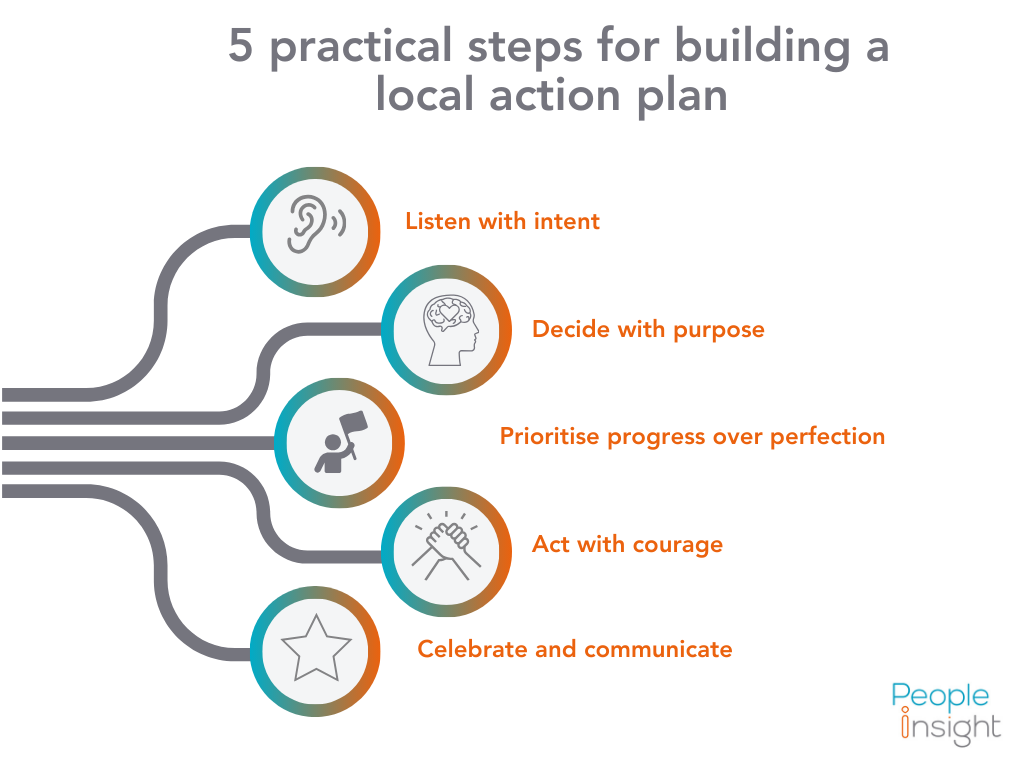
Creating a local action plan does not need to feel overwhelming. By breaking the process down into manageable steps, managers can move from survey results to visible change with clarity and confidence. The following five steps provide a simple structure that makes action planning practical, achievable and impactful.
Treat the survey as the start of a conversation. Look beyond percentages and data points to understand the stories behind them. Encourage employees to share what they are experiencing and pay attention to the emotional undercurrents.
Resist the temptation to try to fix everything. Focus on one or two high-impact themes that truly matter to your team. Use your reporting dashboard to identify drivers of engagement, then validate priorities through discussion.
Employees do not expect overnight transformation. What they want is to see movement. Co-create solutions with your team. Even small wins build momentum and increase buy-in.
Do not wait for perfect clarity. Show your team progress today. That might mean trialling a new initiative, testing a process change or piloting a new way of working. Courage breeds confidence.
Keep the feedback loop alive with visible updates. Use “you said, we did” messaging to connect actions to employee voice. Celebrate small wins and acknowledge ongoing work honestly.
Managers are busy, and creating a local action plan can feel daunting. That is why support and tools make such a difference.
With the right structure, managers can move from hesitation to confident action planning.
As an example of local action planning, we can look to our HEI clients. Different higher education institutions demonstrate how local action planning can be brought to life:
These examples underline the point that belief in action rises when leaders keep things focused, transparent and participatory.
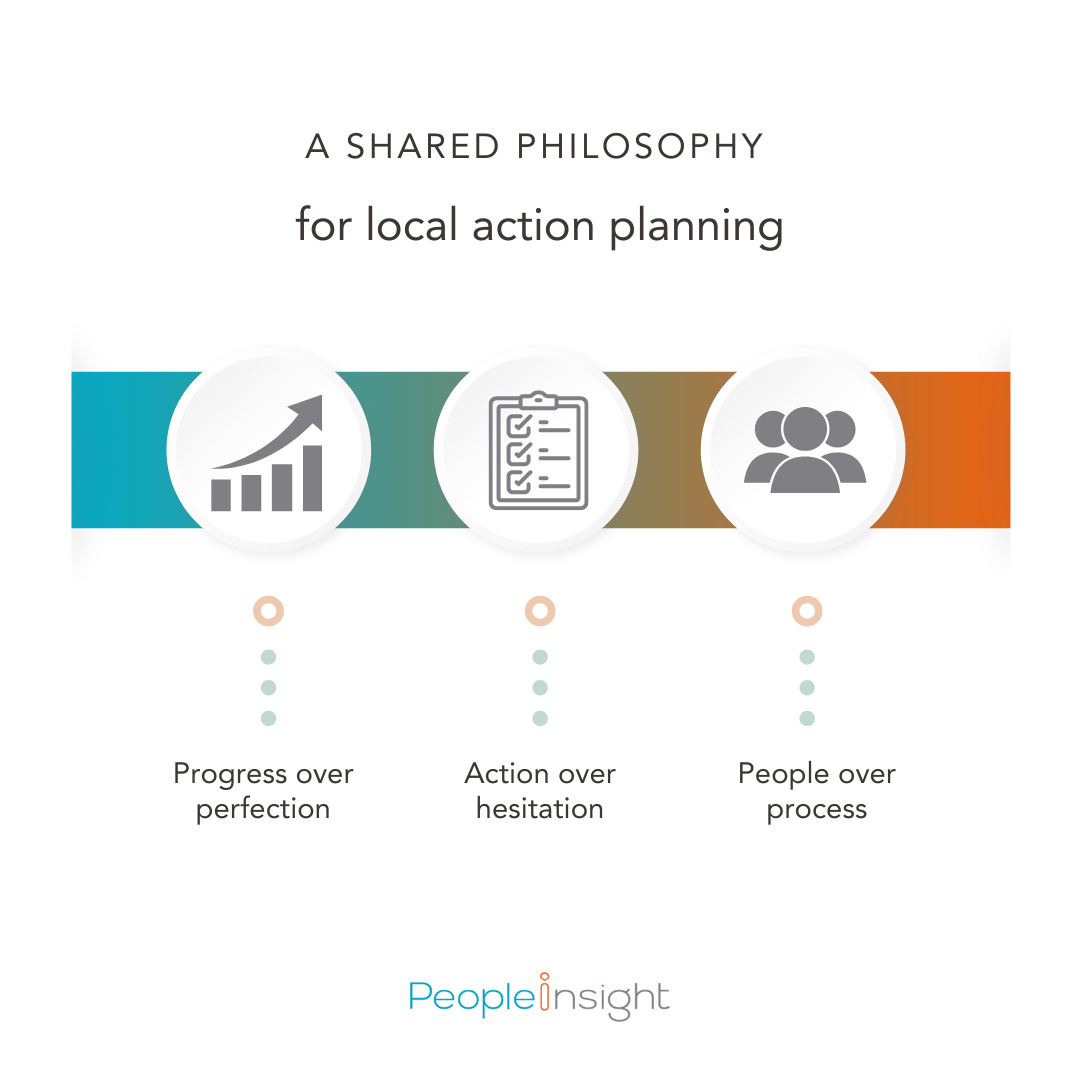
At People Insight, our philosophy is simple:
When managers lead with empathy, clarity and courage, they create workplaces where employees believe change is possible. And that belief is the foundation of engagement.
A local action plan works best when it avoids these traps:
The goal is not to make local action planning a one-off task after surveys, but to build it into everyday leadership. When managers routinely share results, invite input and take visible steps, employees see action planning as part of organisational culture, not an HR exercise.
Over time, this creates a cycle: feedback leads to action, action builds trust and trust drives more honest feedback in the future. That is how meaningful change takes root.
Local action plans are about clarity, focus and follow-through at the level where employees feel it most. With the right support, tools and mindset, managers can turn survey insights into progress that employees believe in.
Want to empower your managers with tools and support to build local action plans that drive engagement? Get in touch with People Insight to learn how our actionable employee experience platform, Prism analysis and HR expertise can help.