



















Blogs:

What is the employee feedback loop, and why is it so important?

A practical guide to building a stronger feedback loop through clearer listening, visible action and better follow-through.

What is the employee feedback loop, and why is it so important

    A quick insight: An employee feedback loop helps organisations listen, respond and communicate in a way that builds trust over time. It creates a consistent cycle where employees share feedback, leaders act on it and progress is made visible. A strong feedback loop improves employee experience, strengthens engagement and makes future listening more credible.

    We talk a lot about listening to employees. But we also consistently reiterate the fact that listening on its own is not enough. The real value comes from what happens after feedback is shared. Feedback needs to be solicited, listened to and acted upon. And, importantly, that action needs to be seen. What we’re describing here is the all-important employee feedback loop.

    A strong feedback loop gives organisations a clear cycle for gathering insight, understanding what it means, taking action and communicating progress. When it works well, employees feel heard and can see that their views are shaping decisions. When it breaks down, however, feedback risks feeling like a despiriting one-way process, where opinions, insight and suggestions simply disappear into a void. 

    Let’s take a minute to look at the employee feedback loop, what it is, why it matters and what you need to keep in mind at your organisation for optimal employee listening.

    Related: What is the employee voice and why does it matter?

    What is an employee feedback loop?

    The employee feedback loop is a structured process where employees share feedback, organisations interpret it, action is taken and progress is communicated back.

    In simple terms, it is the cycle that turns employee feedback into visible change.

    A strong feedback loop helps organisations:

    • gather useful feedback
    • understand what sits behind it
    • compare it with goals or benchmarks
    • act on the priorities that matter most
    • communicate clearly about what happens next

    This is what helps employee feedback become more than a one-off exercise. It becomes part of a wider process of listening, responding and improving.

    Why the feedback loop builds trust where it’s needed

    Listening without visible follow-through invariably weakens trust.

    If employees are asked for their views but never hear what happened afterwards, it becomes harder for them to believe the process is worthwhile. Over time, that can affect candour, participation and confidence in future surveys.

    A stronger employee feedback loop helps organisations:

    • improve the employee experience
    • build trust between employees and leaders
    • identify patterns and priorities more clearly
    • support more meaningful action
    • increase confidence in future listening activities

    The feedback loop also helps make listening sustainable. Instead of treating feedback as a one-off event, it turns it into an ongoing cycle of input, reflection, action and communication.

    The employee feedback loop explained

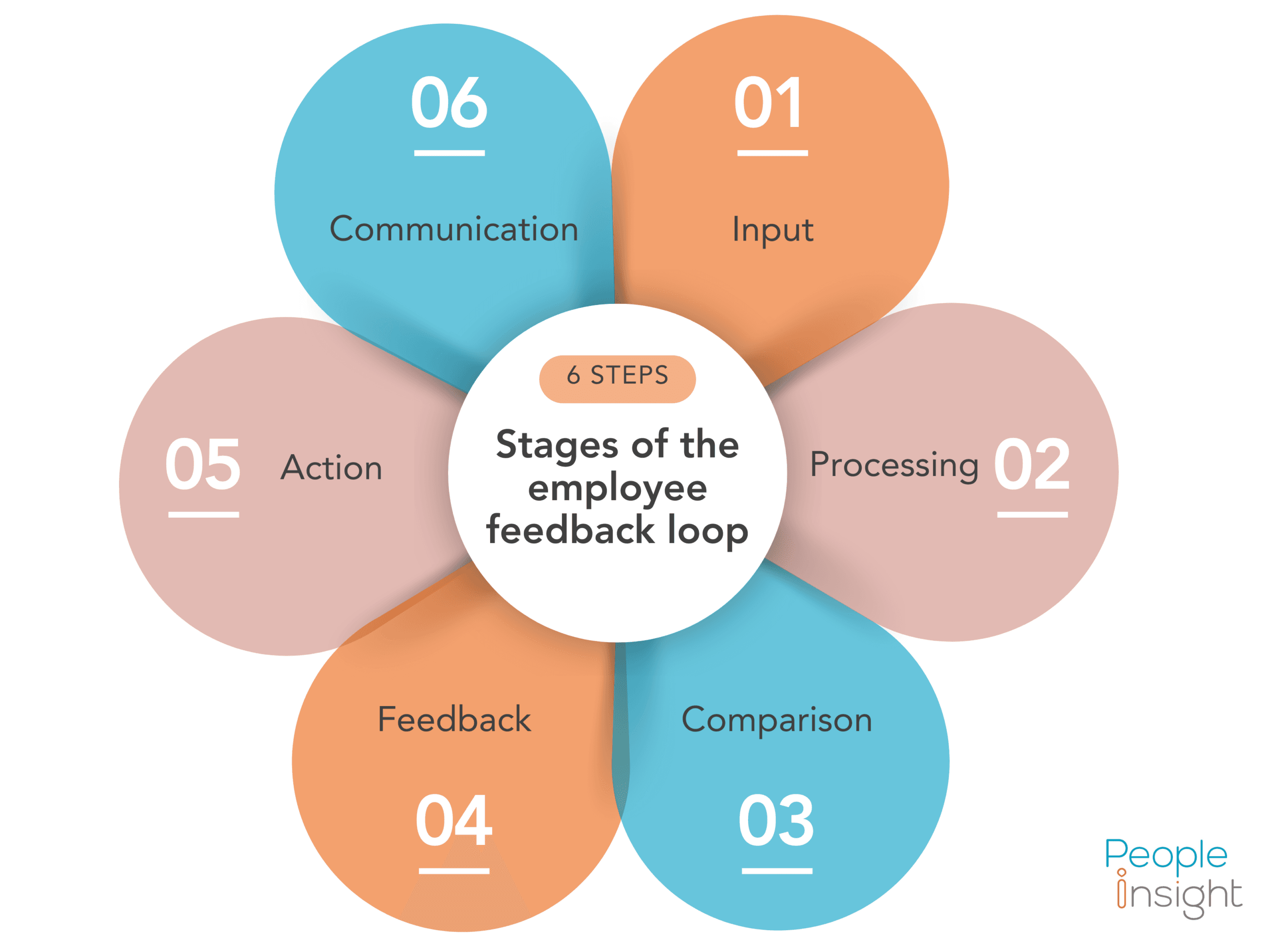
    The employee feedback loop consists of several connected stages. Each one plays an important role in making sure feedback leads somewhere useful.

    Let’s take a look at each in turn.

    stages of the feedback loop

    1. Input: employees provide feedback

    The first stage involves gathering feedback from employees.

    This can happen through employee surveys, pulse surveys, suggestion boxes, focus groups, town halls or other listening channels. Employees are uniquely placed to highlight what is working, what is getting in the way and where improvement is needed.

    This stage is also about trust. If employees feel their feedback will be ignored, misunderstood or punished, they are less likely to share honest views. That is why creating the right conditions for openness matters so much.

    2. Processing: interpreting the feedback

    Once feedback is collected, it needs to be processed properly.

    That means identifying patterns, trends and areas that need attention. Whether the issue is unclear communication, employee wellbeing or development opportunities, the organisation needs to understand what employees are really saying and what matters most.

    This is where tools such as HR analytics and Prism can add real value. They help organisations interpret feedback more clearly, spot themes and move from raw responses to clearer priorities.

    3. Comparison: relating feedback to goals and context

    After processing, feedback needs context.

    This stage involves comparing results with organisational goals, previous surveys, benchmarks or wider trends. That helps leaders understand whether an issue is isolated, long-standing, improving or getting worse.

    Comparison also helps organisations avoid reacting too quickly to one data point in isolation. It creates a clearer sense of what matters most and what should be prioritised first.

    4. Feedback: sharing insights with employees

    Feedback loops do not work if communication only flows in one direction.

    Once insight is clearer, employees need to hear what has been learned. That means sharing:

    • the main themes
    • what stands out
    • what the organisation is prioritising
    • what employees can expect next

    Transparent communication helps build confidence in the process. Without it, employees may feel their feedback disappears after submission, which can quickly reduce trust and engagement.

    5. Action: turning feedback into progress

    This is the point where listening becomes visible.

    Action is where organisations decide what to do with the feedback they have received. It is also where many feedback loops either gain credibility or lose it.

    At People Insight, this is where our post survey action planning approach becomes especially important. We now use the 6 Rs framework to help organisations move from insight to action in a more structured way:

    • Review
    • Replay
    • Reflect
    • Refine
    • Respond
    • Reinforce

    That framework gives leaders and managers a practical route from understanding results to making progress visible over time. In other words, the action stage of the feedback loop is not just about choosing a few actions. It is about creating a process that helps those actions stick.

    6. Communication: closing the loop

    The final stage is about showing employees how their feedback influenced decisions and what progress has been made.

    This is the stage that often has the biggest effect on future trust and response rate. When employees are kept updated on how their feedback has shaped plans or improvements, they are far more likely to believe the process is worth engaging with again.

    Closing the loop does not mean pretending everything can be fixed immediately. It means being clear about what has been heard, what is being prioritised and what employees can expect next.

    The benefits of a strong feedback loop

    Implementing a strong employee feedback loop can bring several important benefits.

    1. Improved performance

    When employees see their feedback leading to meaningful change, they are more likely to feel motivated and supported. Removing obstacles and responding to real concerns can improve how teams work and perform.

    2. Increased engagement

    Employees who believe their voice matters are more likely to feel connected to the organisation and more committed to their role. A strong feedback loop helps strengthen that belief.

    3. Better organisational culture and relationships

    Open feedback helps build trust between employees and leadership. It creates a culture where people feel respected, listened to and more confident in speaking up.

    4. Increased retention

    Employees are more likely to stay with organisations that listen and respond. A visible feedback loop shows that employee concerns are taken seriously, which can strengthen loyalty and reduce turnover.

    Employee feedback loop best practices

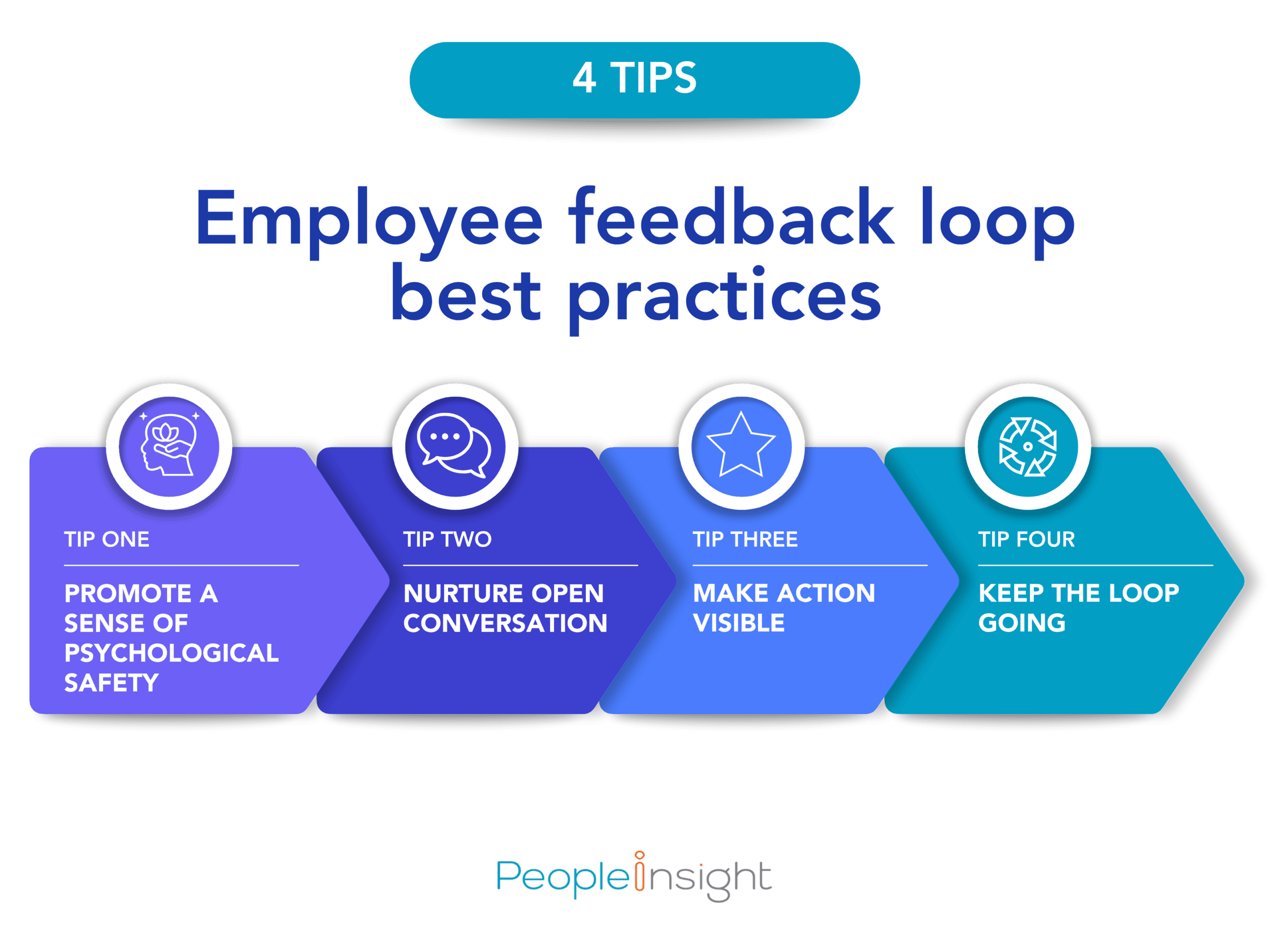
    To get the most from an employee feedback loop, a few best practices matter.

    Employee feedback loop best practices

    1. Promote a sense of psychological safety

    Employees should feel comfortable sharing honest feedback without fear of retaliation or judgement. That means creating a culture where openness is encouraged and where leaders respond constructively to what they hear.

    This is closely connected to psychological safety. Without it, the feedback loop becomes weaker because the feedback itself becomes less honest.

    2. Nurture open conversation

    The feedback loop should be a two-way process, not just a survey followed by silence.

    Managers should engage with employees regularly, listen actively and ask thoughtful follow-up questions. Open conversation helps uncover valuable insight and shows a genuine interest in employees’ perspectives.

    3. Make action visible

    The feedback loop becomes much stronger when employees can see that action is happening.

    That might mean:

    • visible updates from leaders
    • team-level action planning
    • clear ownership of priorities
    • regular progress check-ins
    • you said, we did” style updates where appropriate
    4. Keep the loop going

    A strong feedback loop is not something you complete once. It is an ongoing cycle.

    That is why the most effective organisations keep listening, reflecting, acting and communicating over time. The loop only works if it stays alive.

    How Prism strengthens the feedback loop

    Prism helps make the feedback loop more practical by turning large volumes of employee feedback into clearer themes, priorities and next steps.

    It can help organisations:

    • group qualitative feedback into themes
    • highlight emerging patterns
    • add context to survey scores
    • identify likely priorities
    • support clearer action planning

    That means leaders and managers can spend less time sorting through raw feedback and more time focusing on what matters most.

    Improve your employee feedback loop with People Insight

    The employee feedback loop is not just about gathering opinions. It is about building a stronger cycle of listening, action and trust.

    When employees can see that their feedback is heard, understood and acted on, the whole process becomes more credible. That strengthens engagement, improves the employee experience and makes future listening more valuable.

    At People Insight, we help organisations strengthen every stage of the feedback loop through employee surveys, Prism-powered insight, structured action planning and expert support.

    Want to improve the way your organisation listens and responds? Contact us to learn how People Insight can help you build a stronger employee feedback loop.

    FAQs about the employee feedback loop

    A quick run down on all you need to know

    What is the employee feedback loop?

    The employee feedback loop is a structured process where employees share feedback, organisations interpret it, action is taken and progress is communicated back.

    Why is the feedback loop important?

    It is important because feedback only creates value when employees can see that it leads to action. A strong feedback loop builds trust, improves engagement and strengthens future listening.

    What are the stages of the employee feedback loop?

    The feedback loop usually includes input, processing, comparison, feedback, action and communication.

    How does action planning fit into the feedback loop?

    Action planning is the stage where feedback turns into visible progress. At People Insight, this is supported through the 6 Rs framework, which helps organisations move from results to structured follow-through.

    How does Prism support the feedback loop?

    Prism helps interpret large volumes of survey feedback more clearly by surfacing patterns, grouping themes and highlighting likely priorities for action.

    How do you close the employee feedback loop?

    You close the loop by communicating what was heard, what is being prioritised and what progress employees can expect to see.

    What happens if you do not close the feedback loop?

    If the loop is not closed, employees may feel ignored or lose confidence in the process. That can reduce trust, engagement and participation in future feedback activity.

    How can People Insight help with the employee feedback loop?

    People Insight helps organisations strengthen the feedback loop through employee surveys, structured action planning, Prism-powered analysis and practical support that turns insight into meaningful action.