



















Our experienced team works alongside organisations to help them design, deliver and communicate their listening programmes. From survey distribution to strategic guidance, we’re here when you need us
A quick insight:Handling workplace stress involves recognising the signs early and using practical strategies to reduce pressure and support wellbeing. This post explains common stress triggers, simple steps individuals can use to manage their stress and ways organisations can create healthier work environments that help people feel more supported, resilient and capable of sustaining performance.
Workplace stress is a huge concern for companies and managers alike — and it’s a problem that isn’t going anywhere. From larger political and social issues to organisational frustrations, workplace stress is inevitable for almost every single employee at one point or another. We all get stressed at one point or another. But managers need to be conscious of stress levels at the team level, while also keeping an eye on individuals who may be creeping toward burnout. Sounds simple enough, but the reality is far more complicated.
In this guide, we’ll explore actionable strategies for handling workplace stress, from the practical to the more creative. We’ll also discuss managers themselves and why it’s so important for them to check in with themselves and keep their own wellbeing on track.
14 useful tips for handling workplace stress and creating more balanced teams
Handling workplace stress requires a proactive approach. It might also require a creative flair. What works for one organisation might not work for another.
Below are fourteen actionable tips that can help you create a more balanced and productive environment — some are more practical and traditional, while others are more innovative and forward-thinking.
Consider what’s best for you and your company culture before putting together an action plan:
1. Promote open lines of communication
This may seem like an obvious tip, but it’s certainly one worth stressing. Good communication can go a long way to alleviating causes of stress and frustration in workplaces.
Encourage team members to discuss their concerns without fear of judgment. Regular check-ins — both formal (through employee surveys, for example) and informal (casual check-ins between line manager and employee) — help employees feel heard and valued. Active listening shows empathy and builds trust, which can reduce stress and prevent issues from escalating.
2. Set realistic goals and expectations
Unclear or unrealistic expectations can leave employees feeling overwhelmed. How are you doing with setting realistic workloads? Our benchmark data shows that only 64% of employees feel they can comfortably cope with their workload, with the remainder feeling like they’re scrambling to keep up.
Work with your employees to define clear, achievable objectives and deadlines and to ensure they know what is expected of them. Prioritising tasks and aligning goals with resources can significantly ease workplace pressures.
3. Offer flexible working options
Flexibility in working hours or remote work arrangements can alleviate stress for employees juggling personal and professional responsibilities. Research has shown that offering flexibility reduces burnout and improves overall wellbeing.
Stress can come about when employees feel ill equipped to perform the function of their job — whether through lack of training or poor equipment. Our data shows as many as 32% of employees aren’t receiving the training and development they need to do their jobs.
Equip your team with the tools and knowledge they need to manage their workloads effectively. Training sessions on time management, mindfulness or stress management can be particularly helpful. Make resources like Employee Assistance Programmes (EAPs) readily available.
5. Recognise and reward effort
Acknowledging employees’ hard work can boost morale and motivation. A simple thank-you note, public recognition or even small rewards can go a long way in reducing stress levels and creating a positive atmosphere.
6. Encourage breaks and time off
More time spent in seats is no indicator of quality work being done! We all need time to rest and recuperate. It gives us some much-needed breathing room and perspective, allowing our stress levels to balance out.
Managers should lead by example by taking breaks and encouraging their team to step away from their desks from time to time — particularly at lunch. Regular holidays are equally important — employees should feel comfortable taking their entitled leave.
7. Monitor workloads and adjust when needed
Pay close attention to your team’s workload and redistribute tasks if someone appears overburdened. Regularly reviewing responsibilities ensures a more balanced distribution and reduces the risk of burnout across the team.
8. Leverage augmented reality (AR) for immersive stress management
Tech has changed our workplace for the better — we’ve seen in recent years what difference AI is making in terms of productivity and performance. AI is also being used to boost employee engagement. Some really innovative companies are using another form of advanced technology to help with stress levels at their company.
AR can be used for stress management — offering calming virtual escapes or training simulations to prepare employees for stressful scenarios in a low-pressure environment. This creative use of technology builds engagement and reduces workplace anxiety.
9. Turn mundane activities into a game
Gamification can add fun and reduce stress at work. For example, some organisations use interactive digital scavenger hunts to encourage team collaboration and inject levity into the workday. Teams can compete to solve problems or explore company values in a playful way, strengthening camaraderie while easing tension.
10. Offer mindfulness practices tailored to teams
Google’s “gPause” initiative encourages employees to practice mindfulness together, such as group breathing exercises or short meditation sessions. This collaborative approach builds team cohesion while promoting relaxation and focus, offering a break from high-stress routines.
11. Integrate art therapy into the workday
Creative activities like painting, sketching or storytelling workshops can provide a healthy outlet for stress. Pixar, for example, incorporates storytelling exercises into its team-building sessions to enhance creativity and communication while reducing stress. These activities also encourage employees to tap into their imagination, creating a more relaxed and innovative atmosphere
12. Use fitness as a team-building tool
Reebok integrates fitness challenges, such as CrossFit classes, into their workplace culture. These initiatives not only promote physical health but also build camaraderie, allowing teams to bond over shared goals while combating stress.
13. Host “failure sharing” sessions
Creating a safe space to discuss workplace failures can help alleviate the pressure to perform perfectly while adding to the overall feel of psychological safety within an organisation. For example, companies might hold regular forums where employees and leaders openly share mistakes and lessons learned, normalising setbacks and encouraging resilience.
14. Encourage micro-breaks with purpose
Calm’s blog highlights the importance of intentional breaks, such as stepping outside for a few minutes of fresh air or engaging in a quick relaxation exercise. Activities like stretching or guided deep breathing can refresh employees, making them more equipped to handle ongoing challenges
Manager stress is a problem too — be sure to look after yourself
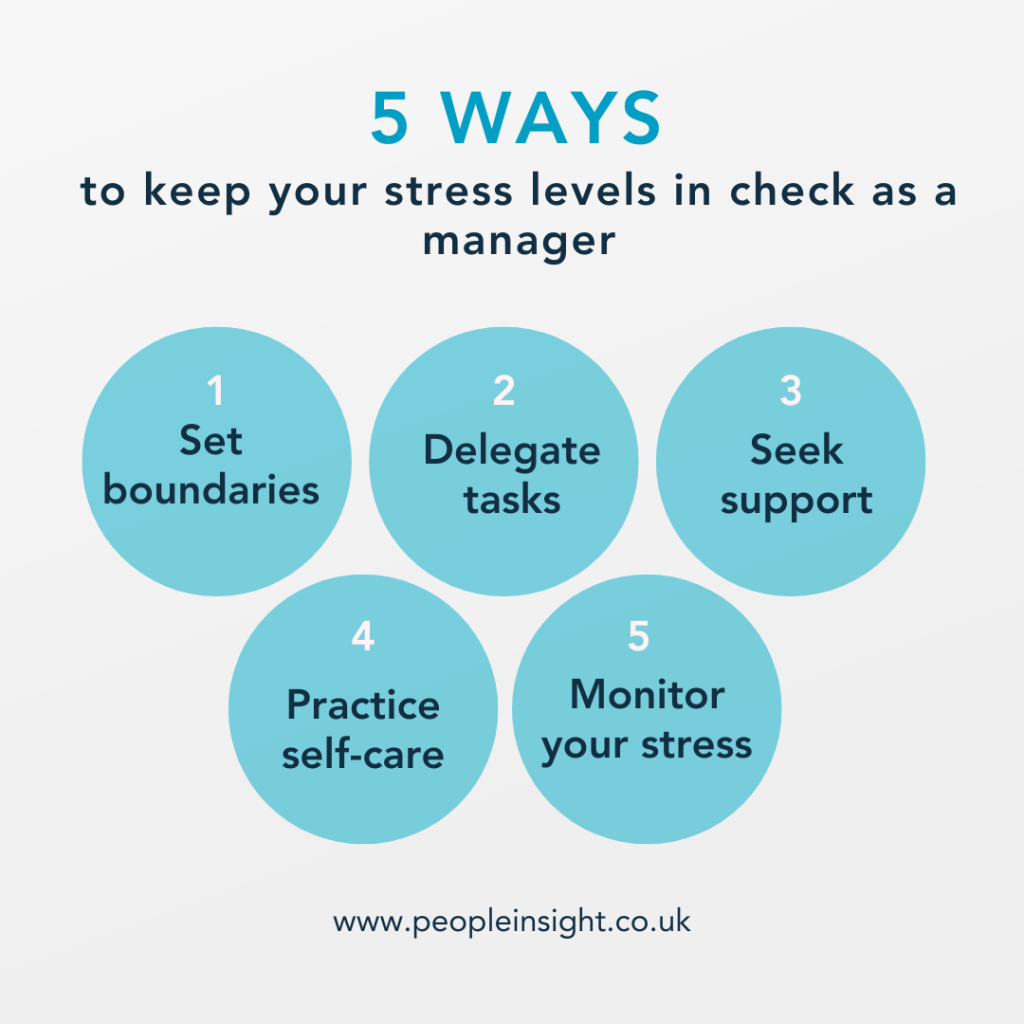
As a manager, you’re not immune to stress. In fact, you might face unique challenges, such as mediating conflicts, meeting leadership’s expectations and supporting a stressed team. To support your team effectively, you need to prioritise your own wellbeing.
Here are some steps to help manage your stress:
Set boundaries: Avoid being constantly available by email or phone. Protect your downtime so you can recharge.
Delegate tasks: Trying to handle everything yourself can be overwhelming. Delegate responsibilities and trust your team to deliver.
Seek support: Talk to your peers, mentors or a counsellor about the pressures you’re facing. External perspectives can often offer clarity.
Practice self-care: Make time for activities you enjoy, whether it’s exercise, hobbies or spending time with loved ones. Self-care is not a luxury but a necessity.
Monitor your stress: Regularly assess your own stress levels. Awareness is the first step in addressing it effectively.
Taking these steps doesn’t only benefit you — it models healthy behaviour for your team and contributes to a more positive workplace culture.
Why handling workplace stress should be a priority in your business
Stress at work is more than an individual concern; it impacts the organisation as a whole. High stress levels can lead to reduced productivity, increased absenteeism and lower engagement. By addressing stress in the right way, managers contribute to a healthier and more productive organisation.
Are you looking to create a calmer, more healthy workplace so your employees are able to do their best work? It all starts with listening to them. Organise a staff wellbeing survey today to discover where they’re struggling and how you can help. Book a demo today!
Resources

Blogs
10 non financial incentives that really motivate employees