



















Our experienced team works alongside organisations to help them design, deliver and communicate their listening programmes. From survey distribution to strategic guidance, we’re here when you need us
A quick insight:Employee wellbeing continues to evolve as organisations respond to changing expectations around work, flexibility and support. Mental health, workload balance, financial security and connection remain central, alongside a growing focus on preventative action rather than reactive fixes. Understanding these wellbeing trends helps leaders prioritise support that genuinely improves how people feel, function and perform at work.
Most organisations want to support their employees’ wellbeing. Yet many fall into the trap of offering surface-level perks that sound great, but have little measurable impact. Free snacks, ping pong tables or a vague “mental health day” policy may sound lovely and supportive, but they rarely address the real needs of today’s workforce.
When designed and implemented with care, employee wellbeing initiatives can reduce stress, boost employee engagement and support long-term performance. More importantly, they reflect an organisation’s commitment to listening to employees and acting on what they need to feel healthy, supported and motivated at work.
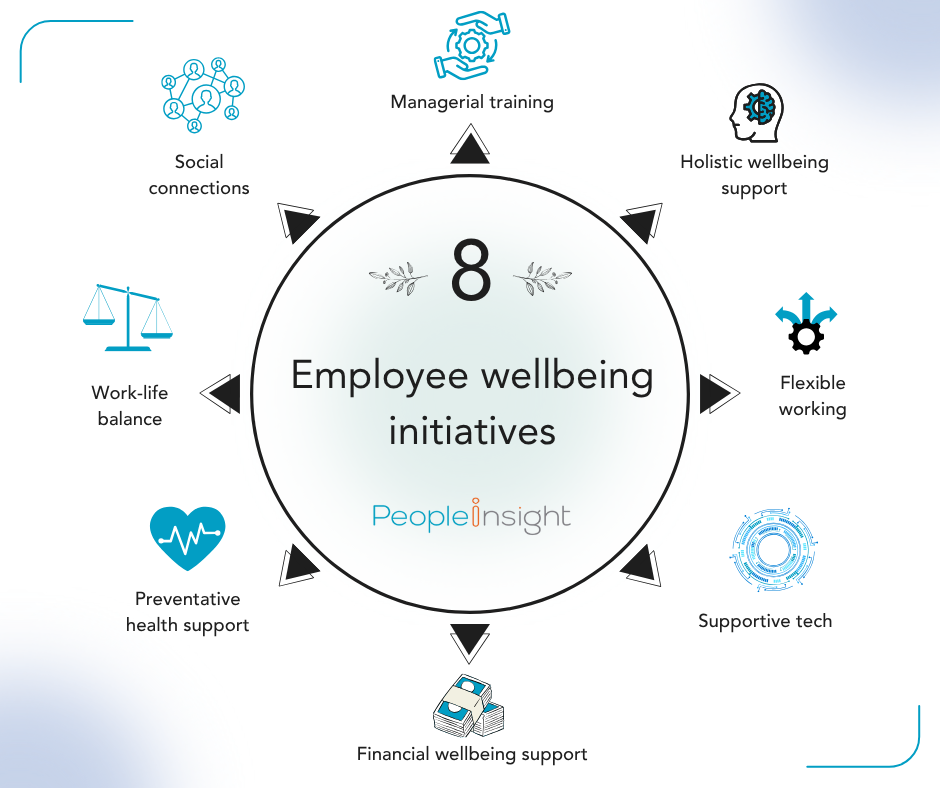
Our team of HR experts have put their heads together and outlined eight impactful employee wellbeing initiatives that reflect current challenges, employee expectations and the latest research with practical steps to bring them into your organisation.
1. Holistic wellbeing support for the whole employee
If you’re looking for data to truly understand the need for wellbeing support, we can look to the fact that nearly 10% of adults in the UK took time off for mental health reasons over the past year. Clearly, people are feeling increasingly wiped out or worn down and they need time away for perspective and clarity. And while awareness has grown in this area, many organisations are still relying on reactive or one-size-fits-all approaches.
A more effective model takes a holistic view of employee wellbeing, with support that spans mental, physical, emotional and social health. This can include:
Counselling and therapy services
Emotional resilience and stress management workshops
Physical wellbeing support such as virtual fitness classes or health screenings
On-demand digital platforms for mindfulness, meditation or sleep support
Wellbeing support is most impactful when it’s visible, inclusive and genuinely accessible. It should be backed by regular feedback channels to understand what employees actually need and whether current support is working.
Despite an increase in employers encouraging employees to come back to the office over the past few years, research shows that employees greatly value and want flexibility rather than a ‘one size fits all’ approach. Employee wellbeing initiatives must reflect how people’s lives operate outside of work. That means moving beyond occasional remote working and offering true flexibility where possible, including:
Adjusted start and finish times
Core hours with flexible margins
Remote-first or hybrid policies
Job shares or part-time roles
Companies like Dropbox and Eventbrite have adopted flexible leave policies and project-based work expectations, reporting improved retention and morale. Flexibility should never compromise business goals, but thoughtful approaches allow employees to manage both personal responsibilities and professional expectations without undue stress.
Technology can be both a support and a stressor. Used well, it can help employees manage workloads, stay connected and access wellbeing resources easily.
Organisations are increasingly investing in wellbeing tech, including:
AI-powered chatbots for on-demand support
Wearables and apps that promote movement and sleep quality
Wellness apps that offer greater perspective and work-life balance
Integrated wellbeing platforms for remote or hybrid staff
Anonymous feedback channels and digital check-ins
Eemployees with access to digital wellbeing tools are more likely to feel supported at work. But tools must be intuitive and integrated into everyday workflows rather than becoming another digital burden.
4. Financial wellbeing support in an uncertain economy
Financial pressure affects sleep, decision-making and overall mental health and it directly impacts employee performance.
Many businesses are now offering employee wellbeing initiatives focused on financial health, including:
Transparent communication around benefits, payroll and financial wellbeing goes a long way in building trust and reducing unnecessary worry. Giving employees access to professional advice rather than leaving them to navigate it alone is a smart and supportive investment.
5. Preventative health support before problems grow
Rather than waiting for burnout or absenteeism to appear, organisations are investing in preventative health programmes that identify risks early and promote healthier habits.
This might include:
Annual wellness screenings and biometric assessments
Preventative vaccinations and eye checks
Onsite or virtual clinics
Health-related goal-setting and coaching
6. Protecting work-life balance with clearer boundaries
Remote work has many benefits, but it can also blur the lines between work and personal life. It’s easy to slip into the habit of working during your free time, which can lead to feelings of overwhelm and burnout in the long run, if left unchecked.
To avoid this, employee wellbeing initiatives are putting measures such as the following in place:
Clear rules around work hours and response times
Communication guidelines for out-of-hours contact
Mandatory holiday usage and encouraged time off
Training managers to role model boundaries
When employees are encouraged to switch off without guilt, they return more focused, creative and engaged. Companies must be willing to back this culturally not just in policy.
7. Building social connection in hybrid workplaces
The Campaign to End Loneliness estimates that lonely workers cost UK employers up to £2.5 billion each year due to reduced productivity and higher staff turnover.
Social wellbeing is a growing priority particularly for hybrid or remote employees who may feel isolated. Meaningful employee wellbeing initiatives in this area include:
Regular optional in-person meetups or offsites
Virtual coffee breaks or interest groups
Active listening channels and informal communication spaces
Social committees and employee-led events
It’s not about forced fun or mandatory quizzes. It’s about giving people options to connect in authentic, meaningful ways. Employees who feel connected are more likely to stay, contribute ideas and speak up.
8. Equipping managers to support wellbeing
Line managers have the most day-to-day impact on employees’ wellbeing but many feel unprepared to support it. A recent Mind survey found that 49% of managers said they would welcome training on how to have wellbeing conversations.
Practical support includes:
Training on recognising stress and burnout
Skills for active listening and empathetic conversations
Access to escalation paths or HR support when needed
Regular feedback loops with their teams
By empowering managers with the right tools organisations send a clear message that employee wellbeing is everyone’s responsibility; not just HR’s.
Employee wellbeing initiatives such as the ones we discussed above reflect how organisations listen, respond to and care about their people. They move beyond surface-level perks and into practical measurable change. When built on feedback these initiatives help uncover what matters most and show employees that their voices count.
Listening to employee sentiment through an intuitive survey platform, acting on the insights with clarity and care and keeping wellbeing as an ongoing conversation not just a policy is what creates real impact.
To measure where your organisation stands, get in touch to see how our actionable employee experience platform and an impactful staff wellbeing survey can support your wellbeing strategy. Or click here for a sample of free wellbeing survey questions.