

















Our experienced team works alongside organisations to help them design, deliver and communicate their listening programmes. From survey distribution to strategic guidance, we’re here when you need us
A quick insight:Radical candour is a feedback approach that pairs direct honesty with genuine care for the other person. It encourages clear, timely conversations about performance and behaviour while showing respect and support. This post explains the two core dimensions of radical candour, how it improves communication and practical ways to use it so feedback feels constructive and human.
If your employees are holding back ideas, avoiding honesty or disengaging after receiving feedback, radical candour could help shift the culture.
Developed by Kim Scott, the approach encourages open, honest communication while showing genuine care for the person on the receiving end.
At a time when psychological safety is becoming more important for performance, innovation and wellbeing, radical candour offers a practical way to improve conversations without undermining trust.
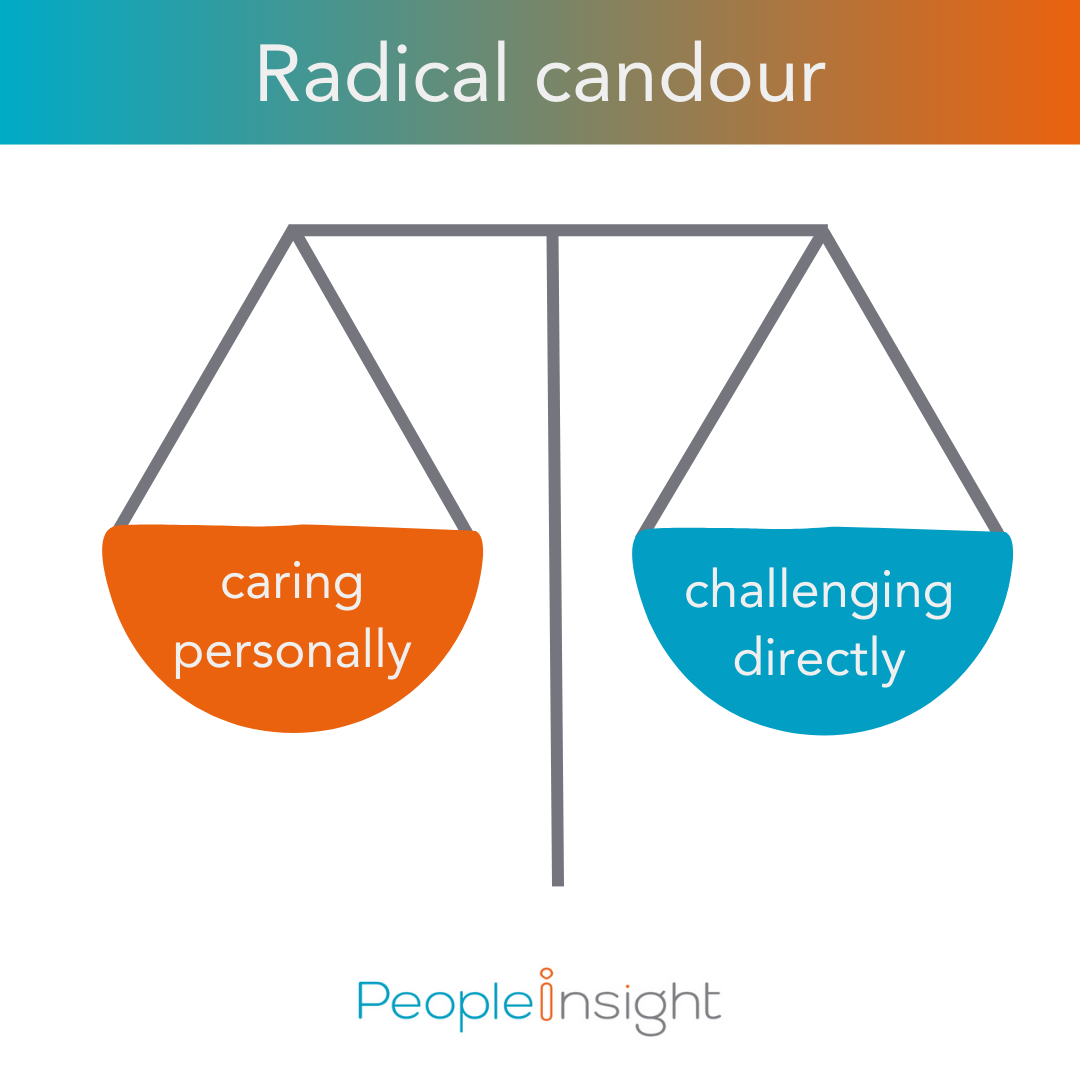
Radical candour is a feedback approach that balances two things — caring personally and challenging directly.

While many managers lean toward one or the other, radical candour brings them together. It means saying what needs to be said, without avoiding discomfort or falling into the trap of ‘being nice’ at the cost of clarity.
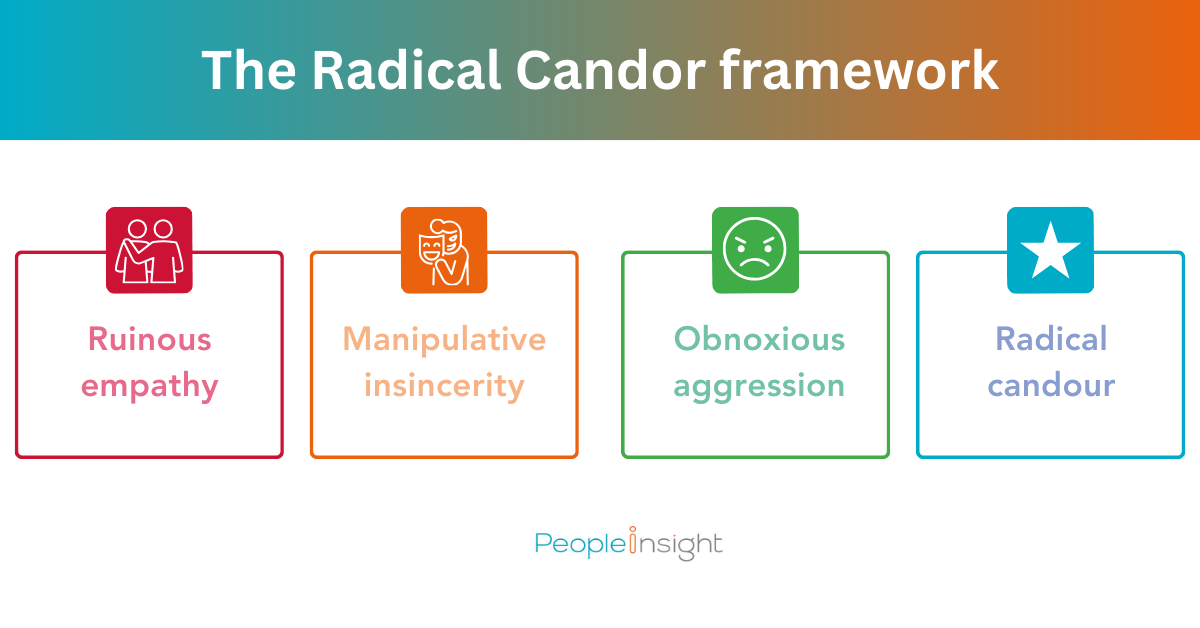
Kim Scott, a former executive at Google and Apple, introduced the concept in her book Radical Candor: Be a Kick-Ass Boss Without Losing Your Humanity. The framework helps people avoid common pitfalls in workplace communication:
Ruinous empathy: Being kind but unclear — sparing someone’s feelings by softening or avoiding feedback altogether
Manipulative insincerity: Saying what someone wants to hear, without meaning it
Obnoxious aggression: Being brutally honest without showing concern
Radical candour: Saying it as it is, with care and respect
When managers use radical candour consistently, they build relationships based on transparency. Feedback becomes less about judgement and more about shared learning.


Why radical candour matters for psychological safety
Psychological safety is the belief that you won’t be punished or humiliated for speaking up with ideas, questions or mistakes. As Harvard’s Amy Edmondson, who coined the term, explains — it’s about feeling safe enough to take interpersonal risks.
Teams with high psychological safety show significantly better learning behaviour and performance outcomes. Yet one of the biggest threats to this is poorly delivered feedback — or avoiding it altogether.
Radical candour supports psychological safety by normalising feedback as an everyday, two-way part of working life. When people see that their manager is willing to be open and vulnerable — and expects the same in return — it builds trust. It also signals that honesty won’t be punished, even when things go wrong.
How to practise radical candour with your team
Getting radical candour right takes practice. It’s not just about being blunt; it’s about being intentional, respectful and clear. Here are practical ways to start building it into your team culture.
1. Ask for radically candid feedback first
Before giving feedback, show that you’re open to receiving it. Invite employees to share honest opinions about your leadership, decisions or communication style.
Say something like, “I’m working on being more open to feedback — if there’s anything you think I could be doing differently or better, I’d really appreciate your thoughts.”
Follow up with questions such as:
“Do you feel I involve you enough when changes happen?”
“What could I have done differently during that last project?”
Thank them when they do speak up, even if it’s uncomfortable to hear.
2. Use feedback as a chance to support development
People Insight’s employee surveys show that employees increasingly value career development and coaching. So don’t stop at the critique — use it to help them grow.
Share your own experiences and offer guidance. For instance: “I noticed the last part of your presentation lacked the impact I know you’re capable of. When I had that issue, I found reframing the closing message helped land it more strongly. Want to work on that together?”
3. Don’t confuse kindness with vagueness
Avoid sugar-coating your message to make it more palatable. That often leads to confusion or resentment. As Kim Scott puts it: “It’s not mean, it’s clear.”
Being direct doesn’t mean being harsh. Lead with empathy, but be specific and honest. If you’re overthinking your delivery, you’re probably not being clear enough.
4. Give feedback in person, not by email
Where possible, deliver feedback face-to-face — or at least over video, if your employees are working remotely. Written feedback, especially when constructive, can easily be misinterpreted.
Informal, in-the-moment feedback often lands better than a delayed performance conversation. It keeps feedback part of the day-to-day, rather than something to dread.
5. Praise publicly, critique privately
This isn’t just good manners; it’s a sign that you respect the person’s dignity. Using radical candour doesn’t mean putting people on the spot.
If someone makes a mistake, address it privately. If they’ve done well, let others know. This builds trust and shows you’re paying attention.
6. Focus on behaviour, not character
One of the most common feedback mistakes is making it personal. Radical candour means describing what happened, the impact it had, and what could change — not making assumptions about someone’s intent or ability.
For example, instead of “You’re not detail-oriented enough,” try: “The final report had a few inconsistencies, which led to confusion in the client meeting. Let’s review how we can catch those earlier.”
7. Make your confidence in the person clear
Feedback often lands better when it’s accompanied by belief in the person’s capability. Be specific about what they’ve done well, and why you think they can improve.
As Steve Jobs once said, the best feedback shows confidence in someone’s potential — it doesn’t question their worth.
Radical candour and employee listening go hand-in-hand
Radical candour creates the kind of culture where people feel safe enough to speak up — and that includes contributing to employee feedback surveys. When employees trust that their voices will be heard and acted on without punishment or performative responses, they’re more likely to be honest.
This openness supports not just individual wellbeing, but organisational learning too. Teams that can talk openly are more resilient, better at problem-solving and more engaged.
If you’re already thinking about how to improve psychological safety, honest conversations are a great place to start — but they should be backed up by regular, reliable employee listening.
Wanting to boost levels of psychological safety at your company? It all starts with gauging where you are now, assessing where you can improve and making realistic organisational changes. Give your employees a voice today and make sure they’re heard — get in touch for an employee engagement survey, or check out our free psychological safety survey questions.