Increase profitability by 23%
 Boost productivity by 21%
 Increase profitability by 23%
Boost productivity by 21%
Increase profitability by 23%
Boost productivity by 21%
When employees talk about supportive company culture, they are not describing perks or slogans. They are talking about how it feels to work in an organisation that listens, responds and invests in their wellbeing and growth. Supportive company culture is about creating the conditions where employees feel safe, valued and empowered to perform at their best.
Let’s take a bit of a more comprehensive look. What exactly is a supportive company culture? Why does it matter and how can you begin to build such a culture at your place of work?
Related: What is organisational culture? (Discover yours in our quiz!)
Supportive company culture is an environment where employees know they will be treated fairly, have access to opportunities and be supported both professionally and personally. It links directly to employee engagement, as people are more motivated when they believe their employer cares about their success and wellbeing.
We’ve seen the benefits of a supportive culture time and again. Research from CIPD shows that when employees experience positive culture and good quality work, they are more likely to report higher wellbeing and stronger commitment to their organisation. It’s worth remembering, however, that a supportive culture is not about words on a wall, but rather about the everyday practices that shape how people feel at work.
Creating a supportive company culture has tangible benefits. Employees who feel supported are less likely to leave, more willing to share honest feedback and more productive. Organisations that invest in culture also strengthen their reputation, helping attract talent in competitive markets.
Supportive cultures also contribute to psychological safety. When employees know they can raise concerns without fear of blame, they are more innovative and collaborative. This makes culture not just an HR focus but a driver of organisational performance.
So what does supportive company culture look like in practice? It usually includes:
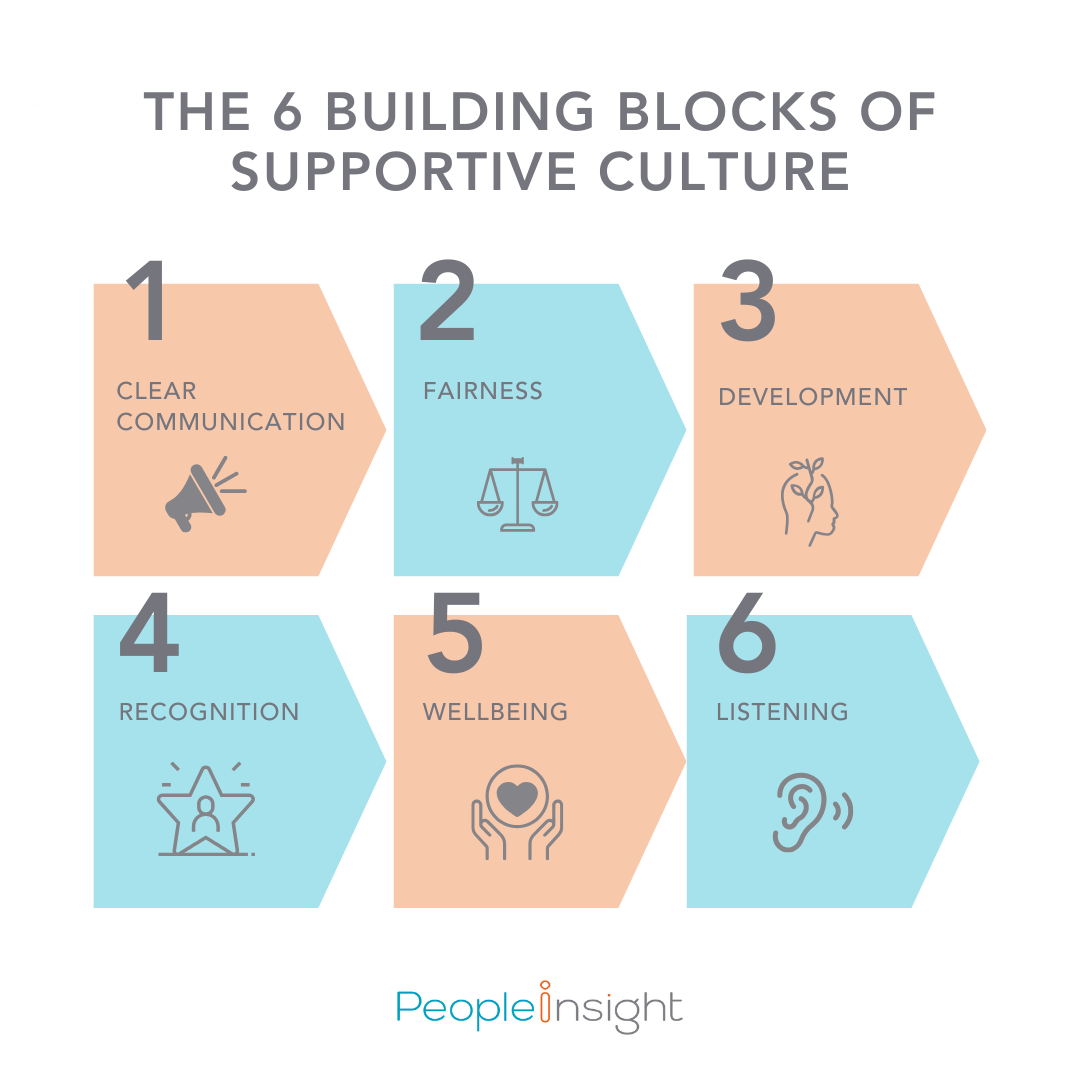
These elements combine to make culture feel tangible. Without them, culture risks being an empty phrase that employees do not believe in.
Related: 7 ways to care for the mental health of young employees
While every organisation has its own challenges, several well-known employers have become examples of supportive company culture in action.
Google is famous for perks, but its supportive culture goes deeper. Google invests in employee voice, development and wellbeing, providing psychological safety and room for innovation. Its employee support structures are consistently ranked among the best in the world.
Unilever embeds supportive company culture through its wellbeing programmes and focus on sustainability. Employees are given flexible working options and are encouraged to connect their work with wider purpose, which drives engagement.
Salesforce’s culture of “Ohana” emphasises family, trust and inclusivity. Its investment in equality programmes and consistent recognition practices has made it a reference point for supportive culture globally.
In the UK, John Lewis Partnership is long recognised for its supportive culture. The employee ownership model encourages voice and participation, giving employees influence over business decisions and a strong sense of belonging.
Microsoft rebuilt its culture under Satya Nadella by focusing on growth mindset and support. Development opportunities, flexible working and inclusive leadership have transformed its reputation, making supportive company culture central to its identity.
Known for autonomy and trust, Netflix supports employees by offering flexibility, clear communication and responsibility. Its transparent culture means employees understand expectations and are empowered to succeed.
Patagonia demonstrates supportive culture through its commitment to environmental values and employee wellbeing. It offers on-site childcare, flexible hours and encourages activism, aligning employee purpose with corporate mission.
The seven examples prove that supportive company culture can take many forms, from psychological safety to shared ownership. What unites them is a commitment to listening to employees, acting on feedback and aligning support with values.
For other organisations, the lesson is not to copy benefits or branding but to focus on authenticity. A supportive company culture must feel real to employees in their day-to-day experience. That means combining corporate initiatives with local manager actions, and making culture visible through consistent communication.
Creating a supportive company culture is all about consistent actions that employees can see and feel in their daily work. Here are some top tips to help organisations strengthen support across all levels:
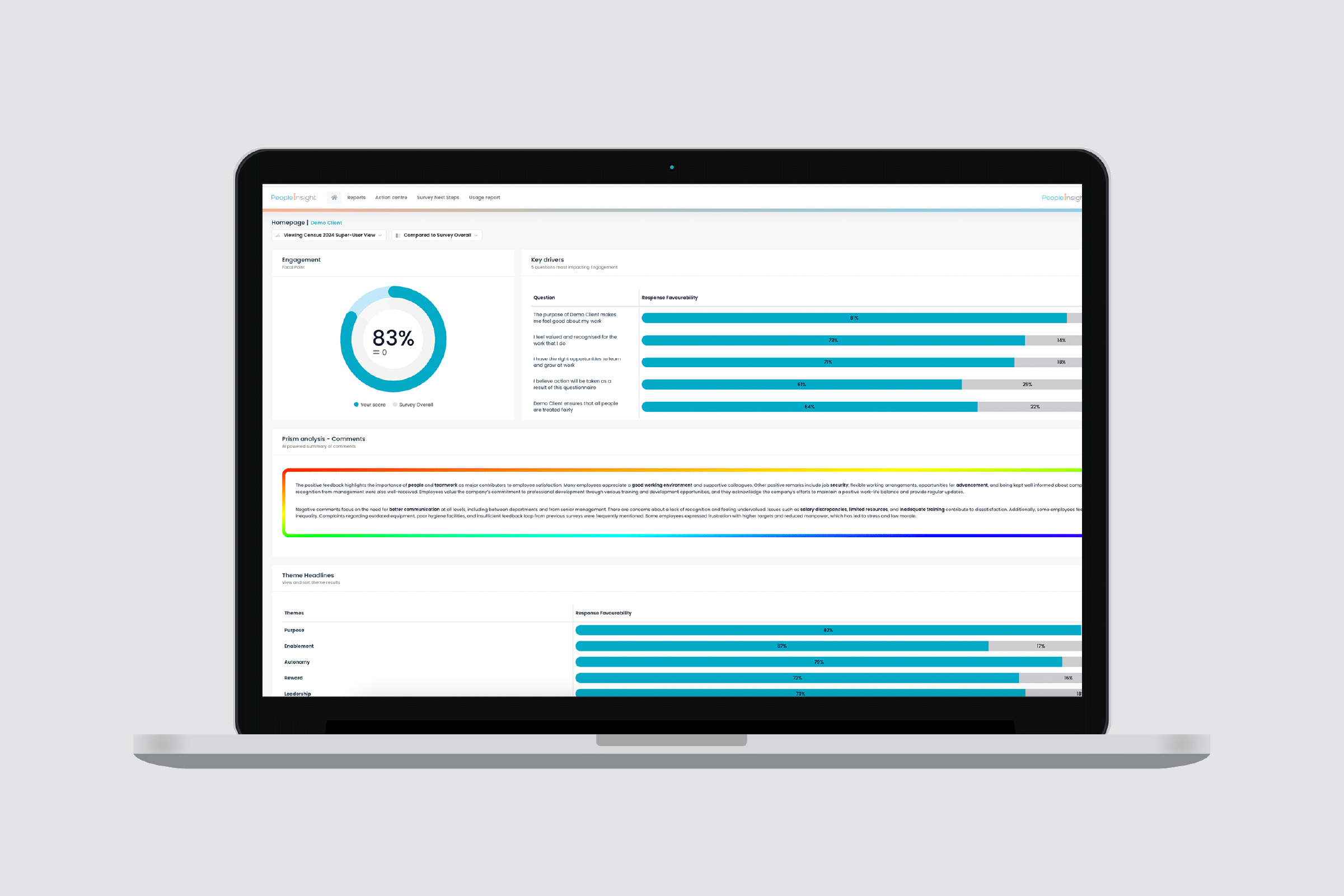
Use actionable employee surveys to capture employee sentiment and follow up with clear communication about what will change. Employees are more likely to feel supported when they see feedback translated into action.
Supportive cultures start with leaders. Provide training and coaching to help managers build skills in empathy, active listening and recognition. Leaders who model these behaviours set the tone for the whole organisation.
Appreciation should not be saved for annual awards. Build recognition into everyday routines, whether through thank-you notes, peer shout-outs or visible reward programmes, so employees feel their efforts matter.
Support is not just emotional. It is developmental. Offer career pathways, mentoring and learning programmes that show employees you are invested in their future, not just their present role.
Create an environment where wellbeing is part of the conversation, not an afterthought. Offer flexible working where possible, provide access to wellbeing resources and encourage open discussions about balance
Supportive cultures break down silos. Encourage collaboration through cross-functional projects, transparent updates and regular forums where employees can share ideas across departments.
Remind employees how their work connects to organisational purpose. When employees see how their role contributes to bigger goals, it reinforces pride and motivation.
Supportive company culture is about creating an environment where employees feel respected, heard and motivated. When organisations invest in culture, they create conditions for meaningful change and stronger engagement. Supportive culture is not a luxury but a driver of resilience and performance.
At People Insight, we help organisations build supportive company cultures through actionable surveys, employee sentiment analysis and practical action planning. Our cultural assessment and alignment service can help you understand your culture and turn feedback into meaningful change. Get in touch with us today to see how we can help.
Check out our other culture resources:
How do you improve company culture?
What’s the difference between company culture and employee engagement
What is an inclusive company culture? (& 7 famous examples)