



















Our experienced team works alongside organisations to help them design, deliver and communicate their listening programmes. From survey distribution to strategic guidance, we’re here when you need us
A quick insight:Unfair treatment at work harms wellbeing, trust and motivation when people feel they are judged, rewarded or supported inconsistently. Patterns such as bias, unequal expectations or lack of recognition undermine connection and performance over time. Understanding how unfair treatment shows up and responding with fairness, clarity and consistent practice helps strengthen trust and engagement.
One of the great things about our famous benchmark data is that it gives us a clear insight into the average employee experience, across sectors. We’re able to explore the data and draw out certain workplace trends, which helps us to advise our clients on what to look out for, what to prioritise and what measures to put in place. What’s really interesting is how often our benchmark data paints a picture of the times we live in, societal shifts and ongoing cultural concerns.
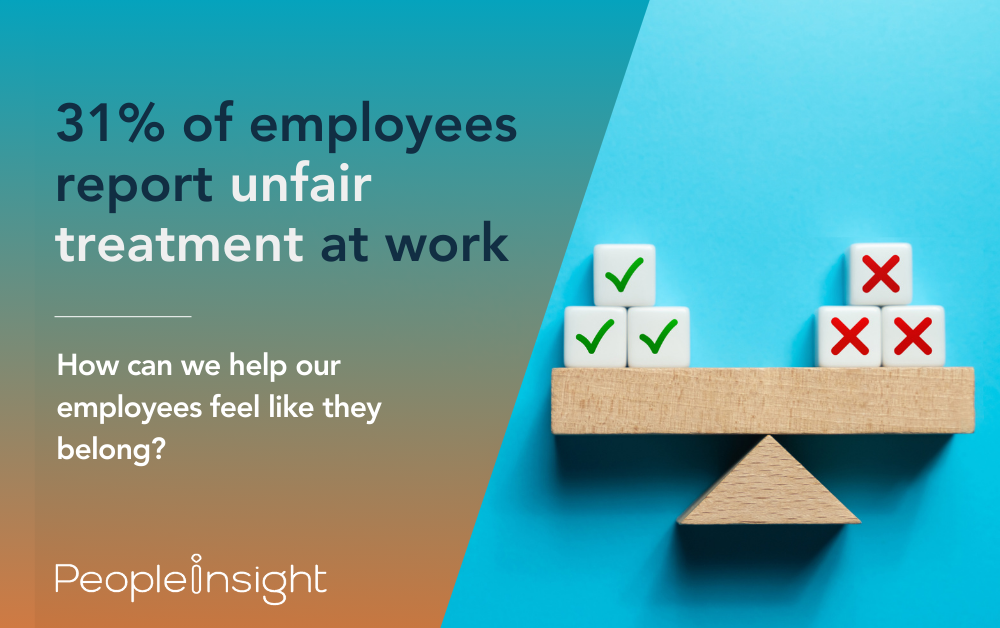
One such example is that of unfair treatment at work. Our 2025 benchmark data shows us that as many as 31% of employees don’t feel everyone at their company is treated fairly or equally. That’s nearly one in three people who believe their organisation isn’t providing a level playing field. At a time when some major corporations such as Meta, Pepsi and Amazon, are scaling back their D&I programmes, this statistic serves as a stark reminder — there’s still a long way to go in creating genuinely fair workplaces where everyone feels they belong.
So let’s take the time to discuss unfair treatment at work. It’s a nuanced topic that isn’t just about blatant discrimination or harassment. It can be subtle, ingrained in organisational culture and often overlooked by those who aren’t directly affected. Yet, its impact is undeniable — lower morale, higher turnover and a workforce that feels undervalued.
So, what does unfair treatment actually look like? And what can businesses do to fix it?
Unfair treatment at work goes beyond occasional disagreements or office politics. It happens when employees are treated differently in ways that negatively affect their work experience, opportunities or wellbeing. This can include:
Discrimination – Treating employees unfairly due to age, gender, race, disability, religion or sexual orientation.
Harassment – Creating a work environment that feels intimidating, hostile or degrading.
Bullying – Repeated negative behaviour that undermines or humiliates an employee.
Unequal opportunities – Failing to provide the same chances for career growth, training or promotions.
Unfair policies – Applying rules inconsistently or enforcing policies that disproportionately affect certain employees.
Even if it’s unintentional, unfair treatment can be terribly damaging, leaving employees feeling frustrated, unsupported and demotivated.
5 Examples of unfair treatment at work
Unfair treatment can show up in many ways, some more obvious than others. Here are just a few examples:
Promotions based on favouritism – When a less-qualified employee gets promoted over someone with more experience and stronger performance, not because of merit, but due to personal relationships or biases.
Discriminatory hiring practices – Rejecting job applicants based on factors unrelated to their ability to do the job, such as age or ethnicity.
Unequal pay – Paying different salaries to employees who perform the same role with the same level of experience.
Exclusion from key opportunities – Leaving certain employees out of meetings, projects or decisions that could help them advance their careers.
Unfair disciplinary action – Holding some employees to a different standard than others, whether through harsher punishments or inconsistent enforcement of rules.
For those experiencing it, unfair treatment at work isn’t just frustrating—it’s a major source of stress that can impact mental and physical health.
What organisations need to know about UK law and unfair treatment in the workplace
UK law protects employees from unfair treatment in the workplace, mainly through the Equality Act 2010. This legislation makes it illegal for employers to discriminate against employees based on protected characteristics such as:
Age
Disability
Gender reassignment
Marriage or civil partnership
Pregnancy and maternity
Race
Religion or belief
Sex and sexual orientation
Employers also have a duty to prevent workplace harassment and bullying, even if it’s not linked to a protected characteristic. Failure to take action can result in legal claims, financial penalties and severe damage to a company’s reputation. Employees who believe they have been treated unfairly have the right to raise a formal grievance or take their case to an employment tribunal.
The bottom line? Organisations that turn a blind eye to unfair treatment not only risk legal trouble but also create an environment where employees feel undervalued and demotivated.
Begin honest discussions and open dialogue around unequal treatment
Addressing unfair treatment at work starts with open conversations. Employees need to feel safe speaking up when something isn’t right. But this won’t happen unless leaders actively create an environment where honest discussions are encouraged and taken seriously.
So, how can managers do this?
Listen without judgment – When employees raise concerns, make it clear that their experiences are valid and that their voices matter.
Create safe reporting channels – Some employees may not feel comfortable speaking up directly. Providing anonymous reporting options can help.
Assure employees there will be no backlash – One major reason employees don’t report unfair treatment is fear of retaliation. Be explicit that speaking up won’t lead to negative consequences.
Follow up with action – Acknowledging concerns is important, but it’s just the first step. Employees need to see that their feedback leads to meaningful change.
A workplace that encourages open dialogue builds trust. When employees know they can voice concerns without fear, they’re more likely to engage, contribute and stay committed to the organisation.
What can companies do to create a fairer, more productive company culture?
Tackling unfair treatment at work is all about building a culture where everyone feels valued. Here’s how companies can make real progress:
1. Regular training on diversity and inclusion
Make education a priority. Employees and managers alike should be trained to recognise biases, challenge unfair behaviours and create an inclusive workplace.
2. Clear and transparent policies
Employees should know exactly what is and isn’t acceptable. Clear policies on workplace behaviour, discrimination and grievances help set expectations and hold people accountable.
3. Fair hiring and promotion processes
Decisions about hiring and promotions should be based on skill and experience, not personal biases. Standardised evaluation criteria can help reduce unfair advantages.
4. Pay equity audits
Conduct regular pay audits to ensure employees doing the same job receive equal pay, regardless of gender, race or other factors. Transparency around salary structures can also help.
5. Promote work-life balance
A fair workplace also respects employees’ time. Offering flexible work arrangements and respecting boundaries helps prevent burnout and improves overall wellbeing.
6. Encourage employee resource groups
Support networks for underrepresented employees can provide a sense of community, amplify voices and highlight concerns that might otherwise go unnoticed.
7. Conduct employee surveys
One of the most effective ways to understand workplace fairness is to ask employees directly. Anonymous staff surveys can highlight patterns of unfair treatment, track progress over time and guide meaningful action.
Fair treatment isn’t an optional ‘nice to have’
Unfair treatment at work isn’t just a legal or ethical issue. It has real consequences for employees’ mental health, engagement and productivity. If companies want to build workplaces where people feel valued, respected and motivated, they must take this issue seriously.
At People Insight, we help organisations measure and improve workplace fairness through employee surveys that provide actionable insights. If you’re ready to create a workplace where everyone is treated fairly, get in touch today to see how we can help.