


















Our experienced team works alongside organisations to help them design, deliver and communicate their listening programmes. From survey distribution to strategic guidance, we’re here when you need us
A quick insight:A structured 360 feedback process ensures insight is meaningful and actionable. Clear steps build confidence, support honest input and help people use feedback to grow. Key stages include defining purpose, choosing participants, designing questions, collecting diverse perspectives, sharing results thoughtfully and supporting development so feedback leads to real improvement.
Every organisation relies on its leaders — they need to be strong, resilient, motivational and push their company forward. Managers influence everything from employee engagement and productivity to workplace culture and business performance. Yet, as HR consultants, we see all too often that companies rely on subjective assessments for leadership development, rather than structured feedback.
The 360 feedback process provides a more complete picture, gathering insights from a range of colleagues to highlight leadership strengths and development areas. Unlike traditional performance reviews, which typically involve feedback from just one person (usually a direct manager), 360 feedback includes input from far more sources. This multi-rater approach helps managers gain a balanced view of how they are perceived across different working relationships.
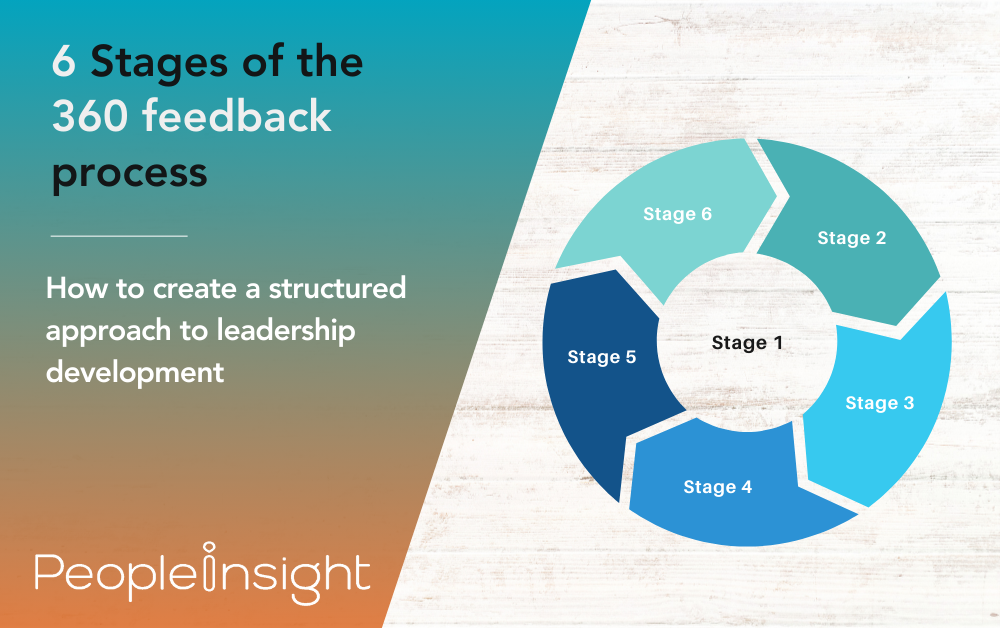
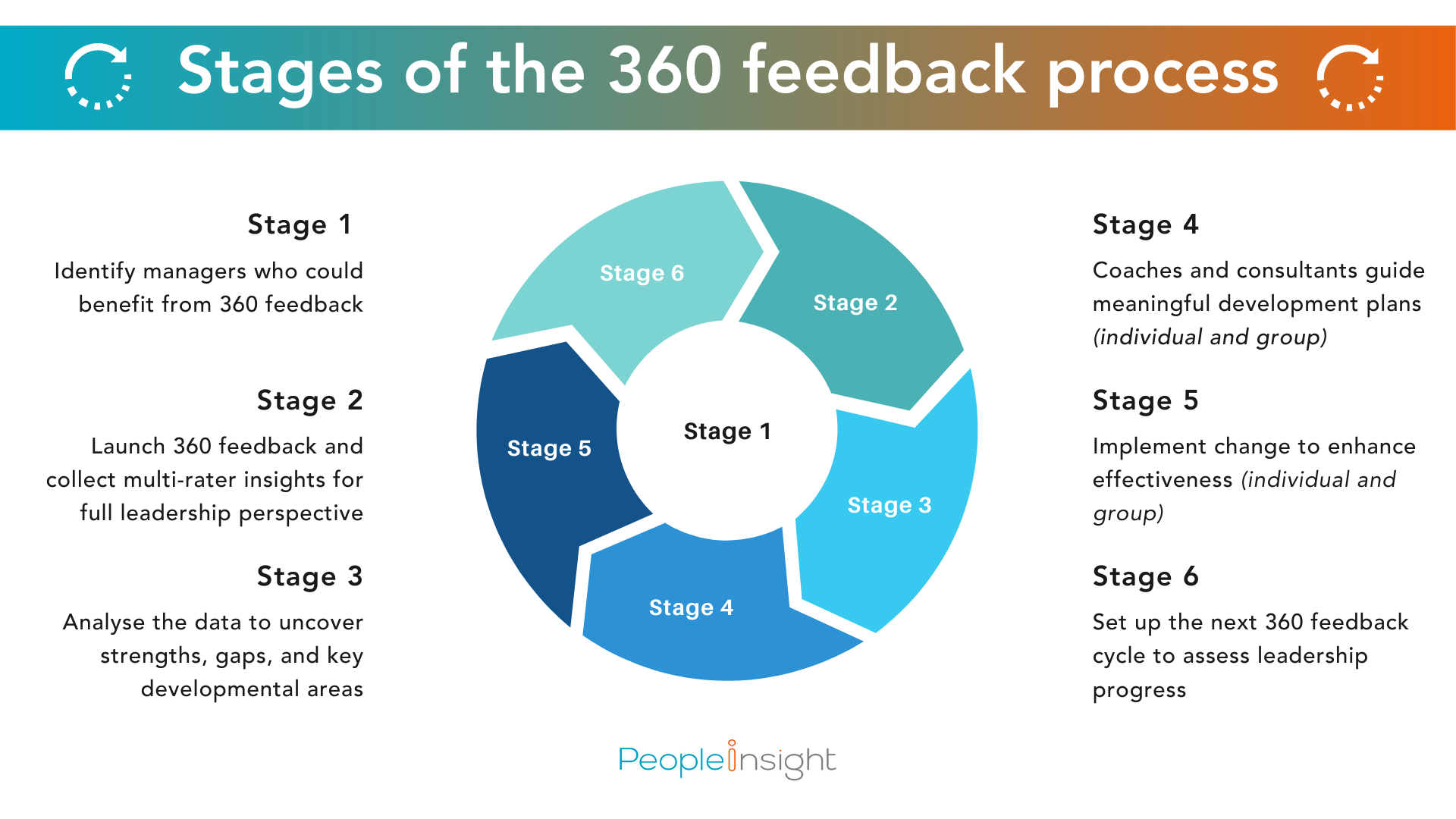
A well-executed 360 feedback process is designed to drive meaningful leadership development. Below, we outline the six key stages that organisations should follow to maximise the impact of their 360 feedback initiatives.
Stage 1: Identify managers who could benefit from 360 feedback
Not every manager needs to go through the 360 feedback process at the same time. The first stage involves selecting those who would benefit most from structured feedback. This might include:
Newly appointed managers who need guidance in their leadership approach.
High-potential employees being considered for senior leadership roles.
Experienced managers looking to refine their skills and adapt to evolving business needs.
Leaders facing challenges with communication, team dynamics or decision-making.
Selecting participants strategically ensures that the feedback received leads to practical, actionable development. Organisations that use targeted 360 feedback often see better leadership outcomes than those that implement it as a generic, company-wide initiative.
Stage 2: Launch 360 feedback and collect multi-rater insights
Once the right participants have been identified, the 360 feedback process moves into the data collection phase. At this stage, managers and their selected raters complete a structured feedback survey, designed to assess various leadership competencies. These might include:
Communication skills – how well the manager conveys information and listens to others.
Decision-making – how effectively they assess situations and take action.
Collaboration and influence – their ability to work with different teams and lead effectively.
Adaptability – how they respond to change and drive innovation.
To maintain transparency and engagement, it’s important to explain the purpose of the feedback process to all participants. Employees should feel confident that their responses will be used constructively rather than for punitive measures. Anonymous feedback collection is often the best approach, as it encourages honest responses.
Organisations that invest in clear communication during this phase typically see higher participation rates and more useful feedback.
Stage 3: Analyse the data to uncover strengths, gaps and key developmental areas
Collecting feedback is just the beginning. The real value comes from analysing the data to uncover patterns. A well-structured 360 feedback process identifies:
Areas of alignment, where self-perception matches external feedback.
Blind spots, where there is a discrepancy between how a manager sees themselves and how others perceive them.
Consistent themes, such as recurring strengths or challenges highlighted across multiple sources.
For example, a manager may rate themselves highly in strategic thinking, but their team may report that they struggle with clear communication. Recognising this gap is key to making meaningful improvements.
Many organisations use visual reporting tools such as heatmaps or radar charts to highlight key trends. Breaking down the data into clear themes helps managers focus on the most important areas rather than feeling overwhelmed by the volume of feedback.
Stage 4: Coaches and consultants guide meaningful development plans
A 360 appraisal without action leads nowhere. Once managers understand their results, the next step is to translate them into a structured development plan.
At this stage, professional coaches or internal consultants play a valuable role in helping participants:
Prioritise development areas based on feedback insights.
Set measurable goals that align with business objectives.
Develop action plans with practical steps for improvement.
One-to-one coaching sessions can be particularly effective, providing managers with the opportunity to explore feedback in more depth. Some organisations also use group coaching sessions to address common themes that emerge across multiple participants.
For example, if several managers struggle with delegation, a tailored leadership workshop on empowering teams might be introduced. By aligning individual development with organisational needs, businesses create a more cohesive leadership culture.
Stage 5: Implement change to enhance effectiveness
Development plans must translate into real-world actions. At this stage, managers start applying feedback-driven changes to their leadership approach. This could involve:
Seeking mentorship from senior leaders.
Attending targeted training programmes.
Practising new management techniques, such as more frequent one-to-one check-ins with employees.
Adjusting communication styles to address feedback about clarity or approachability.
Creating accountability mechanisms helps reinforce behavioural change. Some organisations introduce peer coaching or leadership accountability partnerships, where managers check in with each other on progress. Senior leaders and HR teams also play a role by monitoring improvements and offering ongoing support.
A report by the Institute of Leadership & Management found that managers who actively apply feedback see an increase in employee engagement and overall team performance. Leaders who take their development seriously not only improve their own skills but also contribute to a more engaged and productive workforce.
Stage 6: Set up the next 360 feedback cycle to assess leadership progress
Leadership development is not a one-time exercise—it requires continuous refinement. To assess progress, organisations should conduct another 360 feedback process after a set period (typically six to twelve months).
The follow-up cycle helps:
Measure whether managers have successfully addressed key areas for improvement.
Identify any new development opportunities.
Reinforce a culture of feedback and continuous learning.
Repeating the 360 feedback process over time allows businesses to track leadership growth at both an individual and organisational level. Managers who consistently engage with feedback tend to develop stronger, more adaptable leadership styles.
Effective leadership about self-awareness, adaptability and continuous development. The 360 feedback process provides managers with invaluable insights that help them refine their skills, improve team relationships and drive business success.
Organisations that implement structured feedback cycles see long-term benefits, including stronger leadership pipelines, higher employee engagement and improved workplace culture.
If you’re interested in the information we’ve outlined above, you might want to check out our webinar on the ABCs of 360 feedback, where we explore this topic in more detail.
If you’re looking to introduce a tailored 360 feedback process in your organisation, now is the time to take action. Get in touch to explore how structured feedback through our employee experience platform can drive leadership success and business growth.