



















Blogs:

What is 360 feedback?

How 360 degree feedback works, what it measures and why it matters

What is 360 feedback

    A quick insight: 360 feedback is a multi-source review process where people receive input from peers, direct reports, leaders and sometimes even customers. It gives a more complete picture of strengths, development areas and behaviour than traditional top-down reviews. When it’s done well, 360 feedback supports leadership development, improves self-awareness and helps organisations build stronger managers and healthier cultures.

    360 feedback has been around and kicking for decades, but today, it is more relevant than ever to the way people work. In organisations where collaboration, communication and leadership matter across teams, one person’s view is rarely ever enough.

    That is why 360 feedback remains such an incredibly useful development tool.

    Instead of relying on just a single manager’s opinion, 360 feedback gathers perspectives from different people who work with the individual in different ways. That makes it easier to understand how someone is experienced by others, where their strengths are and which behaviours may need attention.

    At People Insight, this also connects closely to Sharper listening. Smarter action. It is our approach to insightful, proactive employee listening and turning that insight into meaningful action. In a 360 context, that means gathering a fuller view of leadership and behaviour, then using that insight to support more focused development and better follow-through.

    Read further: Developing your leadership with 360 feedback

    What is 360 feedback?

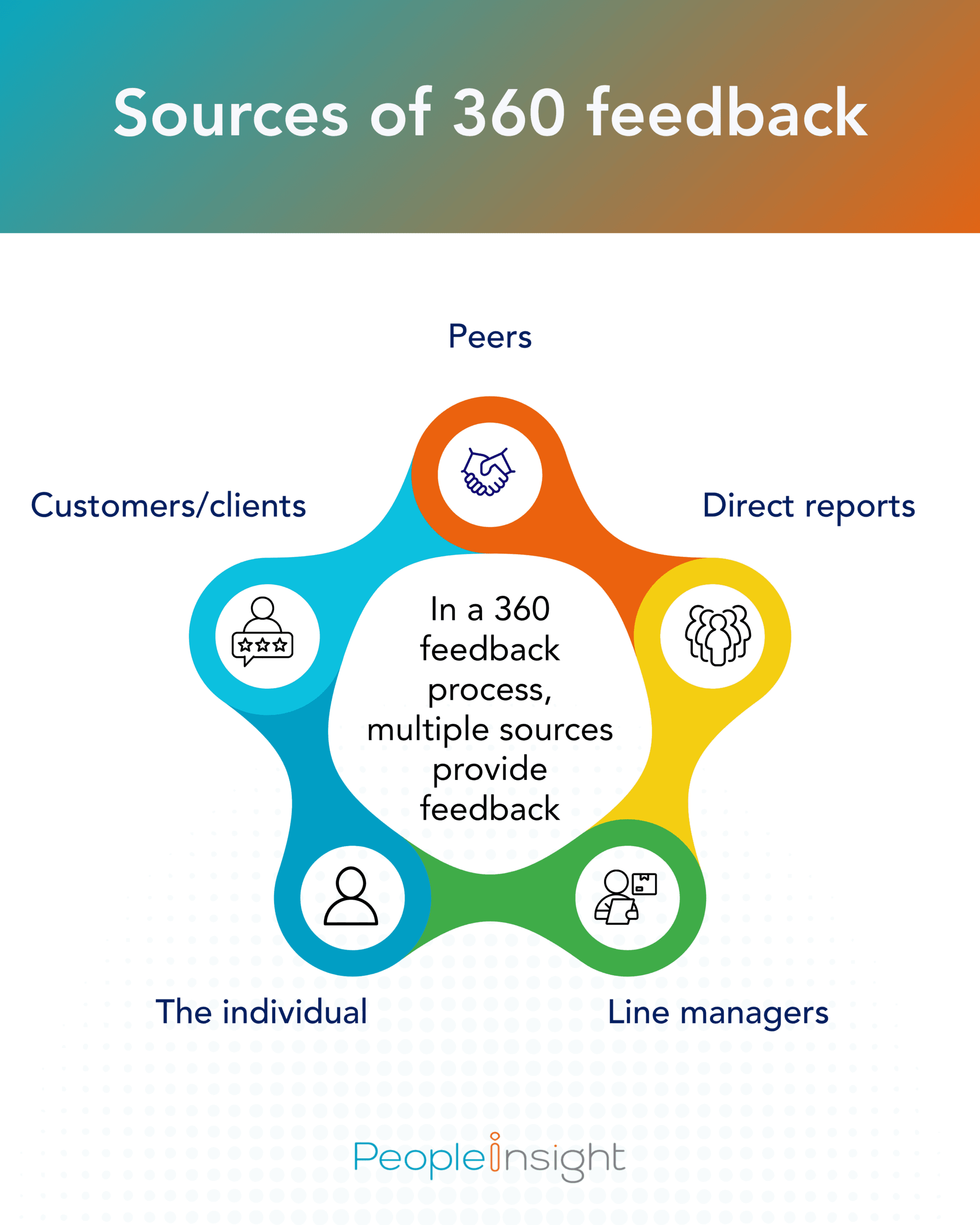
    In a 360 feedback process, multiple sources provide feedback on an individual’s behaviour and performance. That usually includes:

    360 sources

    • peers
    • direct reports
    • line managers
    • the individual themselves through self-assessment
    • sometimes customers or clients, depending on the role

    The “360” refers to the all-round perspective this creates. Instead of seeing performance through one lens, the individual receives a broader picture of how they are perceived across the people they work with.

    That is what makes 360 degree feedback different. It is designed to create a more rounded view of behaviour, strengths and development areas.

    Related: The many benefits of 360 feedback

    How does 360 feedback work?

    A typical 360 feedback process follows a clear structure.

    First, the organisation decides who the feedback is for and what the purpose is. In most cases, the goal is development rather than formal performance management.

    Next, a group of relevant respondents is selected. These are the people who work closely enough with the individual to give meaningful feedback.

    Participants then complete a structured survey, usually made up of behaviour-based statements and, in some cases, open-text comments. The results are grouped and anonymised where needed, then shared with the individual in a report or debrief session.

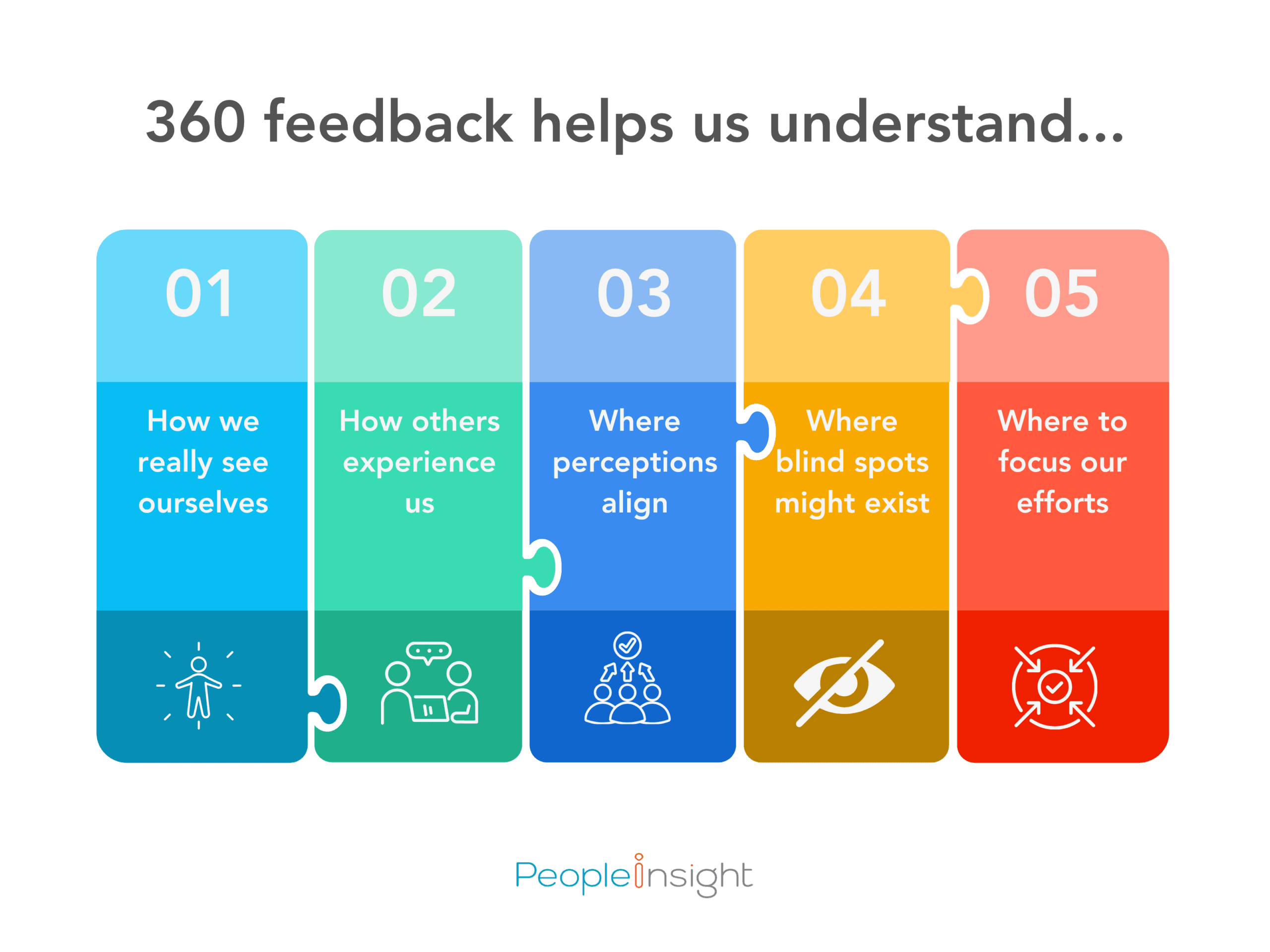
    360 feedback helps us understand...

    That process helps the person being assessed understand:

    • how they see themselves
    • how others experience them
    • where perceptions align
    • where there may be blind spots
    • what to focus on next

    A strong 360 feedback tool makes this process easier to run, analyse and communicate.

    How is 360 feedback different from traditional feedback?

    Traditional feedback usually follows a top-down model. A manager gives input on someone’s performance based on what they see and how they judge results.

    That can be useful, but it is limited.

    A line manager will not always see how someone collaborates or communicates across the organisation. 360 feedback fills that gap by broadening the input beyond one person’s view.

    There is also a difference in purpose.

    A traditional appraisal is often tied to performance ratings, pay or promotion. 360 feedback is usually more developmental. It is intended to support self-awareness, growth and better leadership behaviour over time.

    What does a 360 feedback survey measure?

    A 360 feedback survey can be designed to measure a wide range of behaviours and skills, depending on the role and what the organisation wants to understand.

    Common areas include:

    1. Communication

    How clearly and effectively does the individual communicate with others? This can include active listening, clarity, openness and responsiveness.

    2. Leadership

    For people in leadership roles, 360 feedback often looks at how well they guide, support and influence others. This may include decision-making, delegation, direction-setting and team support.

    3. Teamwork

    How well does the individual work with others? This includes collaboration, respect, reliability and contribution to the wider team.

    4. Interpersonal skills

    This covers relationship-building, empathy, trust, respect and how well someone handles conflict or difficult situations.

    5. Problem-solving and judgement

    360 feedback can help assess how someone responds to challenges, works through issues and makes decisions.

    6. Accountability

    This includes follow-through, ownership and whether someone can be relied on to do what they say they will do.

    7. Adaptability

    This looks at how well someone responds to change, uncertainty or pressure.

    8. Customer or stakeholder focus

    Where relevant, 360 feedback can assess how well the person understands and responds to external or internal stakeholders.

    9. Self-awareness and emotional intelligence

    This is one of the most valuable parts of 360 feedback. It helps people understand how their intentions, behaviours and impact are experienced by others.

    Related: Emotional intelligence in leadership: Why is it important?

    What are the benefits of 360 feedback?

    Done well, 360 feedback can create real value for both individuals and organisations.

    1. It improves self-awareness

    One of the biggest benefits of 360 feedback is that it helps people see how they are experienced by others, not just how they see themselves.

    2. It supports leadership development

    360 feedback is often especially useful for managers and leaders because their impact is shaped by behaviour as much as technical skill. It helps show where leadership style is helping and where it may be holding others back.

    3. It reduces single-source bias

    Because feedback comes from multiple perspectives, the results are usually more balanced than one person’s opinion alone.

    4. It creates more useful development conversations

    A structured 360 process gives managers, coaches and participants something more concrete to work from. Instead of relying on broad impressions, they can focus on patterns and priorities.

    5. It helps organisations build better leadership capability

    When used consistently, 360 feedback can strengthen leadership pipelines, improve line management and support healthier workplace culture.

    If you want to see how stronger management insight can support engagement more broadly, our Cancer Research UK case study is a useful example of how manager understanding and support can shape employee experience.

    What are 360 feedback best practices?

    A 360 process is only useful if it is designed well. These are the most important principles to get right.

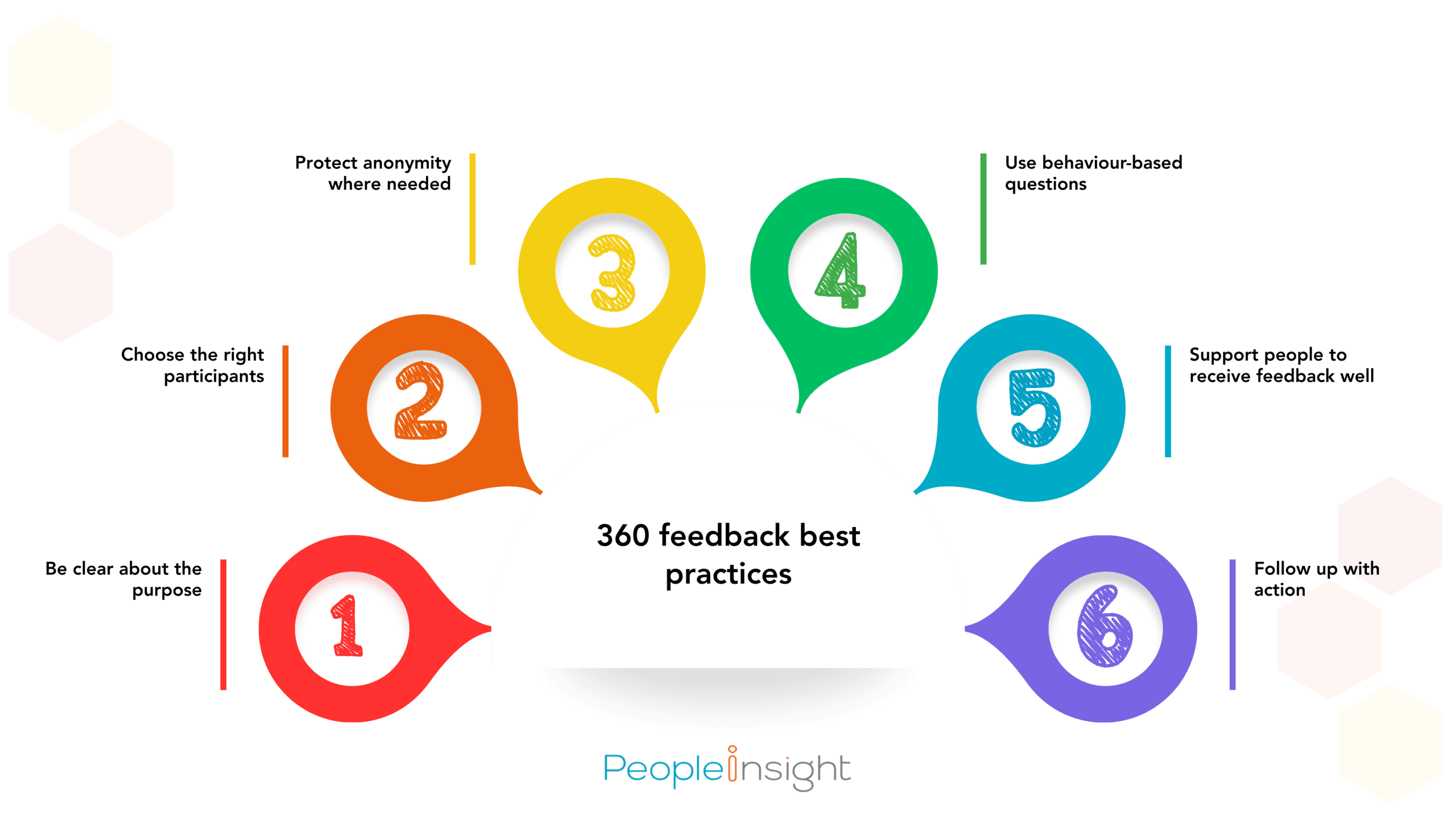
    360 feedback best practices

    1. Be clear about the purpose

    People need to understand why the process is happening. If the aim is development, say so clearly. If people assume the process is really about performance ratings or judgement, trust will drop quickly.

    2. Choose the right participants

    Feedback should come from people who genuinely know the individual’s work and behaviour. Relevance matters more than volume.

    3. Protect anonymity where needed

    If respondents do not feel safe, the feedback will be less honest. Anonymity helps increase candour and trust, especially for peer and direct-report feedback.

    4. Use behaviour-based questions

    The survey should focus on observable behaviours rather than vague personality judgements. That makes the feedback more specific, fair and actionable.

    5. Support people to receive feedback well

    Receiving 360 feedback can be challenging. A strong process gives people enough support to understand the results, reflect well and identify useful next steps.

    6. Follow up with action

    Feedback only creates value when it leads to change. A good 360 process ends with a development plan, not just a report.

    This is one reason coaching can be so valuable alongside 360 feedback. It helps people process the feedback properly and turn it into focused action.

    Common mistakes to avoid with 360 feedback

    A few common issues can reduce the value of the process.

    1. Using it mainly for judgement

    If 360 feedback feels like a hidden performance review, people are less likely to trust it.

    2. Choosing the wrong raters

    Feedback is only useful when it comes from people with enough direct experience to comment meaningfully.

    3. Asking vague or poorly written questions

    Generic or unclear questions usually lead to weaker insight.

    4. Skipping support and follow-through

    Dumping a report on someone without context, conversation or next steps can do more harm than good.

    5. Treating it as a one-off event

    360 feedback is most useful when it sits inside a broader leadership development approach rather than being treated as a standalone exercise.

    If you want to see how leadership and development work can support wider engagement over time, our Crest Nicholson case study is a useful example.

    Improve leadership development with People Insight

    360 feedback is one of the most effective ways to build self-awareness, strengthen leadership and support meaningful development.

    When it is designed well, communicated clearly and followed up properly, it can help individuals understand their impact more fully and give organisations a stronger foundation for leadership growth.

    At People Insight, we help organisations run 360 feedback in a way that is structured, insightful and practical. Through our platform, Prism (our integrated AI), proven models and expert support, we help leaders turn multi-source feedback into meaningful progress.

    Want to explore how 360 feedback could support your leaders? Talk to us about our 360 feedback approach.

    FAQs about 360 feedback

    A quick run down on all you need to know

    What is 360 feedback?

    360 feedback is a multi-source feedback process where an individual receives input from people around them, such as peers, direct reports, managers and sometimes customers, as well as from their own self-assessment.

    What is the purpose of 360 feedback?

    The main purpose of 360 feedback is development. It helps people understand how they are experienced by others, identify strengths and focus on areas for improvement.

    How is 360 feedback different from an appraisal?

    An appraisal is usually a top-down review linked to performance management. 360 feedback is broader and more developmental, using multiple perspectives to build self-awareness and support growth.

    What does a 360 feedback survey measure?

    A 360 feedback survey can measure communication, leadership, teamwork, accountability, adaptability, interpersonal skills and emotional intelligence, depending on the framework used.

    Is 360 feedback anonymous?

    Yes. Anonymity helps people give honest feedback and increases trust in the process.

    Who should take part in 360 feedback?

    The most useful participants are people who work closely enough with the individual to comment meaningfully on their behaviour and impact.

    How can 360 feedback help leaders?

    360 feedback helps leaders understand how they are perceived by others, improve self-awareness and focus on the behaviours that matter most for effective leadership.

    How can People Insight help with 360 feedback?

    People Insight helps organisations run 360 feedback through an intuitive platform, proven models and expert support that turns multi-source feedback into clear development priorities.