Increase profitability by 23%
 Boost productivity by 21%
 Increase profitability by 23%
Boost productivity by 21%
Increase profitability by 23%
Boost productivity by 21%
A quick insight: Young employees often begin their careers with limited experience in managing workplace stress, expectations and boundaries, which can strain their mental health and confidence. Supporting them means creating psychological safety from day one, setting clear boundaries around work, giving regular meaningful feedback, promoting wellbeing genuinely and helping them build connections so they feel supported, understood and able to thrive.
It takes more than good tech and polite onboarding to support young employees entering the workforce for the first time. A great deal of graduate and early-career professionals start their roles with limited knowledge of how to manage workplace stress, communicate concerns or draw healthy boundaries.
While these skills often naturally develop with time, the pressure to perform and ‘fit in’ can very quickly overwhelm younger employees. If businesses don’t actively support the mental health of young employees, they risk higher turnover, presenteeism and, of course, disengagement.
Recent statistics can be hard to come by, but according to Mind, nearly one-third (31%) of 16–24 year olds in the UK reported symptoms of depression or anxiety in 2017–2018, which was up from 26% five years earlier. Clearly, this indicates a significant rise in mental health issues among young people over time. Employers have an opportunity, and a responsibility, to support this group meaningfully from day one.
Our benchmark data here at People Insight (sourced from hundreds of thousands of data points) shows us that 70% of employees aged between 18-29 feel that their company does enough to support their health and wellbeing at work. This is a great start. But there’s always more we can do to ensure the remaining 30% feel supported enough to do their best work.
Knowing where to start isn’t always easy. What exactly is it that younger people need to feel engaged with their work, supported and motivated? Our HR consultants and company culture experts have joined together with their decades of workplace experience to compile this list of 7 tips.

It goes without saying that those new to the world of work face unique challenges compared to their older colleagues. Understanding these challenges, what they are and why they matter, is the first step to alleviating the stress and strain younger employees experience.
The stressors themselves will vary, but may likely include:
Taken together, these factors can undermine the mental health of young employees. They also impact performance, team dynamics and long-term engagement.
Related: Supporting mental health in emergency services: What needs to change?
Psychological safety is the belief that you can speak up without fear of embarrassment or punishment, and it plays a major role in the mental health of young employees. Those new to the workplace are especially sensitive to how mistakes or uncertainty are handled.
To create a psychologically safe environment:
It’s tempting for early-career employees to go above and beyond in an effort to impress. But when boundaries aren’t respected (or clearly modelled by others) this can lead to burnout and low morale. Helping young employees understand and hold their boundaries is one of the most effective ways to protect their mental health.
Organisations should:
Constructive feedback is invaluable, especially for those early in their careers. Without it, young employees may assume silence means disapproval or that they’re not doing well. That uncertainty takes a toll on confidence and wellbeing. Feedback that’s regular, thoughtful and two-way contributes to confidence and a greater sense of belonging.
To support the mental health of young employees, make feedback a habit, not a high-stakes event:
If employees see mental health mentioned only on posters or during Mental Health Awareness Week, it’s easy to assume the business isn’t genuinely invested. Make wellbeing part of the culture, not a side conversation.
Here’s how:
While hybrid and remote work certainly have their advantages, they can be particularly difficult for those new to work. Without informal chats or day-to-day visibility, young employees may feel isolated or uncertain about how others are doing things.
To reduce this:
Employee listening isn’t just about collecting data. It’s about understanding what matters, especially to younger employees who may not speak up directly. Use anonymous employee surveys, listening sessions and feedback platforms to surface hidden concerns.
For example:
It’s important that we welcome, support and motivate people at the earliest stages of their careers. A workplace where younger employees feel safe to speak up, ask for help and be themselves is one that attracts and keeps talent.
Regular employee surveys, combined with honest conversations and day-to-day listening, offer more than metrics. They reflect the real experience of your people. And when you act on those insights, you create the kind of culture where mental health is promoted in the best possible ways.
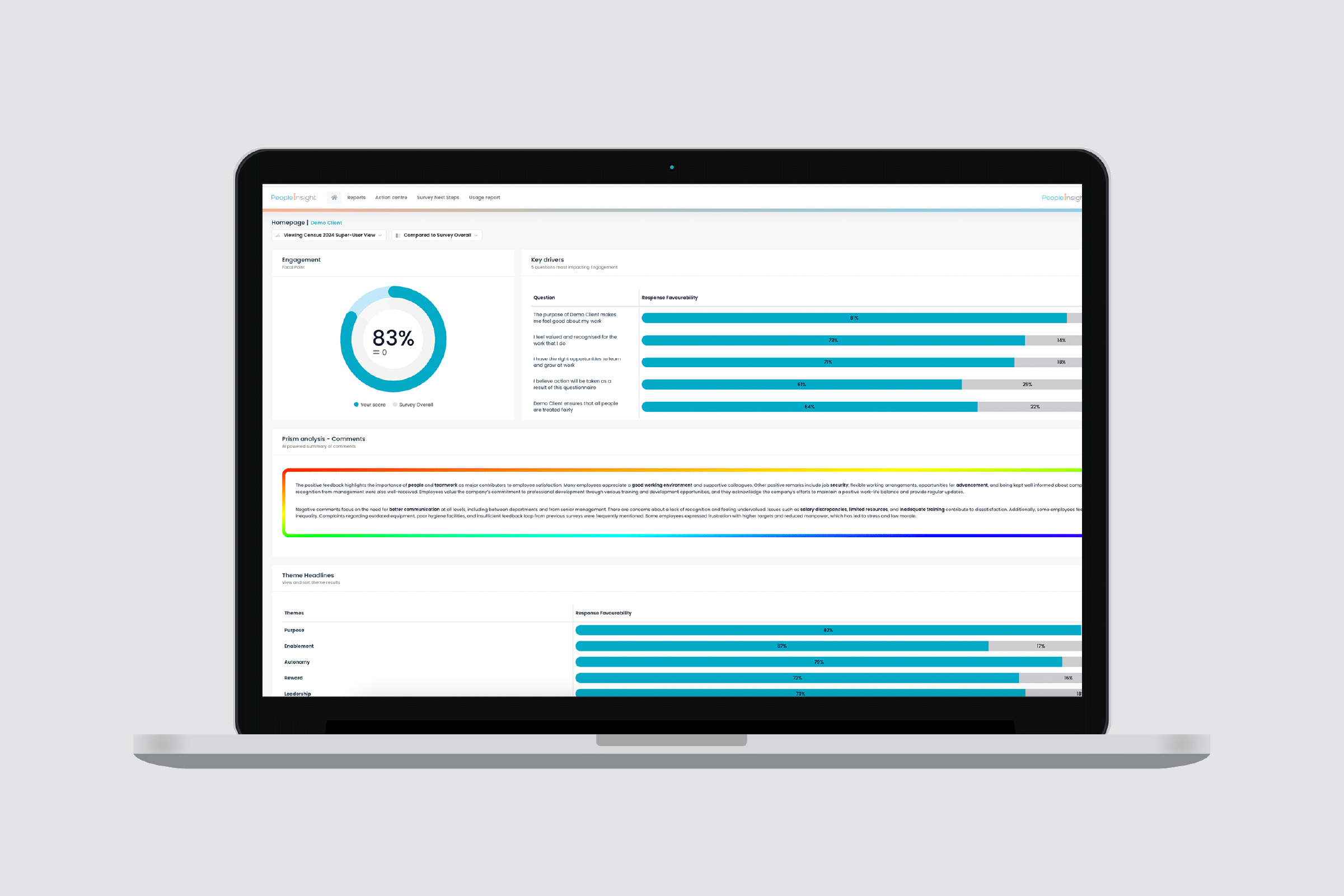
Want to understand how your younger employees are really feeling? Our employee survey platform helps businesses to track wellbeing, psychological safety and early-career engagement. With impactful survey results and actionable feedback, you can create meaningful change that supports the mental health of young employees from day one.
Talk to us today about how we can support you and how you can create the perfect environment for remarkable performance. Get your next survey started now. Or click here for a sample of free wellbeing survey questions.