



















Our experienced team works alongside organisations to help them design, deliver and communicate their listening programmes. From survey distribution to strategic guidance, we’re here when you need us
A quick insight: Managers focus on structure, processes and day-to-day delivery, while leaders inspire, set direction and drive long-term change. Both roles are valuable and most people will find themselves wearing both hats at times. This blog explores the difference, why it matters and how to grow leadership capability in meaningful ways.
We often throw around the words “manager” and “leader” as if they are interchangeable. And to be fair, many managers are asked to lead, while plenty of leaders still find themselves managing.
But the two roles are not the same. Managers focus on keeping things running smoothly, while leaders look ahead and inspire people to move forward. Knowing the difference can have a big impact on how organisations grow talent, shape culture and plan for the future.
Let’s take a deeper look at the difference between management and leadership, how they can be defined, common misconceptions and how leaders and how to develop leadership skills in a meaningful way.
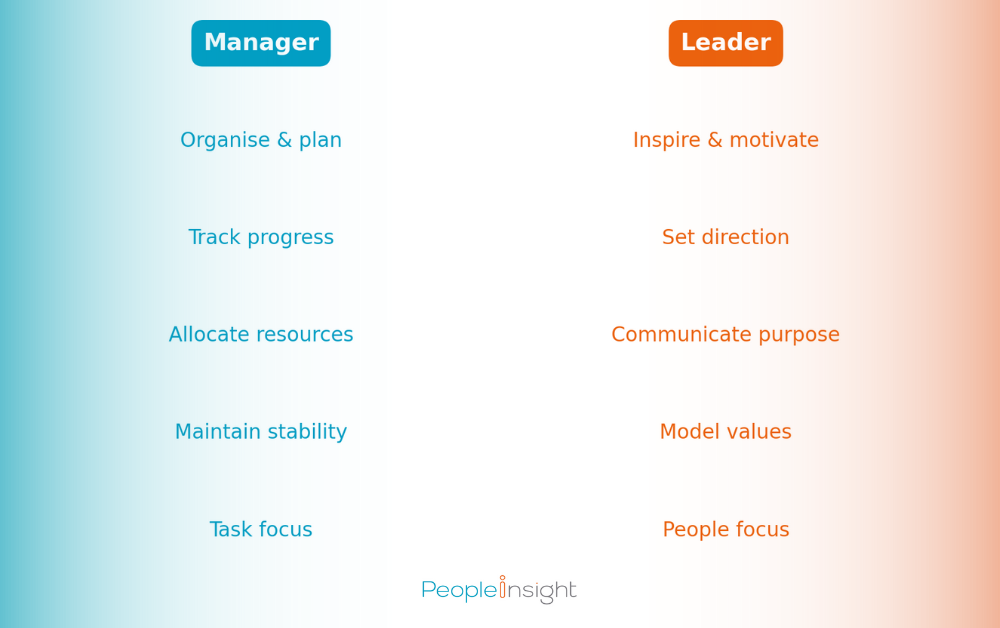
A manager is primarily responsible for overseeing day-to-day operations, coordinating resources and making sure targets are met. They handle the planning, organising and monitoring that keep work on track. A manager might run a project plan, track progress against KPIs or assign responsibilities to make sure deadlines are met.
A leader, on the other hand, focuses on vision, inspiration and long-term direction. Leaders are the ones who rally employees behind a purpose, create a culture people want to be part of and help employees see how their contribution connects to the bigger picture. A leader might launch a bold new initiative, inspire a team to bounce back after setbacks or model behaviours that signal organisational values.
Both roles are valuable and necessary. Organisations need the discipline of good management and the inspiration of strong leadership to do well and compete.
How managers and leaders complement each other
It is easy to think of managers and leaders as being on opposite sides, but the reality is they work best together.
Managers bring structure and predictability, while leaders bring energy and vision.
Picture a sailing crew: the manager is the navigator, checking the charts and tying the ropes. The leader is the captain, setting the course and encouraging the crew through rough seas. Take one away and the journey falters. In most organisations, people end up wearing both hats at different times. A manager might be reviewing rotas in the morning and rallying the team through change in the afternoon. That is why building both sets of skills, and giving people the right support, makes such a difference.
Real-world examples that show the difference
Examples make the distinction clearer, so let’s take a look at a few real-world scenarios:
Scenario 1: A project delay. A manager checks why deadlines were missed, reallocates resources and sets a new timeline. A leader speaks to the team about lessons learned, keeps morale high and reminds them why the project matters.
Scenario 2: Employee wellbeing concerns. A manager arranges cover for staff absence and updates policies. A leader talks openly about wellbeing, shares their own experiences and role models balance, making it easier for employees to speak up.
Scenario 3: Flexible working. A manager ensures schedules are updated and client needs are covered. A leader explains why flexibility is important, links it to organisational values and demonstrates trust in employees.
The examples above show clearly why both perspectives are needed to solve these challenges effectively.
Why the difference matters for organisations
The impact of good management and leadership extends far beyond smooth operations. Research shows that leadership behaviours directly influence employee engagement, wellbeing and retention. For example, when leaders communicate openly and coach employees, engagement levels rise. Conversely, when managers focus only on tasks without recognising people, engagement falls and turnover increases.
Our own People Insight data highlights the gap. Only 59% of employees believe action will be taken following a survey, suggesting leaders sometimes fail to follow through. Only 65% say their manager takes the time to coach them and develop their skills. And just 68% say they receive regular feedback on how they are doing. These are not small gaps. They signal that developing leadership capability should be a priority for every organisation.
Developing leadership skills in managers
Strong leaders are not born. They are developed through experience, reflection and feedback. Many managers are promoted based on technical expertise, not leadership ability, which means they need support to grow into the role.
One of the most effective tools is 360 feedback. Unlike traditional top-down reviews, 360 feedback gathers perspectives from a range of sources: peers, direct reports and senior colleagues. This gives managers a rounded view of their strengths and areas for development. Combined with executive coaching, it becomes a powerful way to encourage continual improvement and self-reflection.
At People Insight, we see how 360 feedback helps managers move beyond task focus into true leadership behaviours. They start to coach more effectively, communicate with greater clarity and connect with employees on a human level. The result is stronger engagement and better organisational performance.
The consequences of getting it wrong
The distinction between management and leadership is not just theoretical. It has real consequences.
When organisations rely too heavily on management, employees may feel micromanaged, undervalued and disconnected from purpose. Burnout and attrition follow.
When organisations rely too heavily on leadership without strong management, big visions may never translate into action. Strategy stalls and employees grow frustrated.
Balance is the answer. Leaders set the destination. Managers make the journey possible.
Common myths about managers and leaders
There are some persistent myths worth challenging:
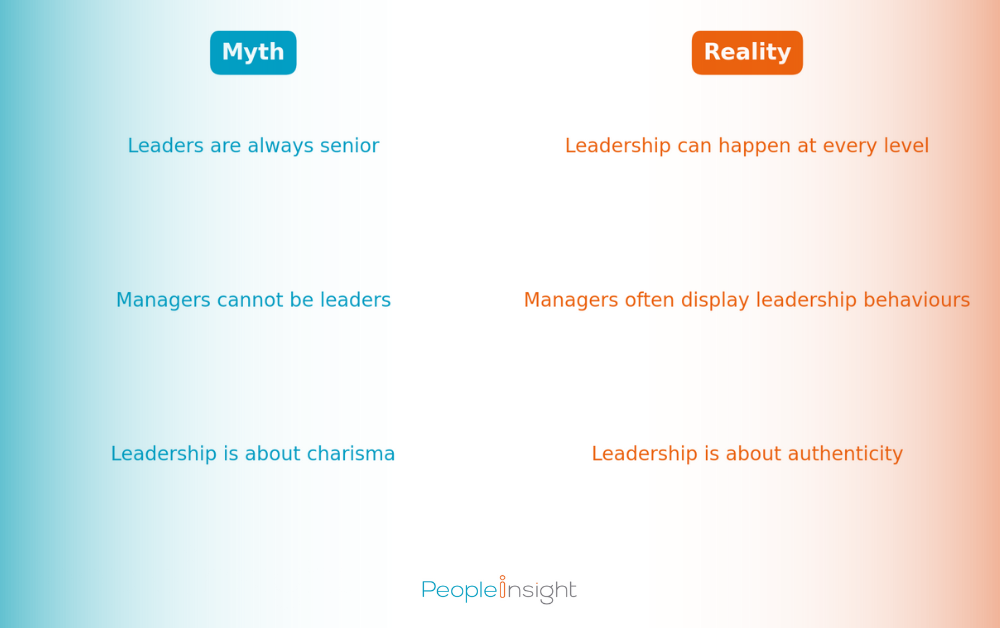
“Leaders are always senior.” Not true. Leadership can happen at every level. A junior employee who inspires peers and models values is a leader.
“Managers cannot be leaders.” In reality, many managers display strong leadership behaviours. With the right support, they can develop further.
“Leadership is about charisma.” Leadership is about authenticity, not showmanship. Quiet, thoughtful leaders can be just as impactful as bold, outspoken ones.
Breaking these myths helps organisations spot and nurture leadership potential in unexpected places.
Understanding the difference between management and leadership matters because it helps organisations develop both sets of skills in balance. Employees want managers who organise well and leaders who inspire confidence. By investing in leadership development through tools like 360 feedback, coaching and employee surveys, organisations can build managers who not only deliver tasks but also drive meaningful change.