

















Our experienced team works alongside organisations to help them design, deliver and communicate their listening programmes. From survey distribution to strategic guidance, we’re here when you need us
A quick insight:Coercive leadership is a directive style that relies on control and compliance. This style can create fast results in crisis situations, but can damage morale when overused. Here, we explain how coercive leadership works, what it looks like in practice and how leaders can manage its impact through balanced habits and 360 feedback.
There are many moments when leaders face pressure. Targets slip. Issues snowball. A crisis hits and everyone waits for a decision. In these situations some leaders default to command. Enter coercive leadership.
Coercive leadership appears simple at first. You set the direction, others follow and progress restarts. Yet this style can shape a culture in ways leaders do not always expect.
Our Goleman leadership style quiz has been taken by more than 24,000 people. Only 5.6% of respondents show a coercive preference. It is a small group, yet the style is important to understand because it appears in moments of high stress and affects how teams feel and perform.
This blog explores the coercive leadership style within the Daniel Goleman framework. It explains how it works, the traits linked to it, famous examples, the strengths and drawbacks of the approach and how 360 feedback can help leaders use the style more wisely.
Coercive leadership is a style defined by strict direction and clear instruction. The leader takes control of decisions, sets the pace and expects immediate compliance. Goleman highlights it as a leadership approach suited to urgent situations that need decisive action.
Coercive leaders often focus on authority and fast delivery. They remove ambiguity and take responsibility for choices. This can stabilise a team when conditions are chaotic. The issue is, because the style reduces autonomy and trust, it tends to harm engagement when applied long-term.
Coercive leadership appears in phrases like “Follow this plan” or “Stick to my process.” Employees may appreciate the clarity if they feel overwhelmed, although they also report frustration when their voices are not considered.
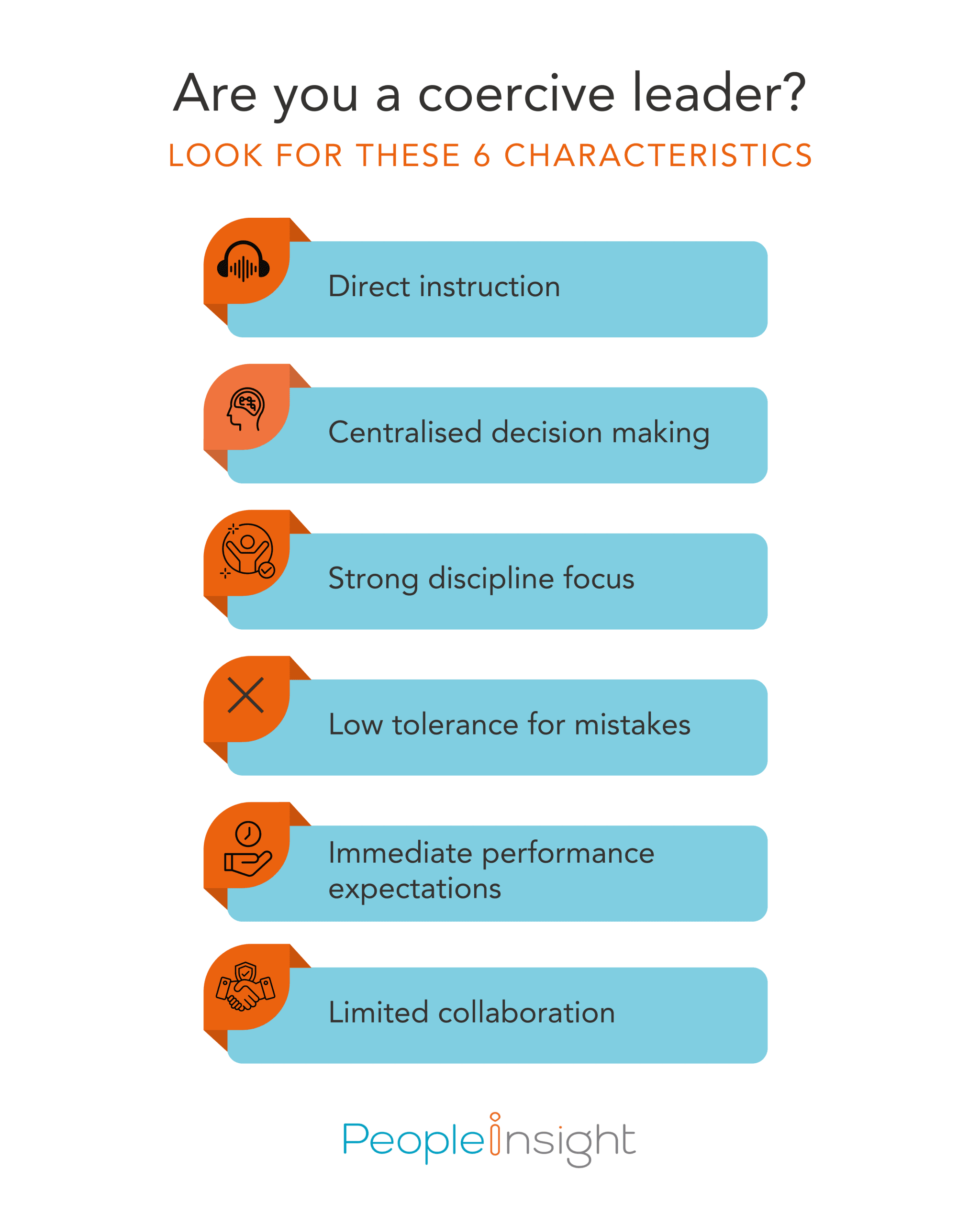
6 Key characteristics of coercive leadership
Coercive leaders commonly display several consistent traits. These traits can be strengths in specific situations although they create challenges if used for too long.
1. Direct instruction
They give very clear, unambiguous orders that leave no room for negotiation. This creates fast execution.
2. Centralised decision making
The leader makes choices alone rather than involving others. This prevents delay but narrows perspectives.
3. Strong discipline focus
Rules, procedures and consequences are emphasised. Compliance becomes the priority.
4. Low tolerance for mistakes
Errors are treated seriously. This creates accuracy yet also increases fear within the team.
5. Immediate performance expectations
Coercive leaders push for rapid improvement. They aim for quick wins during pressure.
6. Limited collaboration
Team input is reduced. The leader drives work through authority rather than shared planning.
Famous examples of coercive leaders
History and public life offer several well-known figures who used a directive or highly controlling approach during key moments in their careers. Their styles show how coercive leadership can achieve rapid results in crisis situations, while also creating strain when conditions no longer justify strict control.
Sir Winston Churchill
Churchill adopted a highly directive style during the Second World War. His clear orders and uncompromising expectations helped Britain respond quickly to wartime threats. His approach was less effective in periods that required consensus and collaboration.
General George S. Patton
Patton was known for strict discipline, rapid decision making and zero tolerance for hesitation. His coercive style helped drive successful military campaigns. It also created tension with those who preferred more collaborative command structures.
Margaret Thatcher
Thatcher often used a strong directive approach, particularly during economic reform and industrial conflict. Her firm stance enabled fast action. It also contributed to polarised views and rising resistance within parts of her party.
Steve Jobs
Jobs demonstrated a demanding and sometimes coercive style in pursuit of product excellence at Apple. His clear vision and strict expectations drove innovation and quality. This approach could also create pressure for teams who needed more autonomy.
Howard Schultz
During key turnaround phases at Starbucks, Schultz used tighter control and directive action to stabilise the business. This helped reset standards and protect customer experience. His leadership later shifted into more participative modes once stability returned.
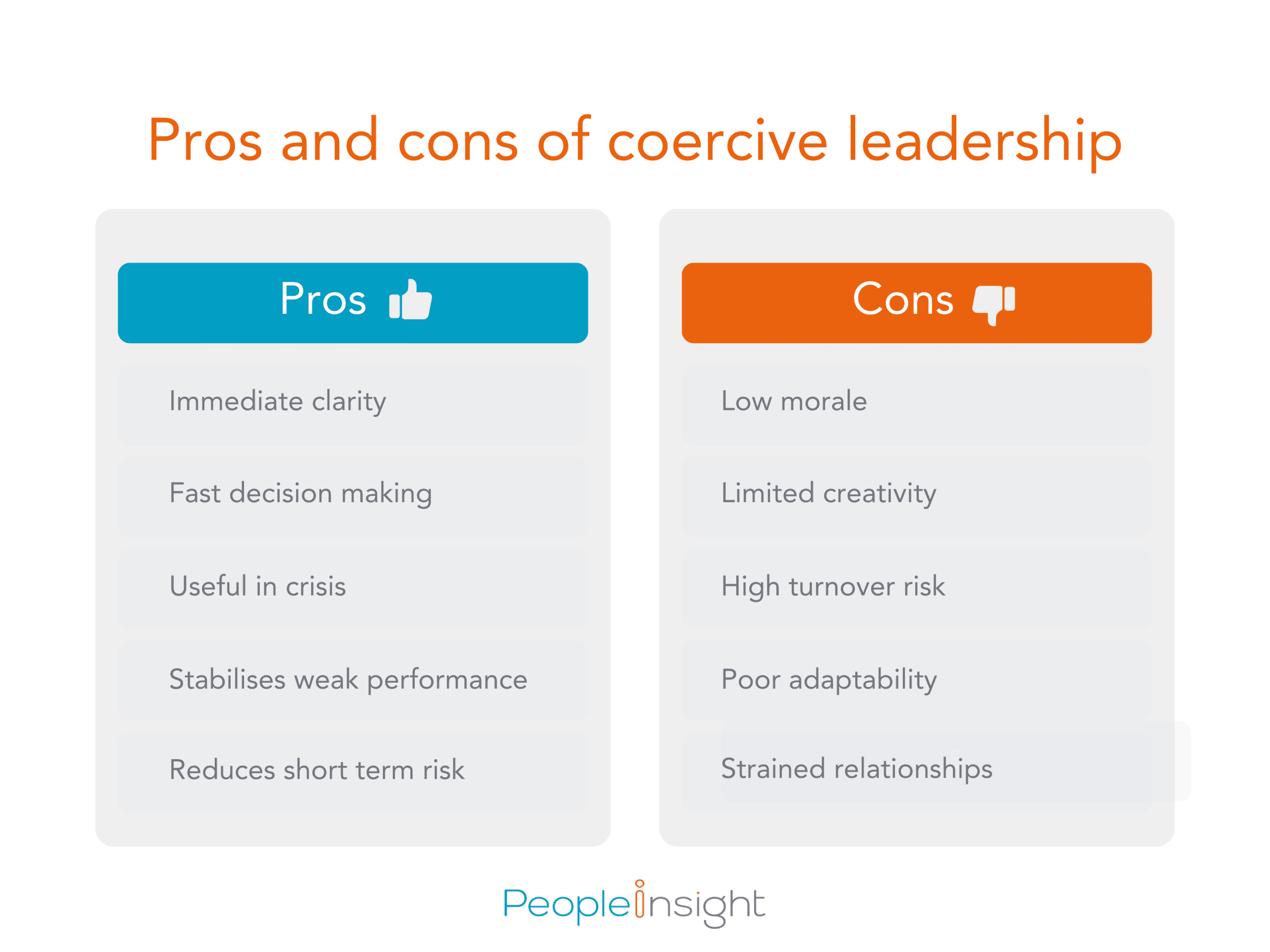
Five pros of coercive leadership
Coercive leadership brings clear advantages when conditions demand fast or decisive management.
Immediate clarity Employees know exactly what to do. This reduces confusion during high pressure phases.
Fast decision making Work moves quickly because the leader makes choices without delay.
Useful in crisis When safety, reputation or financial stability is at risk, this style brings order.
Stabilises weak performance Strict structure can reset expectations after a period of drift.
Reduces short term risk By controlling actions closely, the leader limits mistakes that could worsen a crisis.
Five cons of coercive leadership
Used for too long, this style normally harms team culture and engagement.
Low morale Staff can feel controlled or dismissed. Motivation drops quickly.
Limited creativity Employees stop offering ideas because they expect them to be ignored.
High turnover risk People often seek new roles when autonomy is reduced.
Poor adaptability Teams become reliant on the leader and struggle to act independently.
Strained relationships A controlling tone can damage trust. It often leads to conflict or passive resistance.
What coercive leaders hear in 360 feedback
360 feedback is one of the most effective ways to help coercive leaders understand the impact of their style. Quantitative ratings provide one view although written comments often reveal hidden patterns in employee sentiment. Prism insights can help leaders see these themes clearly and turn them into actionable feedback.
Common strengths in 360 feedback
Colleagues often praise coercive leaders for:
Decisive action when teams feel stuck
Calm confidence during crisis
High standards that support accuracy
Reliability when the organisation needs stability
Commitment to delivering results
These strengths can position the leader as a powerful stabiliser. They often shine when the organisation faces pressure or when teams lack structure.
Common growth areas
Development themes often include:
Difficulty listening to alternative views
Limited trust in others
Rising tension within the team
Unclear boundaries between necessary oversight and micromanagement
When Prism surfaces these comments leaders often see the emotional effect of their behaviour for the first time. This helps them shift toward healthier habits while still using decisive direction when required.
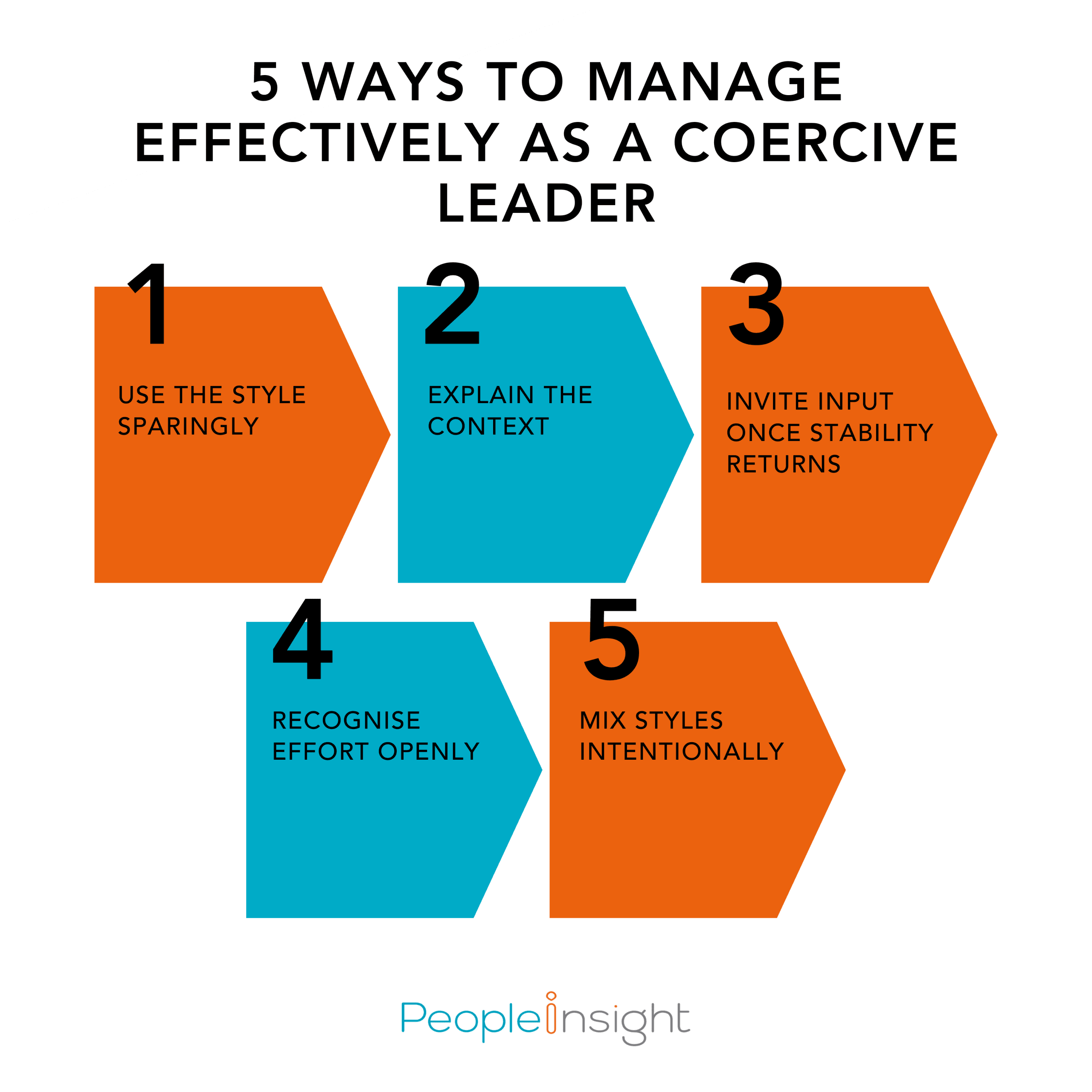
How to manage effectively as a coercive leader
Coercive leaders do not need to abandon their style. They need to use it carefully. Here are five practical tips to help them manage with balance and maturity.
1. Use the style sparingly
Apply the approach only when needed. Crisis, safety issues or severe performance gaps justify it. Routine work does not.
2. Explain the context
Tell the team why faster or stricter direction is needed. Context reduces tension and increases cooperation.
3. Invite input once stability returns
After an urgent phase, ask the team what they see, what is working and what needs improvement. This restores autonomy.
4. Recognise effort openly
Positive recognition rebuilds morale after strict periods. Small acknowledgements can reset trust quickly.
5. Mix styles intentionally
Blend the coercive style with coaching or affiliative behaviours. This helps you create meaningful change and strengthen your culture.
A more balanced style produces impactful survey results, richer employee sentiment and teams that think independently while respecting clear leadership.
If you want support using 360 feedback or employee surveys to help leaders grow with confidence, contact us to see how we can take your company culture from great to exceptional.