

















Blogs:

What is an employee survey? Your 2026 guide

From what a survey is to how it can help you, we cover all the bases in this comprehensive guide

What is an employee survey

    A quick insight: An employee survey is a structured way to understand what people are experiencing at work. But the real value comes after the results are in. The best surveys help organisations listen clearly, identify what needs attention and turn feedback into focused action employees can see.

    Employee surveys are one of the most common ways organisations listen to their people. Done well, they give leaders a clear view of what employees are experiencing, what is helping or holding them back and where action is needed most.

    But an employee survey is only useful if it leads somewhere. Asking questions is the starting point. The real value comes from understanding the results, sharing what has been heard and taking action employees can see.

    In this guide, we explain what an employee survey is, what it measures, why it matters and how to turn employee feedback into meaningful improvement.

    Related: The most actionable employee survey platform for change

    What is an employee survey?

    An employee survey is a structured way to ask employees about their experience at work.

    It helps organisations understand how people feel about key areas such as engagement, leadership, communication, wellbeing, recognition, inclusion, development and confidence in the future. A good employee survey gives HR teams and leaders evidence they can use to improve the employee experience and make better decisions.

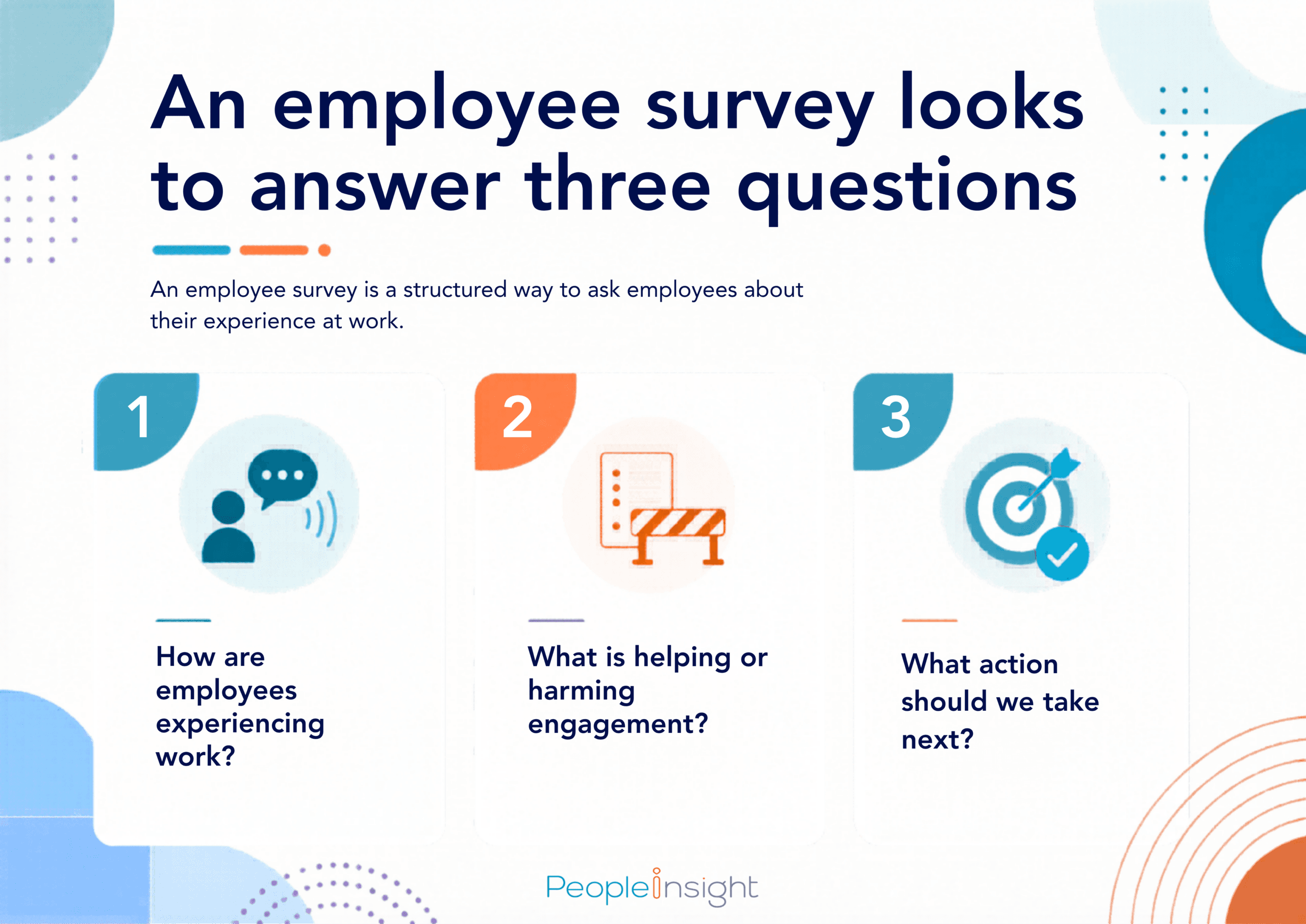
    In simple terms, an employee survey helps answer three questions:

    An employee survey looks to answer three questions

    • How are employees experiencing work?
    • What is helping or harming engagement?
    • What action should we take next?

    The strongest employee surveys do a whole lot more than collect feedback. They create a clear listening cycle: ask, understand, act and follow up.

    That is why survey design, reporting and follow-through are so important. Employees need to trust that their feedback is being listened to properly and used responsibly.

    Why are employee surveys important?

    Employee surveys are important because they give organisations a clearer view of what is really happening across the workforce.

    Without employee feedback, leaders can end up relying on assumptions, anecdotal evidence or the loudest voices in the room. Surveys create a more consistent and representative way to understand the employee experience across teams, locations, roles and groups.

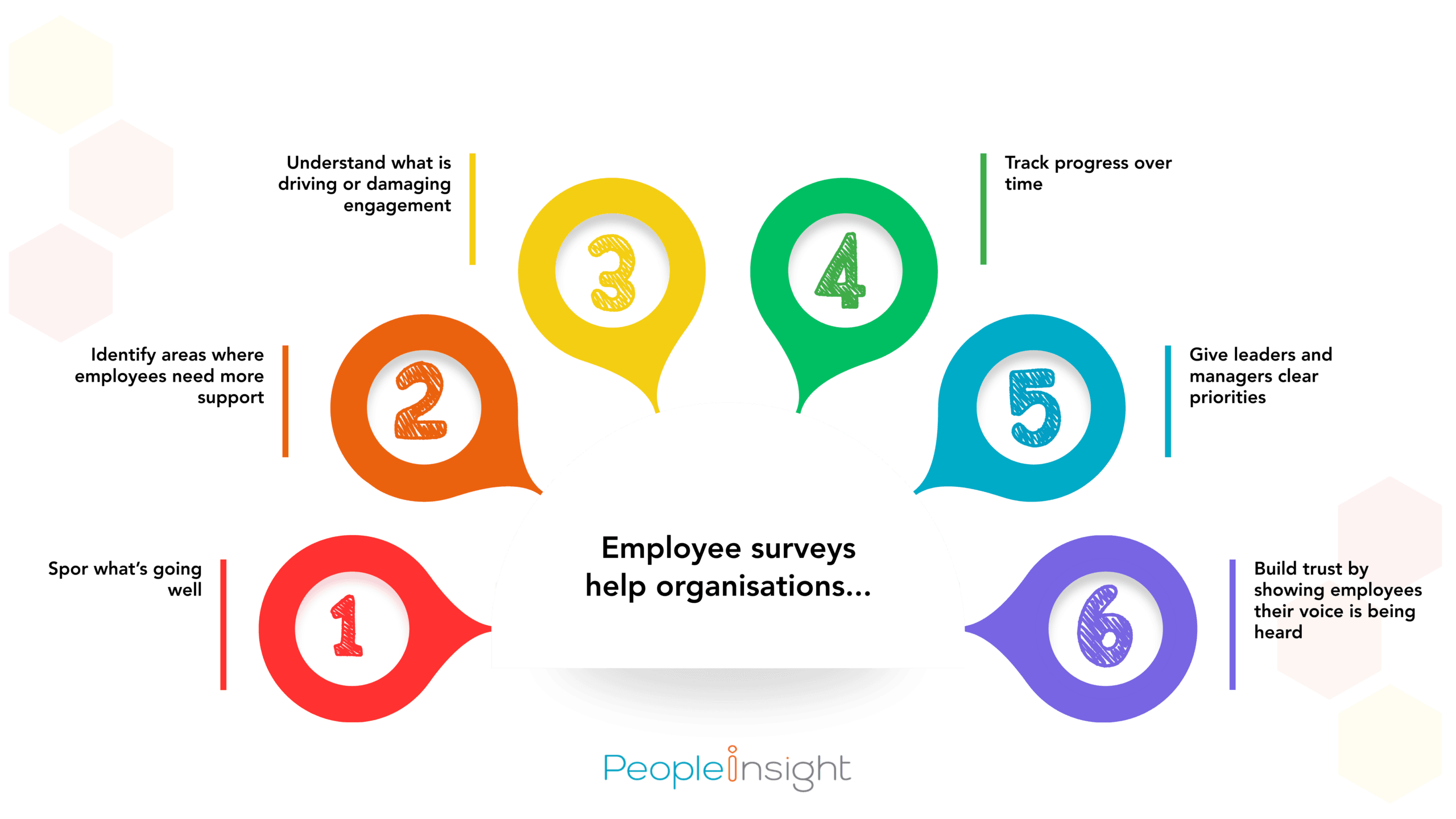
    They can help organisations:

    Employee surveys help organisations

    • Spot what is working well
    • Identify areas where employees need more support
    • Understand what is driving or damaging engagement
    • Track progress over time
    • Give leaders and managers clearer priorities
    • Build trust by showing employees their voice is being heard

    People Insight’s 2025 benchmark data shows why this is so important. While 60% of employees said senior leaders make the effort to listen to staff, only 53% believe action will be taken as a result of a survey.

    That gap is where trust can be won or lost.

    If employees are asked for feedback but do not see anything happen afterwards, surveys can start to feel performative. But when feedback leads to visible action, employee surveys can strengthen trust, improve engagement and help organisations make better people decisions.

    What does an employee survey measure?

    Employee surveys can measure a wide range of areas, depending on what the organisation wants to understand.

    Some surveys focus on overall engagement. Others explore specific themes such as employee wellbeing, inclusion, communication, leadership or change. Many organisations use a full annual survey to understand the whole employee experience, then run shorter pulse surveys to track progress during the year.

    Area measuredWhat it helps you understand
    EngagementWhether employees feel motivated, committed and connected to their work
    LeadershipWhether people trust leaders and understand the organisation’s direction
    CommunicationWhether information is clear, timely and open across the organisation
    WellbeingWhether workload, balance, support and resilience feel sustainable
    RecognitionWhether people feel valued for the work they do
    InclusionWhether employees feel respected, heard and able to belong
    DevelopmentWhether people see opportunities to learn, grow and progress
    Action confidenceWhether employees believe feedback will lead to change

    People Insight’s 2025 benchmark data shows why a broad view is useful. While 88% of employees said they care about the future of their organisation and 79% said working there makes them want to do their best work, only 53% said people communicate openly regardless of position or level.

    Recognition is another area to watch, with 63% saying they feel valued and recognised for the work they do.

    That kind of contrast is exactly why employee surveys are so valuable. They help leaders see not just whether employees are broadly positive, but where the everyday experience may be holding people back.

    What are the different types of employee survey?

    There is no single type of employee survey. The right approach depends on what you need to understand, how often you want to listen and how ready the organisation is to act.

    Type of employee surveyBest used for
    Annual employee surveyGetting a full view of the employee experience across the organisation
    Employee engagement surveyUnderstanding what drives motivation, commitment and performance
    Pulse surveyTracking progress or exploring a specific issue between larger surveys
    Lifecycle surveyGathering feedback at key moments such as onboarding, development or exit
    Wellbeing surveyUnderstanding workload, support, balance and pressure
    Inclusion surveyIdentifying differences in experience across groups
    Change surveyUnderstanding confidence, communication and readiness during change

    An employee engagement survey is often the best starting point for organisations that want to understand overall engagement and the factors that influence it.

    Other survey types can then be used to dig deeper into specific areas of the employee experience.

    How does an employee survey work?

    A strong employee survey process usually starts with purpose.

    Before writing questions or choosing a launch date, organisations need to be clear about what they want to understand and what they are prepared to act on. This helps keep the survey focused and makes the results more useful.

    A typical employee survey process includes:

    1. Defining the purpose of the survey
    2. Designing clear, relevant questions
    3. Communicating why the survey is happening
    4. Giving employees a safe and accessible way to respond
    5. Analysing the results
    6. Sharing findings with employees
    7. Supporting leaders and managers to take action
    8. Tracking progress over time

    The communication stage is often overlooked, but it can have a big impact on participation and trust.

    For example, Wolseley typically achieved participation rates of around 75% by putting real effort into communications that explained why the survey was happening, what would happen as a result and how confidentiality would be protected. Their survey programme also gave managers access to results dashboards, helping them take greater ownership of local action planning.

    The lesson we can learn from Wolseley is fairly simple: employees are more likely to take part when they understand the purpose of the survey and trust that their feedback will be used well.

    What makes an employee survey effective?

    An effective employee survey is not just a long list of questions. It is a listening process built around trust, clarity and action.

    The questions need to be clear enough for employees to answer confidently and specific enough for leaders to act on. The survey also needs to feel relevant to the organisation, rather than generic or disconnected from what employees are experiencing.

    A strong employee survey should be:

    • Easy for employees to complete
    • Clear about anonymity or confidentiality
    • Relevant to the organisation’s goals and context
    • Inclusive and accessible
    • Designed around themes leaders can act on
    • Supported by clear reporting
    • Followed by visible communication and action

    This is where survey design and reporting really matter. If questions are too vague, results become difficult to act on. If reporting is too complex, managers can feel overwhelmed. If action planning is not built into the process, the survey can lose credibility.

    People Insight’s employee survey platform is designed to help organisations move from feedback to clear insight and focused action. It brings survey design, reporting, benchmarks, AI-supported analysis and action planning together in one place.

    What happens after an employee survey?

    What happens after an employee survey is just as important as the survey itself.

    Once the results are in, organisations should share the headline findings, explain what they have heard and identify the priority areas they will focus on. Leaders do not need to fix everything at once. In fact, trying to act on too many things can dilute progress.

    The most effective organisations focus on a small number of priorities, support managers to have meaningful conversations with their teams and keep employees updated on what is changing.

    This follow-up is what turns employee voice into visible progress.

    Sunbelt Rentals is a strong example. Their employee listening strategy helped increase engagement by 6%, improve staff participation and belief in action by 20%, reduce turnover by 8% and increase operational staff retention by 10%. Their approach worked because survey insight was connected to practical change, including clearer communication, regional action planning and stronger leadership visibility.

    RNCM also shows the value of visible follow-through. The College achieved an 88% engagement score and 69% response rate, with belief that the College would act on survey results sitting 23 points above the sector average. That came from clear communication, trust in the process and involving teams in local action.

    You can explore more examples in our employee survey action planning case study.

    How AI can support employee surveys

    AI can make employee surveys easier, faster and more useful when it is applied carefully.

    After a survey closes, HR teams and managers may be looking at thousands of responses, many pages of data and a long list of possible priorities. Without support, this can slow action down.

    Prism is People Insight’s integrated AI, designed to reduce the effort between understanding results and deciding what to do next. It helps surface themes, highlight priorities and give managers clearer guidance based on their results.

    This does not replace human judgement. It supports it. The best use of AI in employee surveys is to help leaders and managers understand feedback more quickly, act with more confidence and keep the listening cycle moving.

    How to choose an employee survey provider

    Choosing an employee survey provider is not just about finding a tool that can send questions and collect responses. It is about choosing a partner that can help you listen well, interpret results clearly and support action afterwards.

    What to look forWhy it matters
    Expert survey designGood questions lead to more useful insight
    Clear reportingLeaders and managers need results they can understand quickly
    Benchmark dataContext helps you understand whether scores are strong, weak or changing
    Action planning supportSurveys only create value when feedback leads to change
    Flexible survey typesDifferent goals may need different listening approaches
    AI-supported insightAI can help teams move more quickly from data to priorities
    Consultancy supportExpert guidance helps leaders focus on the right action

    People Insight is a strong fit for organisations that want more than a survey tool. Our employee surveys combine expert-designed models, intuitive reporting, benchmark data, Prism, action planning and hands-on support from experienced specialists.

    We help organisations listen more clearly, understand results properly and turn employee feedback into meaningful action.

    Ready to get more from your employee surveys?

    An employee survey should help your organisation do more than gather feedback. It should help you understand what your people are experiencing, where action is needed and how to create meaningful improvement.

    People Insight helps organisations run employee surveys that combine expert guidance, intuitive technology, benchmark insight, Prism and action planning support.

    If you want to listen more clearly and turn feedback into focused action, speak to the People Insight team about your next employee survey.

    Employee survey FAQs

    What is an employee survey?

    An employee survey is a structured way to gather feedback from employees about their experience at work. It helps organisations understand areas such as engagement, leadership, communication, wellbeing, inclusion, recognition and confidence in action.

    What is the purpose of an employee survey?

    The purpose of an employee survey is to understand what employees are experiencing, identify what is helping or harming engagement and give leaders evidence they can use to improve the employee experience.

    What should an employee survey include?

    An employee survey should include clear questions linked to the areas you want to understand. Common themes include engagement, leadership, communication, wellbeing, inclusion, recognition, development, workload and belief that action will be taken.

    What happens after an employee survey?

    After an employee survey, organisations should share the results, identify priority areas, support managers with action planning, involve employees in solutions and communicate progress. This follow-up is what builds trust in the survey process.

    Why do employee surveys fail?

    Employee surveys often fail when organisations ask too many questions, communicate poorly, make results hard to understand or fail to act afterwards. Employees are more likely to trust surveys when they can see how feedback leads to visible change.