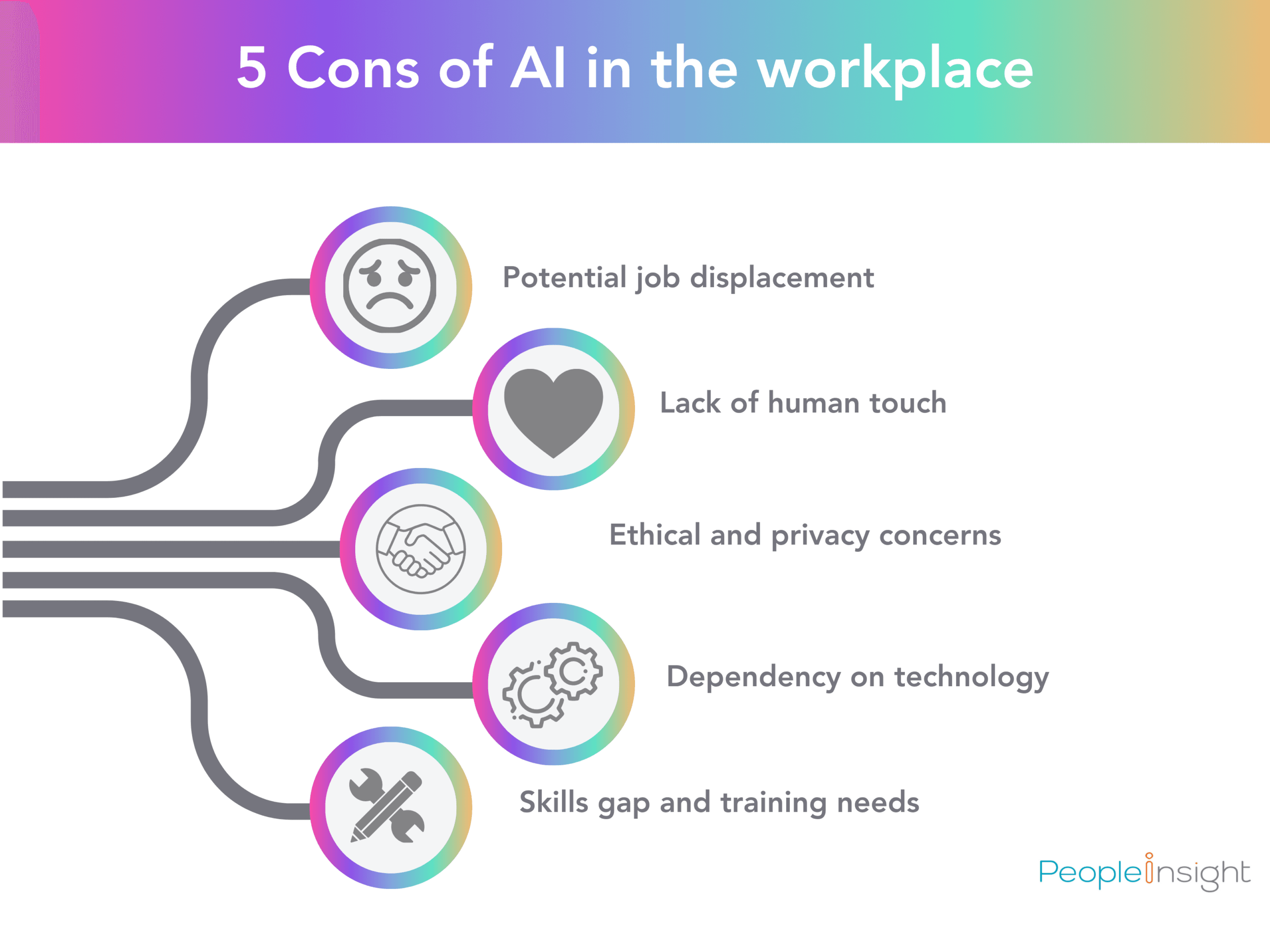






















The main disadvantages of AI in the workplace include concerns around job displacement, privacy, ethics, over-reliance on technology and the loss of human connection. AI can process information quickly, but it cannot replace empathy, emotional intelligence or good leadership judgement. Organisations need clear policies, transparent communication and proper training to make sure AI supports employees rather than creating uncertainty or mistrust.
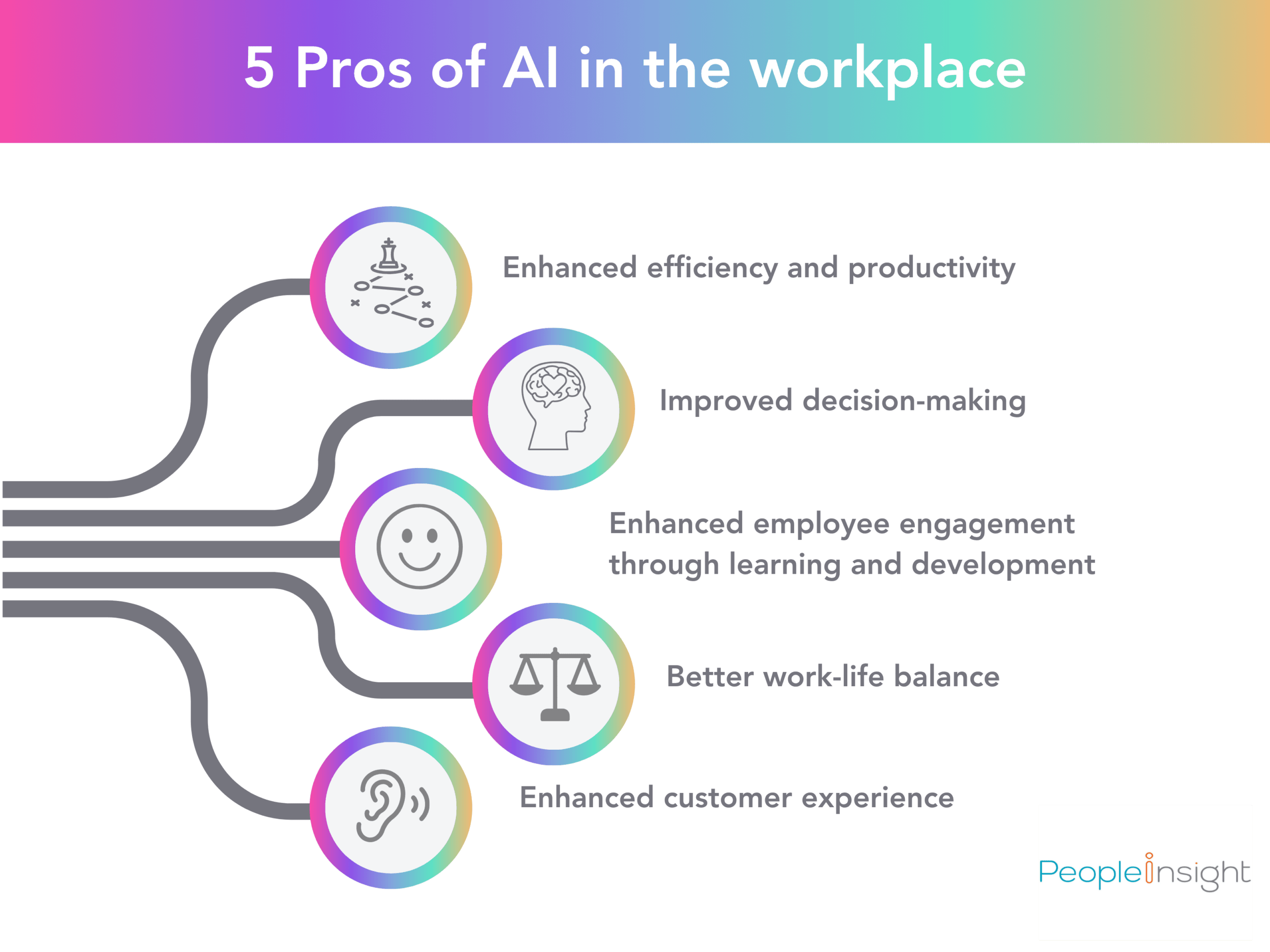
The benefits of AI in the workplace include improved efficiency, faster decision making, better use of data and more personalised employee support. AI can automate repetitive tasks, analyse large volumes of information and help managers identify patterns that may otherwise be missed. Used well, AI can give employees more time for meaningful work and help organisations turn insight into action more quickly.
The main pros of AI in the workplace are greater productivity, stronger data analysis, improved customer experience and better support for learning and development. The main cons are the risk of reduced human connection, employee anxiety, privacy concerns, skills gaps and dependency on technology. The best results come when AI is used as a support tool, with people still making important decisions.
AI can improve employee experience by helping organisations understand employee feedback more quickly and respond with clearer, more focused action. For example, AI can summarise survey comments, highlight recurring themes and suggest practical next steps. This helps leaders move beyond simply collecting feedback and start addressing the issues that employees are raising.
AI should not replace managers in the workplace. It can support managers by analysing information, spotting trends and reducing admin, but it cannot replace trust, empathy, coaching or human judgement. Employees still need real conversations, visible leadership and managers who can listen, understand context and take thoughtful action.
Organisations should use AI responsibly by being transparent about how it is used, protecting employee data, checking outputs carefully and keeping human oversight in place. Employees should understand where AI is involved, what decisions it supports and what safeguards are in place. AI works best when it strengthens human decision making, rather than operating as a black box.
AI can be good for employees when it reduces repetitive work, improves access to insight and helps leaders make better decisions. It can be harmful when it is introduced without clear communication, training or ethical safeguards. The impact depends on how thoughtfully AI is implemented and whether employees feel supported through the change.
HR teams can use AI in employee surveys to analyse open-text comments, summarise key themes, identify strengths and highlight areas that need attention. AI can also help turn survey findings into practical action plans, making it easier for managers to respond quickly and confidently. However, AI should be combined with human expertise so that the context behind employee feedback is properly understood.