Increase profitability by 23%
 Boost productivity by 21%
 Increase profitability by 23%
Boost productivity by 21%
Increase profitability by 23%
Boost productivity by 21%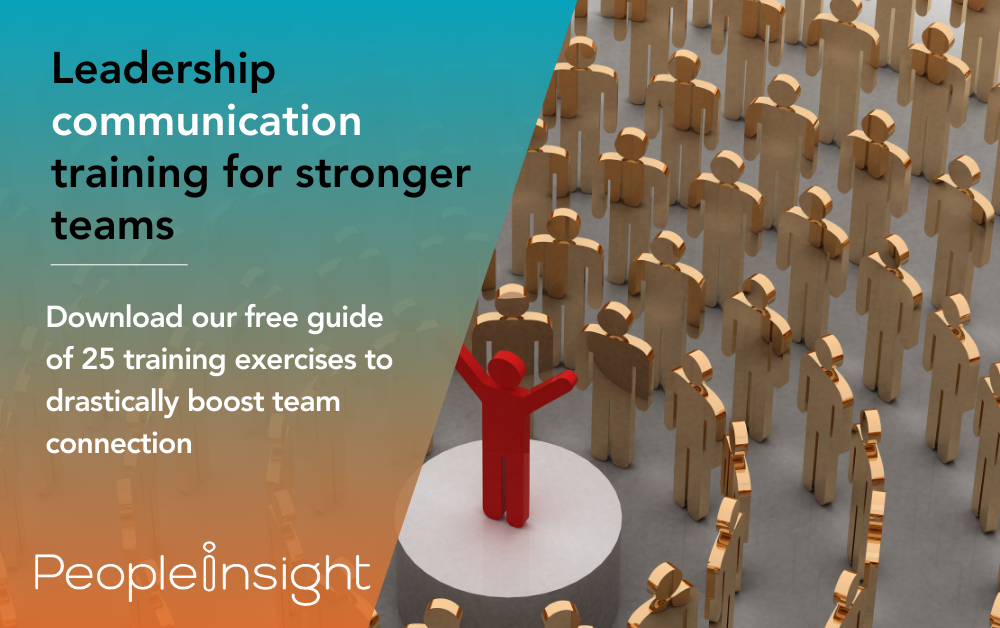
A quick insight: Leadership communication training strengthens how people are heard, understood and guided through everyday work and change. By building skills in clarity, active listening and feedback, leaders create more consistent connection across teams. Better communication from leaders supports trust, reduces misunderstanding and increases engagement by helping people feel informed, valued and confident in decisions that affect their work.
Good leaders aren’t just judged by the decisions they make, but by how clearly and confidently they communicate them. When communication falls short, employees can end up feeling left in the dark, overlooked or disconnected. That’s where leadership communication training comes in. It gives managers the tools, confidence and mindset to share messages with clarity, empathy and purpose.
In this guide, we’ll walk through the value of leadership communication training, how it strengthens relationships at work and what to look for in a programme that genuinely creates meaningful change. We also share training exercises you can try for yourself. Find some in this post, and download our free guide (at the bottom of this post) for even more.
Related: 7 Barriers to communication in the workplace
Leadership communication training is structured development focused on improving how leaders express themselves, listen and interact. It’s something we focus on here at People Insight, given how incredibly influential leaders and managers are when it comes to employee engagement
This form of training is suited for emerging leaders, experienced managers, senior executives and cross-functional project leads. It can be customised to support different levels, challenges and team cultures.
Leadership communication training should ideally be tailored to your company and its culture, so no two programmes will, or should, look the same. However, important elements generally include:
The training is usually carried out via:
Real, lasting change starts when communication becomes a strategic priority, not just a soft skill. Investing in leadership communication training has a measurable impact not just on individual leaders, but across teams and the wider organisation. When leaders communicate with clarity, empathy and consistency, the ripple effects are visible and far-reaching.
One compelling example of great leadership communication comes from Lane Clark & Peacock (LCP), a UK-based professional services firm that partnered with People Insight for their employee listening initiatives. Their staff survey revealed positive trends in several key areas, including leadership effectiveness, communication and work‑life balance. Their highly-engaged workforce can be seen not only from their remarkable engagement rate (88%) but also their survey participation rate (88%). Leaders in the company took the time to listen and effectively communicate with their people, and their people were invested in the company as a result. In fact, their incredible culture helped them qualify for our Outstanding Workplace Award for two years running.
Here are the benefits organisations typically experience with structured leadership communication training:
Communication is essentially a trust-building mechanism. When leaders communicate openly and clearly, they help build psychological safety, where employees feel secure sharing ideas, concerns or challenges without fear.
On the other hand, unclear messaging, inconsistent tone or a lack of listening can lead to outcomes with serious organisational costs. A study found that 44% of employees say miscommunication has caused a delay or failure to complete projects, and 18% say it has led to the loss of a sale or client. These breakdowns are often the result of leadership communication gaps. Consequences include:
It has also been shown that 94% of executives and 88% of employees believe a distinct workplace culture (rooted in strong communication) is important to business success.
Leadership communication training teaches leaders to model openness, handle conflict calmly and be consistent with messaging. When this happens, teams become more aligned and trust begins to grow.
Leadership communication training helps leaders develop the behaviours, confidence and mindset needed to truly connect with their teams. This kind of growth can make a real difference in how they lead.
Here’s how leaders typically grow through this type of training:
Related: Emotional intelligence and leadership: Why is it important?
The most effective training programmes are grounded in evidence-based tools and adaptable to different teams and leadership stages. Look out for content such as:
Here are five practical exercises to embed in your training:
Partners take turns speaking on a topic while the listener practices active listening. No interrupting, no problem-solving. This builds empathy and patience.
Using the SBI (Situation-Behaviour-Impact) model, pairs give and receive feedback on fictional or real workplace scenarios. This reduces anxiety around difficult conversations.
Participants are given a brief they must explain in one minute with zero jargon or filler words. A powerful way to strengthen clarity and confidence.
Using DISC profiles, participants practice adjusting their communication style to match different personas. Great for improving flexibility and inclusivity.
Participants draw a card with an emotion and must respond to a hypothetical scenario using that emotion constructively. This strengthens emotional intelligence.
Want more exercises? Download our free guide, including 25 powerful leadership communication training activities.
Effective leadership communication is a force multiplier. It transforms not only how leaders express themselves, but also how connected employees feel to their work and each other. That sense of connection leads to more trust, better collaboration and greater wellbeing.
Employee listening is where this begins. When you understand what your people need and how your leadership is landing, you can build communication training that sparks meaningful change.
Ready to build stronger, more connected teams? Get in touch to see how we can help your leaders improve communication and lead more productive, more engaged teams.