














When leaders and HR professionals set out to improve performance, they often struggle to make coaching conversations structured and effective. That is where coaching frameworks come in.
Coaching frameworks provide a map for conversations, helping managers ask the right questions, guide employees through challenges and reach actions that stick. The right coaching framework is able to boost trust, accountability and productivity.
Let’s take a second to look at 16 widely recognised coaching frameworks. Compiled by our leadership development experts, some of these frameworks are classics used in HR for decades, while others are modern approaches adapted from psychology or team coaching.
Related: What is coaching leadership?
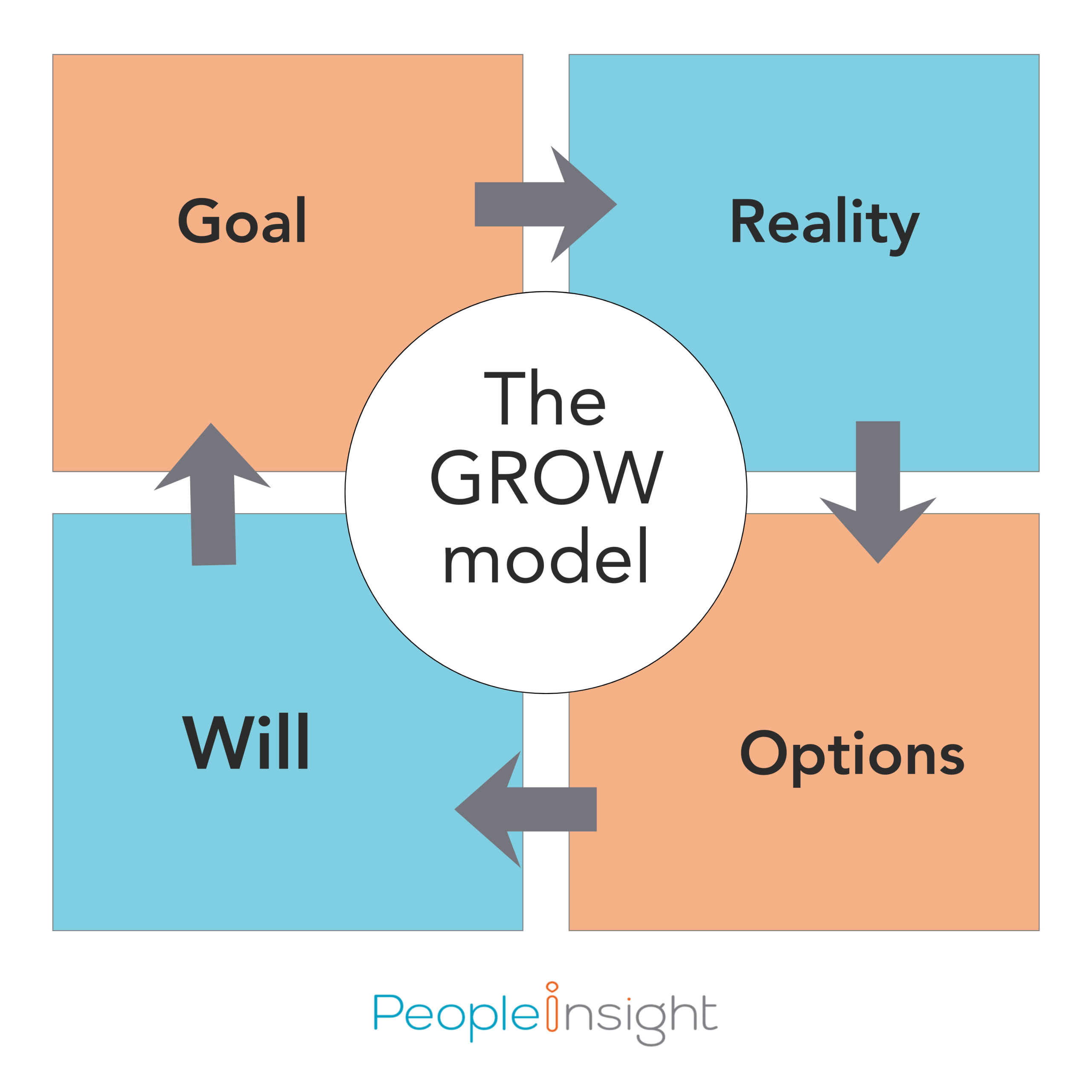
The GROW model is one of the most widely used coaching frameworks. It structures the conversation into four steps:
For example, a manager might ask: What do you want to achieve? What is happening now? What could you do? What will you commit to? This keeps the discussion practical and forward-looking. GROW is highly flexible and can be used in everything from performance reviews to career development and planning.
OSCAR stands for Outcome, Situation, Choices, Actions and Review. It builds on the idea of GROW but makes progress tracking clearer. After identifying outcomes and reviewing the current situation, employees explore choices and agree on specific actions. The Review stage then reinforces accountability. HR practitioners often use OSCAR in structured programmes because it produces measurable outcomes and encourages reflection.
The CLEAR model (Contracting, Listening, Exploring, Action, Review) was developed by Peter Hawkins. Its emphasis on “contracting” at the start sets expectations for the coaching relationship, making it especially valuable in formal programmes. The focus on listening and exploration encourages deeper understanding before moving to action. For productivity, this model is helpful when issues are complex and require trust to be built before solutions emerge.
FUEL stands for:
This model is popular in leadership coaching because it balances structure with adaptability. For instance, a manager might use FUEL to reframe a performance challenge by exploring not just the problem but the desired state of success, then laying out steps to get there. It is a practical way to help employees move from frustration to ownership.
TGROW adds an initial stage, Topic, to the classic GROW model. By clarifying the topic before setting goals, coaches avoid drifting into unstructured conversations. This can be particularly effective in one-to-one sessions where employees have several issues in mind. By choosing a topic, the coaching becomes more focused, and the following stages (Goal, Reality, Options, Will) gain sharper direction.
The STEPPA model (Subject, Target, Emotion, Perception, Plan, Pace, Adapt/Amend) is notable for including emotion and perception as stages. This recognises that productivity is not just about plans but about how people feel. For example, if an employee feels anxious about a project, the coach works through those emotions and perceptions before moving to a plan. STEPPA is valuable in high-stakes contexts where motivation and mindset are as important as the task itself.
The ACHIEVE model (Assess, Creative ideas, Hone goals, Initiate options, Evaluate options, Valid action programme, Encourage momentum) is detailed and comprehensive. It goes beyond goal setting by explicitly including creativity, evaluation and momentum. In practice, this helps employees generate more ideas, refine them into practical actions and build commitment. It is often used in executive coaching where leaders need structured yet flexible development conversations.
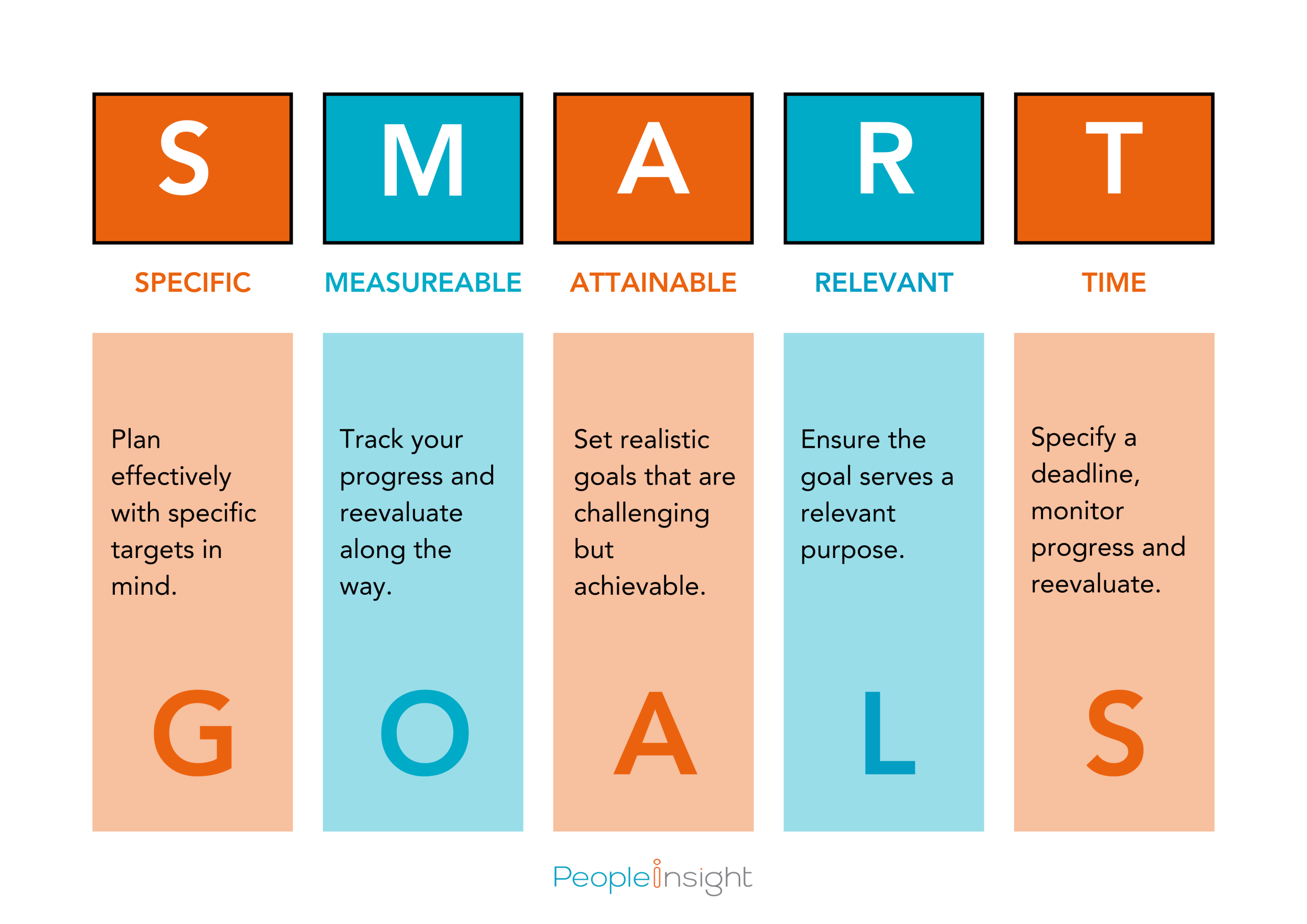
SMART (Specific, Measurable, Achievable, Relevant, Time-bound) is often used alongside other coaching frameworks. By turning broad aspirations into clear goals, employees can measure progress. For example, “I want to improve my communication skills” becomes “I will deliver three presentations over the next quarter and request feedback from my manager.” Productivity improves because goals are practical and time-bound.
Originally developed in healthcare, Motivational Interviewing is a conversational style that helps people resolve ambivalence about change. In coaching, it involves asking open questions, listening reflectively and encouraging employees to articulate their own reasons for change. It is particularly useful in HR when working with behaviour change, such as improving punctuality or adopting new working practices. The focus is on internal motivation, not external pressure.
Appreciative Inquiry is a strengths-based coaching framework that shifts the focus from problems to what is working well. By asking questions such as “When have you felt most engaged at work?” or “What do we do well as a team?” it generates energy and positivity. For organisations, this can be a powerful way to build morale and drive change based on success, not deficits. Productivity grows because employees feel encouraged to build on their strengths.
Solution-focused coaching helps employees move quickly from discussing problems to imagining a better future. Questions such as “What will be different when this issue is resolved?” encourage employees to define outcomes. Coaches then help identify the smallest steps towards that future. This approach is effective when time is short and teams need quick wins. It can help cut through cycles of complaint and focus energy on solutions.
Cognitive Behavioural Coaching (CBC) draws on CBT techniques. It helps employees identify unhelpful thought patterns and reframe them into constructive ones. For example, an employee who thinks “I always fail at presentations” can be coached to reframe this as “I can improve my presentations by preparing differently and seeking feedback.” This shift in mindset can directly improve productivity by reducing avoidance and building confidence.
Related: How to encourage a growth mindset at work
Intentional Change Theory (ICT), developed by Richard Boyatzis, highlights five discoveries for sustained change: an ideal self (vision), the real self (current reality), a learning agenda, experimentation and supportive relationships. In coaching, ICT helps leaders align their vision with their strengths and values. It is often used in leadership programmes where long-term behavioural change is needed.
Transactional Analysis (TA) looks at Parent, Adult and Child ego states in communication. In coaching, it helps individuals recognise when they are speaking or reacting from an unhelpful state. For example, an employee may default to a “Child” state when facing authority. By recognising this, they can shift to the “Adult” state and communicate more constructively. This improves workplace interactions and team productivity.
The Team Coaching Wheel, developed by Peter Hawkins, assesses areas such as purpose, relationships, processes, external relationships and learning. Coaches use it to guide discussions with teams, highlighting strengths and gaps. It is a practical tool for improving team productivity by making invisible dynamics visible and giving teams a shared focus for improvement.
Systemic Team Coaching goes further by considering how a team interacts with the wider organisation and stakeholders. It encourages teams to think about their external impact, not just internal collaboration. This framework is particularly relevant in complex environments where teams must align with organisational strategy and adapt to external demands. It builds collective responsibility and higher performance.
Coaching frameworks are designed as practical tools to help managers and HR professionals guide conversations towards outcomes employees can act on. Whether it is the clarity of SMART goals, the positivity of Appreciative Inquiry or the systemic focus of team coaching, these approaches make coaching conversations more effective. When used consistently, coaching frameworks turn listening into action and boost productivity across the organisation.
At People Insight, we help organisations use coaching frameworks alongside 360 feedback to create meaningful change. Get in touch today to learn how our team of leadership experts can support your organisation’s productivity.