

















Knowledge base:

How to run a 360 programme

A practical guide to planning, launching and following through on a 360 programme that leaders trust and use.

How to run a 360 programme

    A quick insight: A strong 360 programme creates a clear, trusted process that helps leaders understand how they are experienced, reflect on what needs attention and turn feedback into meaningful development. The best 360 programmes are carefully designed before launch, well supported during delivery and followed by visible action afterwards.

    A 360 programme can be one of the most effective ways to support leadership and manager development. But only when it is run well.

    That means being clear about the purpose, choosing the right participants, protecting confidentiality, giving people enough guidance and making sure the process leads somewhere useful afterwards. When those pieces are missing, 360 feedback can feel vague, political or hard to trust. When they are handled properly, it becomes a much more credible and practical development tool.

    Let’s take a look at what a 360 programme is and how to best run one, step-by-step (before, during and after) to get results that will make a difference.

    Related: What is 360 feedback?

    What a 360 programme actually is

    A 360 programme is a structured process for collecting feedback on an individual from multiple sources, usually including their manager, peers, direct reports and self-assessment.

    It is normally used for development rather than formal judgement, because its real value lies in helping people understand how they are experienced by others and what they should work on next.

    A strong 360 programme should help participants:

    • build self-awareness
    • understand strengths and development areas
    • compare self-perception with external perception
    • focus on the behaviours that matter most
    • turn feedback into practical action

    That is what makes a 360 programme more than a survey. It is a development process.

    Before you launch: set the programme up properly

    The quality of a 360 programme is usually decided before the questionnaire even goes live.

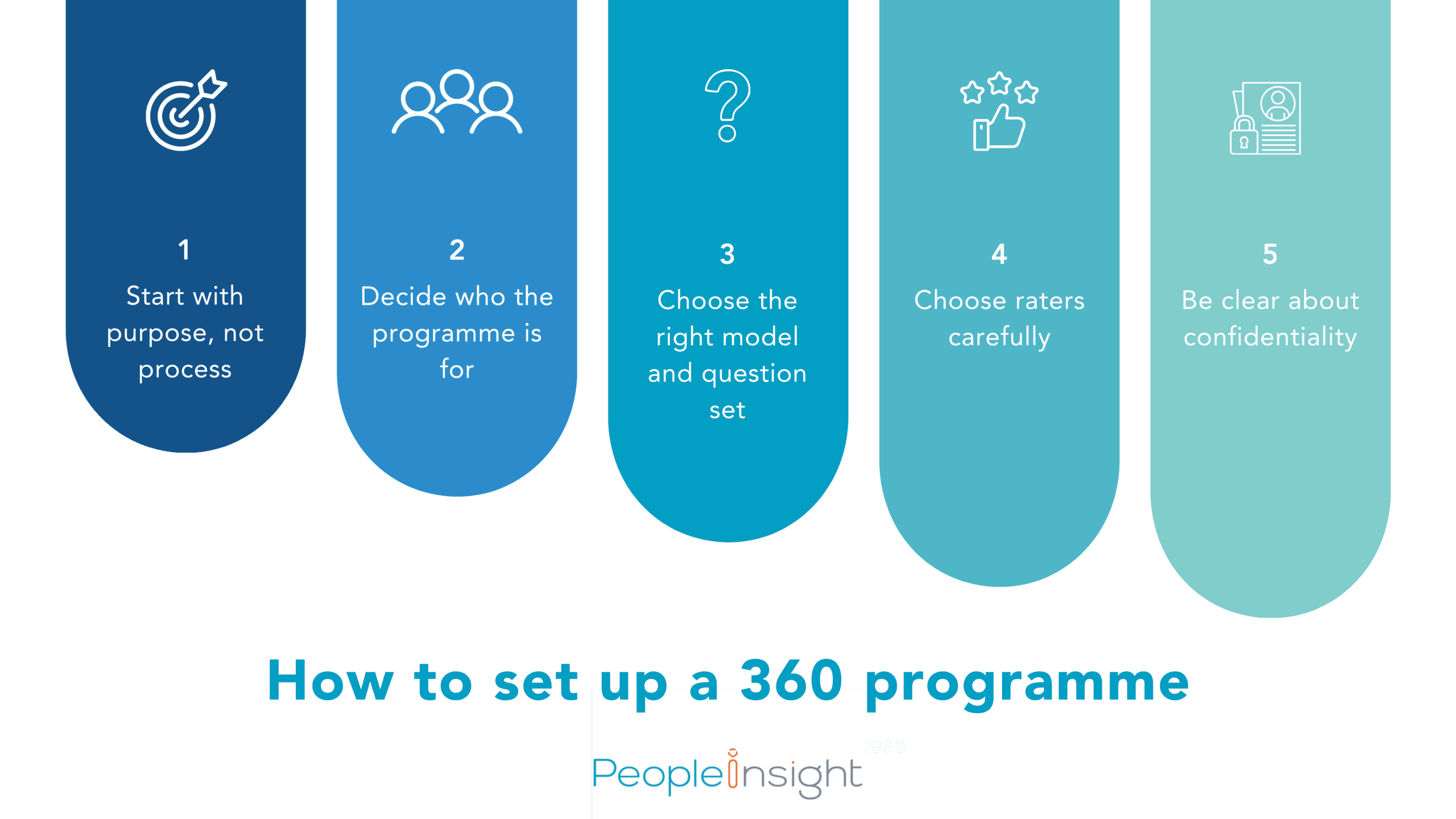
    How to set up a 360 programme

    1. Start with purpose, not process

    The first question is not which 360 feedback tool to use. It is why you are running the programme.

    A 360 programme works best when the purpose is specific and developmental. That might mean supporting leadership development, helping managers build self-awareness, preparing a cohort for broader responsibility or strengthening a wider management development programme.

    That is why it helps to define:

    • who the programme is for
    • what success should look like
    • whether it is being used for development only
    • how feedback will connect to coaching or development planning afterwards

    Related: How 360 feedback supports leadership development

    2. Decide who the programme is for

    Not every organisation needs to start with everyone.

    A 360 programme is often strongest when it begins with a clearly defined audience, such as line managers, senior leaders, high-potential leaders or a specific leadership cohort.

    3. Choose the right model and question set

    One-size-fits-all questionnaires rarely produce the most useful results.

    A stronger 360 programme uses questions that reflect the behaviours your organisation actually wants to strengthen, such as:

    • communication
    • trust-building
    • delegation
    • coaching
    • decision-making
    • collaboration
    • leadership visibility

    That means your question set should align with your values, leadership expectations and culture, rather than relying on generic competency lists.

    4. Choose raters carefully

    A 360 programme is only as useful as the people giving the feedback.

    Choose raters who know the participant’s work and behaviour closely enough to comment meaningfully. In practice, that usually means a balanced mix of:

    • line manager
    • peers
    • direct reports
    • sometimes wider stakeholders, where relevant

    The aim is not to collect the maximum number of responses. It is to collect relevant ones.

    5. Be clear about confidentiality

    Trust is one of the most important parts of any 360 programme.

    If raters are not confident that their input will be handled appropriately, they are less likely to be candid. Before launch, be clear about:

    • who will see the results
    • how anonymity works
    • how results will be grouped
    • what the feedback will and will not be used for

    That clarity helps your 360 programme feel safer and more credible from the start.

    During the programme: make participation easy and useful

    Once the programme is live, the focus shifts to clarity, support and momentum.

    Explain the process properly

    People are much more likely to engage well when they understand what is happening.

    That means explaining:

    • what 360 feedback is
    • why the programme is happening now
    • what kind of feedback is most useful
    • how long the process will take
    • what support will be available afterwards

    Clear communication helps the process feel more transparent and more developmental.

    This is also why listening programmes generally benefit from strong survey communications, even when the tool is 360 rather than a wider employee survey.

    Help people give better feedback

    One of the biggest mistakes in a 360 programme is assuming everyone already knows how to give useful feedback.

    A little guidance can make the whole process more constructive and less intimidating.

    Useful guidance usually encourages raters to be:

    • specific
    • balanced
    • behaviour-based
    • constructive
    • focused on things the participant can actually use

    That helps reduce vague praise, overly personal criticism and feedback that is hard to act on.

    Use a platform that reduces friction

    A 360 programme is easier to run when the technology does not get in the way.

    The right platform should make it easier to:

    • launch and manage the process
    • send reminders
    • protect confidentiality
    • produce clear reporting
    • reduce admin for HR and L&D teams

    That matters because clunky delivery can quickly undermine a well-designed process.

    After the programme: this is where the value shows up

    A 360 programme only becomes valuable when the feedback leads to reflection, discussion and action.

    Debrief the results carefully

    Receiving multi-source feedback can be challenging, especially where the themes are unexpected.

    That is why a report alone is rarely enough. People often need time, context and conversation to interpret the results properly.

    Turn the insight into focused actions

    The best 360 programmes do not end with a report download. They end with a clear development focus.

    That usually means identifying:

    • two or three priority behaviours
    • what needs to change in practice
    • what support is needed
    • how progress will be reviewed

    This is where action planning becomes essential. Development is far more likely to stick when the next steps are clear, realistic and visible.

    Keep the programme connected to wider development

    A 360 programme works best when it fits into something broader.

    That broader context might include:

    • leadership programmes
    • one-to-one coaching
    • management development
    • performance conversations
    • action planning
    • repeat 360 cycles over time

    This is what turns a 360 programme from a feedback exercise into a real development tool.

    Where Prism strengthens a 360 programme

    Prism, our integrated AI, can make a 360 programme more useful by helping organisations move from raw responses to clearer priorities.

    In practice, that means Prism can help:

    • summarise large volumes of rater feedback
    • surface common patterns
    • add context to comments
    • highlight strengths and development areas
    • support clearer next steps

    That is particularly helpful when your 360 programme includes larger cohorts or more qualitative input.

    This is where Prism helps create smarter action. It reduces the gap between feedback and focused development by helping participants and programme owners see what matters most more quickly and clearly.

    5 Common mistakes that weaken a 360 programme

    A few things regularly reduce the value of 360 programmes.

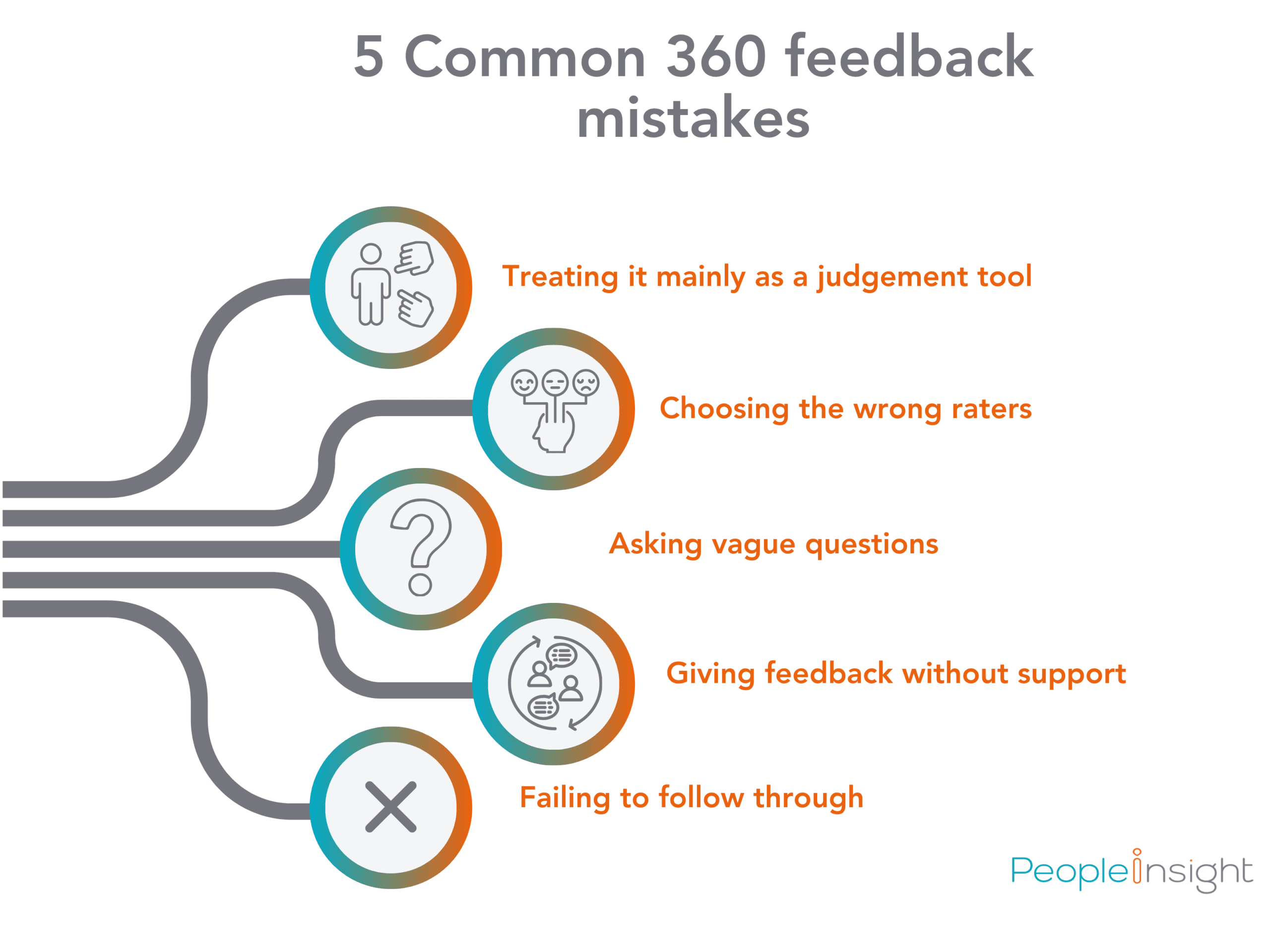
    Common 360 feedback mistakes

    1. Treating it like a hidden appraisal

    A 360 programme usually works best when it is clearly developmental. If people suspect it is really about judgement or pay, trust tends to drop.

    2. Choosing the wrong raters

    Feedback is only useful when it comes from people who know the participant’s work and behaviour well enough to comment meaningfully.

    3. Having vague questions

    We recommend asking behaviour-based questions, as they tend to produce better insight than broad personality statements.

    4. Providing the report without support

    A report on its own is rarely enough to create meaningful development.

    5. Failing to follow through

    The real value of a 360 programme lies in what changes afterwards, not in the survey itself.

    What good looks like in practice

    A strong 360 programme usually includes:

    • a clear developmental purpose
    • the right participants
    • relevant, well-designed questions
    • strong confidentiality
    • clear communication
    • useful guidance for raters
    • well-supported debriefs
    • focused development planning
    • follow-up over time

    That combination is what helps the programme feel credible, safe and worth the effort.

    Run a stronger 360 programme with People Insight

    A well-run 360 programme can support stronger self-awareness, better leadership conversations and more focused development. But that only happens when the process is designed carefully, communicated clearly and followed through properly.

    At People Insight, we help organisations run 360 programmes through intuitive technology, Prism-powered insight and expert support before, during and after delivery. That helps leaders understand how they are experienced, focus on what matters most and turn feedback into meaningful progress.

    Want to run a 360 programme that leaders trust and use well? Get in touch to learn how People Insight can help.

    FAQs about running a 360 programme

    What is a 360 programme?

    A 360 programme is a structured multi-source feedback process where someone receives feedback from people around them, such as managers, peers and direct reports, to support development.

    What is the purpose of a 360 programme?

    The purpose of a 360 programme is usually to support development by helping participants understand how they are experienced by others and what they should focus on next.

    Who should be included in a 360 programme?

    A typical 360 programme includes self-assessment, a line manager, peers and direct reports, plus wider stakeholders where relevant. The key is choosing people who know the participant’s behaviour well enough to comment meaningfully.

    How do you make a 360 programme credible?

    Be clear about the purpose, choose the right raters, protect confidentiality, explain the process properly and make sure the feedback leads to supported development afterwards.

    Should a 360 programme be anonymous?

    Peer and direct-report feedback is often anonymised because confidentiality helps people give more honest and useful input.

    What should happen after a 360 programme?

    Participants should review the results, reflect on the themes, identify clear development priorities and follow through with coaching or practical action planning.

    How can Prism help with a 360 programme?

    Prism helps surface strengths, development areas and likely next steps by analysing rater feedback and making the results clearer and more actionable.

    How can People Insight help run a 360 programme?

    People Insight helps organisations run 360 programmes through intuitive technology, expert-led support, Prism-powered analysis and practical follow-through before, during and after delivery.