



















Blogs:

How 360 feedback supports leadership development

A complete guide to building self-awareness and strengthening impact

How 360 feedback supports leadership development

    A quick insight: Leadership development works best when leaders can see how they are experienced by others, not just how they see themselves. 360 feedback helps create that fuller picture by gathering input from managers, peers and direct reports. When used well, it supports stronger self-awareness, clearer development priorities and more meaningful behaviour change over time.

    Many organisations know they need stronger leaders. They want managers who communicate well, support their teams, build trust and lead with clarity. But leadership development often falls short when it is too generic, too theoretical or too disconnected from the real experience of working with that leader day-to-day.

    That is where 360 feedback can make leadership development much more specific and useful.

    By giving leaders a fuller view of how they are experienced by others, 360 feedback helps make leadership development more grounded, more practical and more relevant. It moves development beyond abstract capability models and towards the behaviours people actually see, feel and respond to in practice.

    Related: What is 360 feedback?

    A stronger starting point for leadership development

    Leadership development is most effective when it starts with honest, well-rounded insight.

    That is not always easy to get. Traditional feedback often relies too heavily on a single line manager view, and self-assessment alone rarely gives leaders the full picture. A leader may believe they are clear, approachable and empowering, while others may experience them quite differently.

    360 feedback helps bridge that gap.

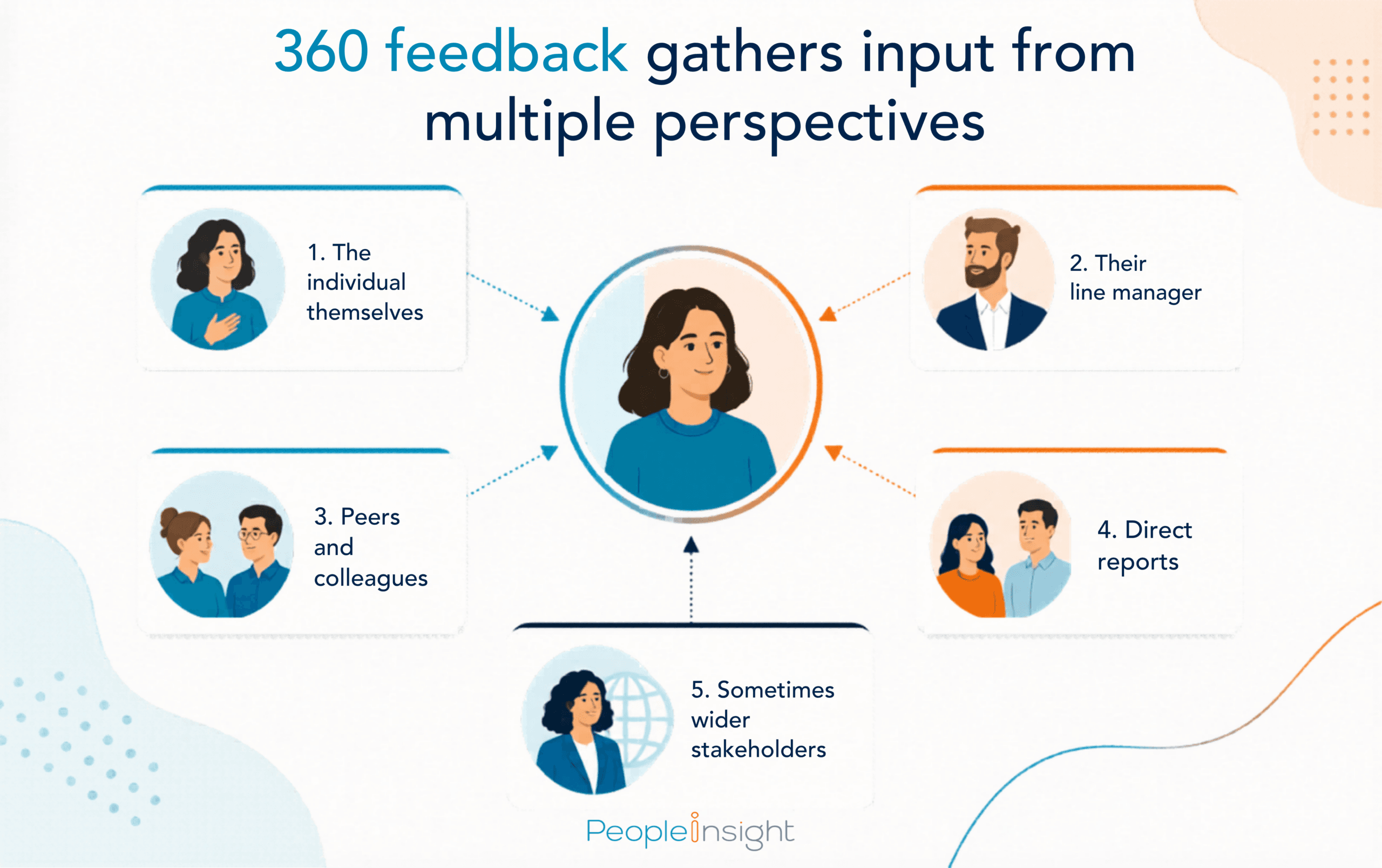
    It gathers input from multiple perspectives, usually including:

    360 feedback gathers input from multiple perspectives

    • the individual themselves
    • their line manager
    • peers
    • direct reports
    • sometimes wider stakeholders

    That creates a more rounded picture of how someone leads, communicates and influences others.

    Where does 360 feedback add real value?

    The value of 360 feedback lies in the fact that leadership is experienced from multiple angles.

    A manager may see delivery and outcomes. Our colleagues may see collaboration and influence. Those reporting to us may see communication, support and trust. All of those perspectives matter if you want leadership development to reflect the real day-to-day experience of working with someone.

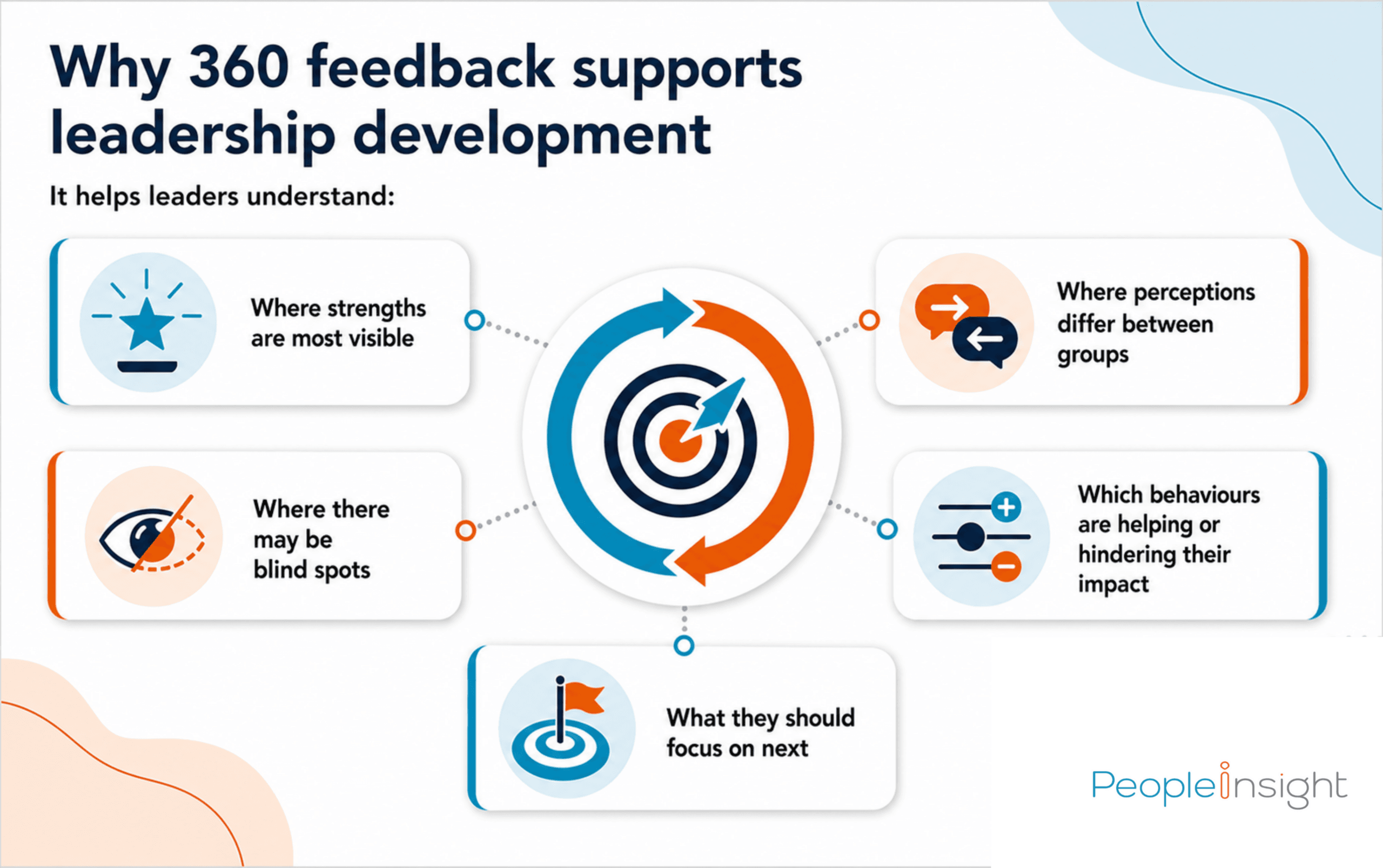
    That is why 360 feedback supports leadership development so well. It helps leaders understand:

    why 360 feedback supports leadership development

    • where their strengths are most visible
    • where perceptions differ between groups
    • where there may be blind spots
    • which behaviours are helping or hindering their impact
    • what they should focus on next

    Instead of relying on assumptions, 360 feedback gives leaders something much more useful to work with.

    Related: Advantages of 360 feedback

    The core benefits for leaders

    A strong 360 process does more than generate feedback. It supports several of the most important ingredients of leadership development.

    1. Stronger self-awareness

    Leaders who understand their strengths and limitations are better equipped to communicate effectively, navigate challenges and build trust.

    360 feedback helps uncover blind spots by showing where self-perception and external perception differ. That gives leaders a much clearer basis for growth.

    2. Clearer developmental focus

    Leadership development often becomes too vague when the advice is broad. Phrases like “communicate better” or “be more visible” are not enough on their own.

    360 feedback gives those themes more shape by showing where they appear, how consistently they show up and who is experiencing them most clearly.

    3. Stronger relationships and trust

    When leaders actively seek and act on feedback, they show openness, humility and a willingness to grow. That can strengthen trust and improve day-to-day working relationships.

    4. Better alignment with organisational goals

    Leadership development is most useful when it supports the wider direction of the organisation. 360 feedback helps connect behaviour to the leadership qualities the organisation needs most.

    5. A culture of continuous improvement

    When leaders engage seriously with feedback, it helps reinforce a wider organisational culture where development is taken seriously, not treated as a one-off event.

    What can 360 feedback reveal about leadership?

    Leadership development becomes much more focused when feedback is specific enough to reveal patterns.

    A well-designed 360 process can help surface themes such as:

    • communication clarity
    • leadership visibility
    • empathy and support
    • delegation
    • accountability
    • collaboration
    • decision-making
    • coaching and feedback
    • trust-building
    • adaptability

    This is especially valuable because different groups often experience the same leader differently. A senior leader may be seen as decisive by their peers, but distant by their team. A line manager may believe they are giving regular feedback, while direct reports may experience that support as inconsistent or vague.

    What People Insight’s benchmark data adds to the picture

    People Insight’s benchmark data helps show why leadership development still deserves real attention.

    In our 2025 benchmark data:

    • only 60% of employees say senior leaders make the effort to listen to staff
    • only 69% say their line manager gives regular feedback
    • 84% say their line manager treats them fairly and with respect
    • only 59% say their career development aspirations are being met

    That pattern is pretty revealing. Fairness and respect from line managers are relatively strong, but visible listening, regular feedback and support for longer-term development are weaker.

    That combination suggests many organisations are not dealing with a lack of leadership altogether. They are dealing with uneven leadership experience, and that is exactly the kind of gap 360 feedback can help reveal. Leaders may be respected, but not always experienced as clear, developmental or visibly responsive.

    How 360 feedback strengthens leadership development in practice

    Let’s take a deeper look and see how 360 feedback can really help with leadership development.

    1. It makes development more specific

    Leadership development often struggles when the goals are too vague.

    A leader may be told to be more visible, communicate better or build stronger relationships, but those phrases are too broad on their own. 360 feedback gives those themes more shape by showing how they appear in practice and where they are most strongly felt.

    That helps turn leadership development into something more concrete and actionable.

    2. It helps prioritise the right behaviours

    Not every development area needs equal attention.

    360 feedback helps leaders focus on the behaviours that are most likely to improve their effectiveness. Rather than trying to work on everything at once, they can identify two or three priorities that matter most to the people around them.

    That makes development more realistic and much easier to sustain.

    3. It strengthens coaching conversations

    360 feedback works especially well when paired with thoughtful coaching or facilitated reflection.

    A strong debrief helps leaders:

    • understand the patterns in the data
    • manage emotional reactions well
    • avoid becoming defensive
    • identify practical development goals
    • commit to visible next steps

    This is one reason 360 coaching can add so much value to the process. It helps turn feedback into development, not just insight.

    4. It supports behaviour change over time

    Leadership development is not about reading a report and moving on.

    The strongest 360 processes support longer-term change by helping leaders revisit the feedback, reflect on progress and keep their development anchored in the real experiences of others.

    That is where the process becomes much more than a one-off feedback exercise. It becomes part of an ongoing development journey.

    How to get more value from 360 feedback

    A 360 process is only as useful as the way it is designed and delivered. These practices make a big difference.

    1. Start with the purpose

    Be clear about why the process is happening. Is it to support a development plan, build readiness for a broader role or strengthen leadership capability in a particular area?

    Clarity of purpose helps the process feel focused and credible.

    2. Involve the right people

    Choose respondents who know the leader’s behaviour closely enough to comment meaningfully.

    3. Use reliable tools

    A strong 360 feedback tool should make the process easy to run, protect confidentiality and produce reporting that is clear enough to support action.

    4. Guide respondents well

    Many people are not naturally confident at giving constructive feedback. A little guidance goes a long way.

    Encourage respondents to make feedback:

    • specific
    • balanced
    • behaviour-based
    • useful rather than personal
    5. Deliver feedback sensitively

    Receiving feedback can be challenging, especially where the themes are unexpected.

    That is why good debriefing matters. Leaders need space to understand the results, process them well and turn them into focused development priorities.

    6. Connect feedback to wider development

    360 feedback is most effective when it is linked to broader leadership development support, such as:

    • coaching
    • learning pathways
    • development planning
    • follow-up reviews
    • wider manager development activity

    What good leadership development looks like

    Strong leadership development is not just about sending people on a course. It is about helping them become more effective in ways others can actually feel.

    That often includes:

    • stronger communication
    • clearer expectations
    • better listening
    • more useful feedback
    • healthier team dynamics
    • greater consistency
    • more trust
    • more self-awareness

    360 feedback supports this by making those behaviours more visible.

    For example, at Cancer Research UK, stronger manager insight helped shine a light on how managers were being experienced and where support needed to be focused. The real value there was not just the insight itself, but the ability to use that insight to shape more targeted conversations about manager effectiveness and support.

    At Crest Nicholson, work around leaders and line managers highlighted how leadership behaviour and capability can shape wider engagement and employee experience. That reinforces an important point: leadership development is not just good for leaders. It affects the wider culture too.

    How 360 feedback fits into a wider development approach

    360 feedback is powerful, but it works best as part of a wider development process.

    That wider approach might include:

    • leadership frameworks
    • coaching
    • manager development programmes
    • one-to-ones
    • action planning
    • follow-up reviews
    • repeat 360 cycles over time

    In other words, 360 feedback should not replace leadership development. It should strengthen it.

    Common mistakes to avoid

    360 feedback can support leadership development extremely well, but only if it is handled properly.

    A few common mistakes can weaken the value:

    Using it as a hidden appraisal

    If leaders feel the process is really about judgement rather than development, trust tends to fall.

    Choosing the wrong raters

    Feedback is only useful when it comes from people who know the leader’s behaviour closely enough to comment meaningfully.

    Providing the report without support

    A report on its own is rarely enough. Leaders often need space, reflection and support to make good use of the insight.

    Trying to fix everything at once

    The strongest development plans focus on a small number of meaningful priorities rather than a long list of vague intentions.

    Failing to follow through

    Leadership development only creates value when feedback leads to visible change over time.

    How Prism can support the process

    While 360 feedback is already a strong development tool, wider insight support can help leaders and organisations focus more clearly on what matters most.

    Prism can strengthen the process by helping organisations:

    • identify recurring patterns
    • add context to the feedback
    • connect leadership themes to wider employee experience data
    • support clearer prioritisation
    • move more confidently from insight to action

    That is especially helpful when leadership development is being considered alongside wider listening work, such as employee surveys.

    Leadership development that leads somewhere

    The best leadership development does not stop at awareness. It changes behaviour.

    That is what makes 360 feedback so valuable. It helps leaders understand how they are experienced, identify what they need to work on and focus on the behaviours that will have the greatest effect on others.

    At People Insight, we help organisations use 360 feedback in a way that is structured, constructive and genuinely developmental. Through our platform, proven models and expert support, we help leaders turn multi-source feedback into clearer self-awareness, stronger capability and more meaningful progress.

    Want to use 360 feedback to strengthen leadership development in your organisation? Get in touch to learn how People Insight can help.

    FAQs about leadership development and 360 feedback

    How does 360 feedback support leadership development?

    360 feedback supports leadership development by giving leaders a fuller view of how they are experienced by others. That helps them build self-awareness, identify priorities and focus on the behaviours that matter most.

    Why is 360 feedback useful for leadership development?

    It is useful because leadership is experienced by multiple groups, not just one manager. 360 feedback captures those different perspectives and turns them into more rounded development insight.

    What does 360 feedback reveal about leaders?

    360 feedback can reveal strengths, blind spots and recurring patterns in areas such as communication, trust, support, delegation, feedback and leadership visibility.

    Is 360 feedback better than manager-only feedback?

    It is often more useful for development because it includes input from a broader group of people, creating a more balanced and realistic view of leadership impact.

    What should happen after a leader receives 360 feedback?

    The most useful next steps usually include reflection, debrief, prioritisation, coaching and a small number of clear development actions.

    Can 360 feedback improve employee experience?

    Yes. When leaders act on 360 feedback well, it can lead to stronger communication, better support, more trust and a healthier day-to-day employee experience.

    How can People Insight help with leadership development?

    People Insight helps organisations support leadership development through 360 feedback, coaching, expert facilitation and practical development support that helps leaders turn insight into meaningful change.