



















Blogs:

What are the drivers of employee engagement?

Discover the 5 factors that matter most

5 Drivers of employee engagement

    A quick insight: The drivers of employee engagement are the factors that most strongly shape how connected, motivated and committed people feel at work. At People Insight, our Pearl™ model identifies five core drivers of employee engagement: Purpose, Enablement, Autonomy, Reward and Leadership. Understanding these drivers helps organisations focus on what matters most and turn employee listening into meaningful improvement.

    Employee engagement has a direct impact on performance, retention and the overall employee experience. Most organisations know that. The harder question is this: what actually improves employee engagement?

    That is where the drivers of employee engagement come in.

    When organisations understand what shapes engagement, they can stop guessing and start focusing their efforts more effectively. Instead of relying on broad initiatives or generic engagement campaigns, they can identify the areas that matter most to employees and build action plans around them.

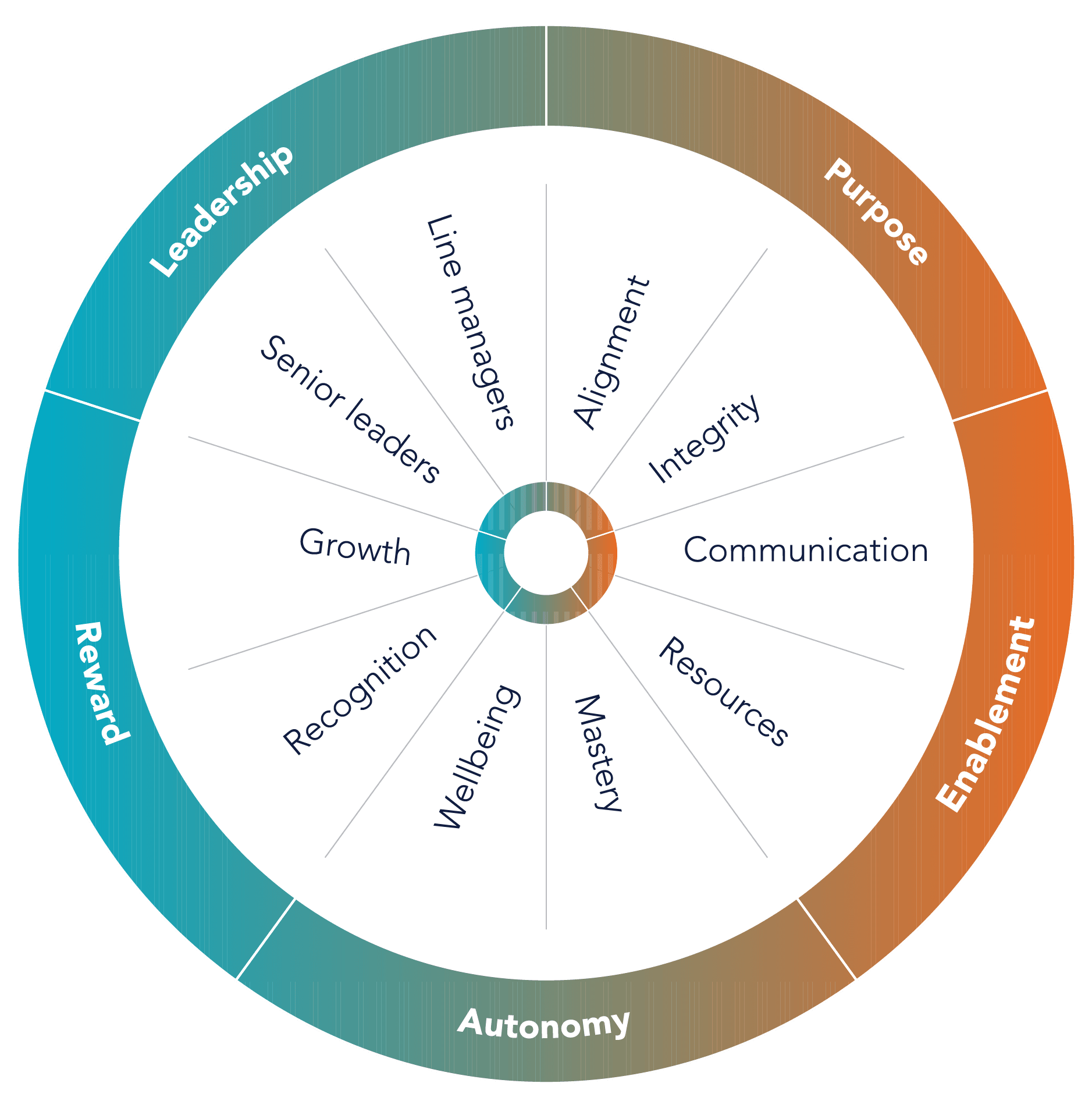
    At People Insight, our research-backed Pearl™ model, created by experienced organisational psychologists, identifies five core drivers of employee engagement:

    • Purpose
    • Enablement
    • Autonomy
    • Reward
    • Leadership

    These five drivers give organisations a practical framework for understanding how employees experience work and where change is most needed.

    Related: How to improve employee engagement

    What are the drivers of employee engagement?

    The drivers of employee engagement are the conditions and experiences that most influence how motivated, committed and emotionally connected employees feel at work.

    Put simply, they are the factors that shape whether people feel positive about their work, willing to give their best and likely to stay.

    At People Insight, we group those factors into five core drivers through the Pearl™ model:

    • Purpose: understanding where the organisation is going and how your role contributes
    • Enablement: having the tools, support and conditions needed to do your job well
    • Autonomy: having trust, flexibility and appropriate control over your work
    • Reward: feeling recognised, valued and fairly supported in return for your contribution
    • Leadership: having confidence in leaders and line managers

    This framework makes employee engagement easier to interpret and much easier to act on.

    Why understanding the drivers of employee engagement is so important

    Many organisations measure employee engagement, but fewer understand what is driving it.

    That creates a problem. An engagement score can tell you how people feel overall, but it cannot tell you where to focus or what to fix unless you look at the underlying drivers.

    Understanding the drivers of employee engagement helps organisations:

    • identify where experience is strongest and weakest
    • focus action plans more effectively
    • support leaders and managers with clearer priorities
    • improve retention, performance and employee experience
    • track progress in a more meaningful way

    This is what makes employee listening more useful. A survey should not just tell you that engagement is high or low. It should help you understand why.

    The 5 drivers of employee engagement in the Pearl™ model

    Discover more about what drives employee engagement below.

    Pearl model

    1. Purpose

    Purpose is about helping employees understand what the organisation is trying to achieve and how their own role contributes to that bigger picture.

    This is one of the most important drivers of employee engagement because people are more likely to feel motivated when they can see meaning in their work. When employees understand the organisation’s aims and can connect their day-to-day responsibilities to those aims, work feels more relevant and more worthwhile.

    Purpose depends on:

    • clear communication about organisational goals
    • helping employees see how their work contributes
    • regular updates on priorities and progress
    • leaders making direction visible in everyday working life

    Global benchmark snapshot:

    • 82% of employees understand the aims of their company
    • 87% know how the work they do helps their company achieve its aims
    • Only 60% know how well their company is doing against its objectives

    That final figure is really important. It suggests many employees understand the direction of travel, but far fewer feel clear on whether the organisation is actually making progress. That kind of line-of-sight gap can weaken engagement over time.

    2. Enablement

    Enablement is about whether employees have the resources, support, communication and working conditions they need to succeed.

    Even highly motivated people can become frustrated if work feels harder than it should. Poor systems, weak cross-team communication or a lack of development can all get in the way of good work.

    Enablement includes:

    • access to the right equipment and resources
    • training and development
    • supportive colleagues
    • open communication
    • effective collaboration between teams
    • working conditions that help people perform well

    Global benchmark snapshot:

    • 69% feel they can get the training and development they need to do their job
    • 53% feel people communicate openly regardless of position or level
    • 77% feel people help and support each other at work
    • 74% are satisfied with their physical work environment
    • 72% feel they have the equipment and resources they need to do their work properly
    • Only 46% feel communication is good between different teams

    This is a strong example of why the drivers of employee engagement matter. Support from colleagues looks relatively healthy, but cross-team communication is still a clear weak spot. That kind of friction can have a real effect on how easy work feels day to day.

    3. Autonomy

    Autonomy is about trust, ownership and having the freedom to do your job well.

    Employees are more likely to feel engaged when they have the space to make decisions, manage their work and contribute their views. Autonomy is also closely connected to work-life balance, wellbeing and workload, all of which shape whether work feels sustainable.

    Autonomy often includes:

    • flexibility over how work gets done
    • trust in employees’ judgement
    • manageable workloads
    • support for health and wellbeing
    • employee voice in decisions that affect work

    Global benchmark snapshot:

    • 74% feel they can strike the right balance between work and home
    • 65% say their company does enough to support their health and wellbeing at work
    • 80% feel they have the freedom they need to get on with their job
    • 64% say they can comfortably cope with their workload
    • 65% say their opinion is sought on decisions that affect their work

    The strongest score here is freedom to get on with the job. The weaker scores around workload, wellbeing and voice show that autonomy is about more than independence alone. It also depends on whether people feel supported and listened to.

    Related case study: Check out the Catalyst IT Europe approach to autonomy and balance

    4. Reward

    Reward is one of the clearest drivers of employee engagement because it shapes whether employees feel valued in return for what they contribute.

    This goes beyond salary. Reward includes recognition, development, fairness and the sense that effort is noticed and appreciated. It is both practical and emotional.

    Reward includes:

    • fair pay
    • benefits
    • recognition
    • opportunities to learn and grow
    • career development
    • a visible link between contribution and reward

    Global benchmark snapshot:

    • 63% feel valued and recognised for the work they do
    • 63% say they have the right opportunities to learn and grow at work
    • 59% say their career development aspirations are being met
    • 52% say their rewards are linked to their performance and contribution
    • Only 50% are satisfied with the pay they receive for the work they do

    Reward remains one of the biggest pressure points. Pay satisfaction is still low, but the story is wider than pay alone. Recognition, career development and fairness all shape whether reward feels meaningful in practice.

    5. Leadership

    Leadership is the driver that often influences all the others.

    Employees look to senior leaders and line managers for clarity, support, fairness and confidence in the future. Leadership affects whether purpose feels real, whether change feels credible and whether employees believe their feedback will lead to action.

    Strong leadership includes:

    • clear direction from senior leaders
    • regular feedback from line managers
    • fair and respectful management
    • visible listening and follow-through
    • consistency between words and actions

    Global benchmark snapshot:

    • 62% feel senior leaders provide a clear vision of the overall direction of their company
    • 69% say their line manager gives them regular feedback on how they are doing
    • 84% say their line manager treats them fairly and with respect

    That final figure is encouraging, but the lower score for senior leadership vision suggests that leadership may feel stronger at the local manager level than at the broader organisational level. For many organisations, that is where engagement work needs to focus.

    Related: How to improve leadership skills in your company

    Which drivers of employee engagement matter most?

    All five drivers matter and they work together. That is why the Pearl™ model is so useful. It helps organisations avoid focusing too narrowly on one issue while missing the broader experience of work.

    That said, not every organisation will have the same pressure points.

    For one employer, leadership may be the main issue. For another, the biggest barrier to engagement might be reward, enablement or purpose. The point is not to assume. The point is to listen properly and identify which drivers of employee engagement are having the greatest effect in your organisation.

    That is where employee surveys make the difference.

    At People Insight, our employee surveys help organisations understand not just whether engagement is high or low, but which of the five drivers need the most attention. Prism, our integrated AI, adds another layer by helping teams summarise comments at scale, uncover what sits behind the scores and identify recurring themes more quickly.

    That leads to sharper listening and smarter action.

    How to improve the drivers of employee engagement

    Understanding the drivers of employee engagement is only the first step. Improvement comes from focused action.

    A practical approach looks like this:

    1. Start with the data

    Use employee surveys to understand how employees are experiencing Purpose, Enablement, Autonomy, Reward and Leadership. Look for patterns across teams, roles, locations and demographic groups.

    2. Prioritise the biggest gaps

    Do not try to fix everything at once. Focus on the areas that are having the strongest effect on engagement or where experience is most inconsistent.

    3. Use comments to add context

    Scores show you where to look. Comments help explain why. Prism can help summarise comments at scale, making it easier to understand what employees are really saying.

    4. Turn insight into action plans

    Assign actions, owners and timescales. Keep plans realistic and visible. Employees are far more likely to stay engaged with listening if they can see that feedback leads to change.

    5. Track progress over time

    Engagement is not a one-off project. Revisit the drivers regularly and measure whether your actions are improving the employee experience.

    Turning the drivers of employee engagement into action

    One of the biggest mistakes organisations make is treating employee engagement as too broad to act on. In reality, engagement improves when organisations focus on the specific drivers shaping employee experience.

    For example:

    • if Purpose is weak, improve visibility of progress against goals
    • if Enablement is weak, remove friction and improve communication between teams
    • if Autonomy is under pressure, review workload, flexibility and employee voice
    • if Reward is weak, look at recognition, growth and fairness
    • if Leadership is the issue, support managers and strengthen leadership communication

    This is where People Insight helps organisations move from insight to action. Our surveys help identify the drivers of employee engagement. Prism helps uncover deeper context from employee comments. Our survey platform and consultants help organisations prioritise the right actions and build momentum after the survey.

    Why the drivers of employee engagement should shape your survey strategy

    If you want employee listening to lead to meaningful improvement, your survey strategy should be built around the right framework.

    Using the drivers of employee engagement as a structure helps organisations:

    • ask better questions
    • interpret results more clearly
    • communicate findings in a way leaders understand
    • create more targeted action plans
    • track progress against the things that matter most

    That is why the Pearl™ model is so incredibly helpful and actionable. It helps organisations move beyond measurement alone and focus on the experiences that shape engagement in real working life.

    Build stronger engagement with People Insight

    The five drivers of employee engagement in the Pearl™ model provide a clear framework for understanding what helps people feel motivated, connected and committed at work.

    Purpose, Enablement, Autonomy, Reward and Leadership all shape engagement in different ways. When organisations understand how employees are experiencing those drivers, they can take more focused action and create more meaningful improvement over time.

    At People Insight, we help organisations do exactly that through employee surveys, deeper analysis, Prism-powered comment summaries and practical action planning support.

    Want to see which drivers of employee engagement are having the biggest impact in your organisation? Get in touch to learn how People Insight can help you gather better insight, understand what sits behind the scores and turn employee voice into meaningful improvement.

    FAQs about the drivers of employee engagement

    A quick run down on all you need to know

    What are the drivers of employee engagement?

    The drivers of employee engagement are the main factors that shape how motivated, committed and connected employees feel at work. At People Insight, the Pearl™ model identifies five core drivers of employee engagement: Purpose, Enablement, Autonomy, Reward and Leadership.

    Why are the drivers of employee engagement important?

    The drivers of employee engagement are important because they help organisations understand what is shaping engagement, rather than relying on an overall score alone. That leads to better decisions and more targeted action.

    Which driver of employee engagement matters most?

    There is no single driver that matters most in every organisation. The most important driver depends on the employee experience in your organisation. For some, leadership may be the biggest issue. For others, reward, enablement or purpose may matter more. The key is to use employee feedback to identify what is having the biggest impact.

    How can organisations improve the drivers of employee engagement?

    Organisations can improve the drivers of employee engagement by gathering employee feedback, identifying the biggest gaps, analysing comments for context and creating focused action plans. Regular communication and visible follow-through are essential.

    How do employee surveys help identify the drivers of employee engagement?

    Employee surveys help identify the drivers of employee engagement by showing how employees experience areas such as purpose, enablement, autonomy, reward and leadership. They also help organisations spot trends and track progress over time.

    What is the Pearl model of employee engagement?

    The Pearl™ model is People Insight’s framework for understanding the five core drivers of employee engagement: Purpose, Enablement, Autonomy, Reward and Leadership. It helps organisations interpret survey data and focus their action planning on the areas that matter most.

    How does leadership affect employee engagement?

    Leadership affects employee engagement by shaping clarity, trust, fairness and confidence. Strong leadership helps employees feel supported and connected, while weak leadership can undermine many other drivers of engagement.

    How does reward affect employee engagement?

    Reward affects employee engagement by influencing whether employees feel valued, recognised and fairly supported. Reward includes pay, but it also includes recognition, development and career opportunity.

    How can People Insight help with the drivers of employee engagement?

    People Insight helps organisations understand and improve the drivers of employee engagement through employee surveys, benchmark insight, Prism-powered comment summaries and practical action planning support.