



















Case studies:

Clarion Events: Developing a D&I strategy

How Clarion Events develop inclusion strategies in the workplace for diversity and inclusion engagement support

Clarion Events Developing a D&I strategy case study

    Introduction

    When it comes to putting a D&I strategy in place and addressing issues around diversity and inclusion, many organisations feel wary of getting started. What if they get something wrong, say the wrong thing or fail to meet employee expectations?

    Clarion Events is a strong example of an organisation that moved past those fears and developed a Diversity and Inclusion strategy with employee voice at its centre.

    At our webinar, “How to develop your D&I strategy”, Cheryl Busby, Clarion’s HR Director, shared the organisation’s journey towards creating a D&I strategy that was sustainable, practical and led from the top. It is a useful Diversity and Inclusion strategy example for any organisation that wants to move beyond compliance and create visible action from employee feedback.

    People Insight had already supported Clarion through their employee survey programme, helping them understand the wider employee experience through clear survey insight, engagement data and expert interpretation. That foundation gave Clarion an important starting point: a better understanding of what employees were feeling, where trust was strong and where more focused listening and action were needed.

    Catch up on our D&I webinar here:

    Why did Clarion need a Diversity and Inclusion strategy?

    Clarion Events is the 3rd largest international events organiser in the world, with almost 2,000 employees spread across offices in Europe, Asia and the US. Clarion is a highly successful organisation and an employer of choice within the industry.

    Like many organisations, Clarion was D&I compliant. The right policies and procedures were in place, but that was as far as their strategy went. Looking at their success, some might have believed there was no need to change how they were doing things. Their investors were happy. They attracted and retained strong people and their most recent employee survey with People Insight revealed a 72% employee engagement score.

    However, compliance and engagement scores alone do not always show the full picture. A strong employee listening approach helps organisations look beyond headline results and understand whether people feel included, heard and able to speak openly about their experiences. This is where employee survey data, local insight, dashboards and expert interpretation become especially valuable.

    Clarion had previously felt that it was not appropriate to align their brands and business with external campaigns, and communicated this message internally when asked. They continued this approach in the aftermath of the death of George Floyd in May 2020, a decision that Cheryl recognises was not the right one.

    Engage your leaders with D&I: The business case for Diversity & Inclusion

    BLM: A wake up call for Clarion

    In the wave of reaction to Black Lives Matter, Clarion received strong feedback from employees that they should have a voice and address the issues being raised. Their employees needed their support.

    Initially, Clarion sent an email via HR to their UK employees. It acknowledged the impact of BLM and invited colleagues to message or call Cheryl to discuss this further. Cheryl received lots of heartfelt feedback from employees who felt Clarion could do more to oppose racism.

    People wanted to hear more from their management board and wanted a place to share their thoughts and feelings.

    This was a real wake-up call for Clarion, and in particular for their management board. The importance of D&I for the future success of their business could not be ignored.

    It also showed why employee listening cannot be limited to an annual survey alone. Surveys are essential for understanding trends, benchmarking progress and giving leaders a reliable view of the employee experience. But organisations also need the confidence and support to respond when feedback highlights something urgent, sensitive or emotionally charged.

    Getting Clarion’s D&I strategy off the ground

    Clarion’s is a great example of a Diversity & Inclusion strategy that hit the ground running by incorporating employee listening, leadership engagement and communications. For example, they:

    Talked and listened to employees

    Having recognised the need to engage current and future employees around D&I, Clarion’s management board members arranged to speak to each employee who had shared feedback about the silence and inactivity around BLM. Through these conversations, the management team wanted to understand colleague views and ask how Clarion could do better.

    This kind of direct listening complemented the wider insight Clarion was already gathering through People Insight’s employee surveys. Together, these listening channels helped Clarion move from assumption to understanding.

    Admitted they were scared

    Cheryl acknowledged that as a senior team, they felt afraid of messing up. They were a devolved business with teams across the globe, and knew they had significant gaps in data and knowledge around the diversity of their people.

    This honesty mattered. It helped Clarion move away from silence and towards curiosity, learning and action. It also created a clearer need for structured listening, better data and visible leadership accountability.

    Asked for help

    Clarion discovered a hidden gem amongst their own team: a recently employed Group General Counsel who had been part of a global D&I initiative at the BBC. This internal knowledge boosted Clarion’s confidence as they developed their D&I strategy.

    For other organisations, this support might come from internal experts, employee networks, external specialists or People Insight’s consultancy services, where experienced consultants help interpret employee feedback, identify priorities and turn survey insight into practical next steps.

    Added D&I pages to their internal website

    Clarion built and launched several pages specific to D&I, to communicate their programme, activities and objectives to employees.

    This is an important part of closing the feedback loop. Employees need to see what has been heard, what is being worked on and how they can stay involved. Clear survey communications help organisations build trust before, during and after listening activity.

    Launched quarterly listening forums

    In response to employee feedback, Clarion created safe places for colleagues to meet and share their experiences, ideas and questions. These forums are moderated by an independent diversity consultant, with senior leaders invited to attend from time to time.

    The forums gave Clarion a regular way to listen between survey cycles. This helped them understand the human stories behind the data, test whether actions were landing well and keep inclusion on the leadership agenda.

    Appointed employees as diversity representatives

    Clarion felt it was important for the forums to have a mechanism to give feedback to senior leaders, so they invited employees to apply to be “Diversity Representatives” via their new D&I web pages. Clarion’s 14 Diversity Reps attend the listening forums and take it in turns to share feedback at quarterly management board meetings.

    The reps also join bi-annual meetings with Clarion’s owners, to help raise and consider D&I issues. For local impact, the Diversity Reps meet with their regional MDs to focus on local D&I differences and make local plans.

    What Clarion didWhy it matteredHow People Insight supports this kind of work
    Used employee feedback as a trigger for changeHelped leaders understand where silence was damaging trustEmployee surveys, dashboards and expert interpretation help leaders identify what employees are really experiencing
    Created listening forumsGave employees a safe space to share lived experienceSurvey insight can be combined with listening sessions, comment analysis and local feedback
    Communicated D&I activity internallyHelped employees see that the organisation was taking actionSurvey communications support participation, trust and visible follow-up
    Appointed diversity representativesBuilt a route from employee voice to board-level discussionAction planning and manager support help turn insight into local ownership
    Set leadership accountabilityMade D&I a business priority, not just an HR projectBenchmarking, reporting and consultancy help leaders track progress and stay focused

    A D&I strategy example: Clarion’s plan on a page

    Clarion held their first D&I listening forum in September 2020 and it soon became clear that the forums were a great start, but that employees wanted to see their leaders commit to D&I actions and KPIs. They were looking to their leaders to set the agenda.

    Cheryl remembers that as a senior team they felt panicked at this prospect. They worried about over-promising and under-delivering but, realising they needed to be seen to lead, they set out objectives and actions for the year ahead and wrote their first D&I strategy.

    Their D&I strategy for phase 1 included their mission statement, their aim for the first 12 months and their business priorities.

    For organisations running an employee listening programme, this is where clear reporting and prioritisation are so important. Feedback creates momentum, but leaders need to know what to do with it. People Insight’s employee survey platform helps organisations bring survey results, dashboards and reporting together so leaders can understand key themes, compare results across teams and focus action where it will have the greatest impact.

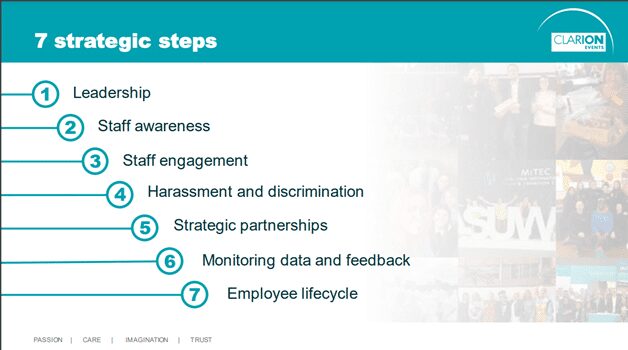
    Phase 1: Clarion’s 7 strategic steps

    Based on the business priorities in their D&I strategy, Clarion went on to identify 7 steps for the year ahead.

    For each step, they made clear:

    • The actions that would be taken
    • The outcomes they believed each step would achieve in Phase 1
    • How they would measure the success of each action, including its impact on employee engagement, feedback from employees and willingness of employees to share D&I data

    To ensure that leadership were engaged and accountable, each Board member was appointed as sponsor and responsible for 1 of the 7 steps. Clarion were determined their D&I strategy would be led from the front.

    This is a strong example of moving from listening to action. Clarion did not stop at gathering feedback. They translated employee voice into priorities, created named ownership and agreed how progress would be measured.

    For many organisations, this is the point where People Insight adds real value. Our consultants help teams interpret survey results, understand benchmarks, explore employee comments and build focused action plans. Prism-supported insight can also help leaders and managers identify themes faster, summarise feedback clearly and move from raw comments to practical next steps without losing the human context.

    7 strategic steps


    Lessons learned and Cheryl’s advice for others

    Looking back at their D&I programme so far, Cheryl is rightly proud of what Clarion has achieved on their D&I journey and recognises that this is just the beginning. She shared her lessons for other organisations getting started with their D&I strategy.

    1. Listen, listen and listen some more!

    Listen to employee feedback. Don’t interrupt, be defensive or self-justifying. Just listen.

    Clarion partner with People Insight to run employee surveys that capture feedback about all parts of the employee experience, which Clarion use to shape business changes and priorities around the needs of their people.

    A strong listening programme gives employees different ways to be heard. Employee surveys provide robust data, benchmarking and trends. Listening forums and local conversations bring depth and context. Dashboards and reporting help leaders see where experiences differ across teams, regions or demographic groups. Together, these insights help organisations focus on what matters most.

    Find out more about People Insight’s employee surveys

    2. It’s OK not to know what to do or say

    You won’t always know what to do, or what the answer is. And that’s OK. But it’s not OK not to do anything.

    Clarion’s experience shows that leaders do not need to have every answer before they start. What matters is being willing to listen, acknowledge mistakes and take visible action.

    This is where expert support can give leaders confidence. People Insight helps organisations interpret sensitive feedback, understand what employees are really saying and decide what action is realistic, credible and likely to build trust.

    3. Set employee expectations

    Be clear about what you can and cannot do, particularly given the current situation.

    When organisations ask for feedback, they also create expectations. Employees want to know what will happen next, who is responsible and how progress will be shared.

    That is why action planning and communication are essential parts of any employee survey programme. The aim is not to promise instant change. It is to show employees that feedback has been heard, priorities have been chosen and action is underway.

    4. You don’t have to do it yourself

    Find support from others who have already been on that journey. Like Clarion, you might discover this experience in your current team or need to look externally.

    The most effective D&I strategies are not built by HR in isolation. They involve employees, senior leaders, managers, internal experts and external support where needed.

    People Insight supports organisations by combining technology with expert guidance. Our employee survey platform helps capture and report feedback clearly. Prism helps surface themes and practical next steps. Our consultants help leaders interpret the results, prioritise action and support managers to make change visible at local level.

    And finally, we asked Cheryl what her 2 pieces of advice would be for someone developing a D&I strategy

    • Make sure to be curious and brave. Learn to sit with some of the discomfort. But above all, be committed to act.
    • From a business point of view, D&I must be led from the top. Nothing really happened for Clarion until their CEO and Board Members got behind, pushed and promoted their programme.

    Clarion’s story is a reminder that employee listening only creates value when it leads somewhere. The organisations that build trust are the ones that listen honestly, communicate clearly and turn feedback into visible, meaningful action.

    Plan your D&I Survey Today

    People Insight helps organisations of all sizes and sectors measure D&I, understand the wider employee experience and use insight to create more inclusive workplaces.

    Whether you need a dedicated D&I survey, a full employee engagement survey or support turning feedback into action, our team can help you design the right listening approach, communicate it well and make sense of the results.

    For more Diversity and Inclusion strategy examples, or to speak to us about how we can help, please get in touch.

    What is a D&I strategy?

    A D&I strategy is a structured plan for improving diversity, equity, inclusion and belonging across an organisation. It should set out what the organisation is trying to change, how progress will be measured, who is accountable and how employees will be involved.

    How can employee surveys support a D&I strategy?

    Employee surveys help organisations understand whether people feel included, respected, treated fairly and able to speak up. Survey results, dashboards, benchmarks and employee comments can help leaders identify priority areas and track whether action is improving the employee experience over time.

    Why is leadership important in a D&I strategy?

    Leadership is essential because D&I work needs visible commitment, accountability and follow-through. Clarion’s experience showed that progress accelerated when the CEO and Board Members actively supported and promoted the programme.

    How can organisations turn D&I feedback into action?

    Organisations can turn D&I feedback into action by listening carefully, identifying clear priorities, assigning ownership, communicating what will happen next and reviewing progress regularly. People Insight supports this through employee survey technology, Prism-supported insight, consultancy, action planning and manager support.

    How does People Insight help organisations improve inclusion?

    People Insight helps organisations measure employee experience, understand inclusion-related feedback and turn survey results into practical action. This includes employee surveys, dashboards and reporting, benchmarking, Prism-supported insight, expert interpretation, survey communications and action planning support.