



















Higher Education case studies:

Royal Northern College of Music: turning trust into action in a specialist HE environment

RNCM shows how trust, purpose and pride can shape an exceptional specialist HE experience.

rncm inspire
89%
Engagement score
90%
purpose score
74%
feel valued and recognised for the work they do

    A quick insight

    RNCM’s results show what can happen when a strong sense of purpose is matched by visible action. By building trust in the survey process, protecting a collegial culture and keeping action planning live and visible, the College has created an employee experience shaped by pride, collaboration and shared commitment. 

    RNCM: recognised for inspirational employee experience

    The Royal Northern College of Music has built an employee experience that stands out for its sense of purpose, collegiality and visible action. Its latest results reflect not just strong scores, but a listening approach that staff can trust. 

    RNCM has continued to build on the progress made since its previous survey, showing colleagues that their feedback is listened to and leads to meaningful action. That kind of consistency is exactly what helps institutions earn recognition through initiatives such as Inspire HE and build a more inspirational employee experience over time. 

    Building trust through visible action 

    RNCM is clear about what has made the biggest difference since its last survey: visible action. After listening carefully in 2023 and acting on staff views, the College used its 2025 survey cycle to reinforce that feedback does lead to change. Staff have seen clearer action in response to what they shared, helping to build trust in the process. 

    That approach shows how trust grows when people can see their views influencing real decisions and improvements over time. RNCM’s action planning approach has been coordinated, live and visible, with priorities owned across departments and schools. Managers and teams have focused on a small number of meaningful actions, revisiting them regularly and communicating progress clearly through intranet updates and “You said, We did” messaging. 

    A strong sense of purpose and pride

    Purpose is one of RNCM’s standout strengths. Staff can clearly see the value of their work because the College’s mission is so distinctive: supporting exceptional musical talent and contributing to cultural life locally, nationally and internationally. 

    RNCM works hard to connect individual roles and teams to that bigger picture, helping people understand not just what they do, but why it matters. That helps explain both the 90% purpose score and the 87% who say their work gives them a sense of personal achievement. 

    This sense of meaning shows up in everyday working life through pride in contribution, commitment to high standards and a shared understanding of the impact staff have on students, service users and the wider cultural community. 

    Collegiality, respect and recognition

    RNCM’s results also point to an especially strong culture of collegiality. As a small specialist higher education institution, it places high value on mutual respect, professionalism and shared responsibility for both student and staff experience. Smaller teams, cross-institutional projects and open communication channels all help support that culture, while leadership reinforces the message that how people work together is just as important as what they deliver. 

    Recognition is another important part of the story. Alongside formal processes, managers are encouraged to acknowledge contributions in everyday ways through feedback, opportunities and trust. RNCM also has reward and recognition initiatives open to all, helping staff feel that their work is noticed and valued rather than taken for granted. 

    Together, those strengths help explain why relationships between colleagues score so highly and why the employee experience feels so positive across the institution. 

    Creativity, autonomy and flexibility in practice

    The employee experience at RNCM is also shaped by creativity, excellence and innovation. These qualities are not limited to the student-facing side of the organisation. They are part of the working culture, too. Staff are encouraged to think creatively about how they work, improve processes and respond to challenges, with space for professional judgement, experimentation and continuous improvement. 

    Flexibility is another clear strength. RNCM’s blended working framework is highly valued because it is underpinned by clear expectations, strong relationships and mutual accountability. Some activities work best in person, while others are well suited to remote working, and teams are trusted to agree clear, consistent ways of working. That balance has helped improve engagement and wellbeing without undermining collaboration or delivery. 

    Related: Read more about wellbeing in higher education for a broader sector perspective. 

    A more joined-up approach to wellbeing 

    RNCM’s growing wellbeing infrastructure has also had a noticeable impact on staff experience. The biggest difference appears to have come from a more visible, joined-up approach. The Staff Wellbeing Framework has given structure and legitimacy to wellbeing conversations, while events and support services such as the EAP and Access to Work signal that wellbeing is taken seriously rather than treated as an add-on. 

    The Staff Wellbeing Group, created in 2022, coordinates a range of wellbeing interventions with direct staff input and has now evolved into a wider network of trained wellbeing champions. That kind of visible infrastructure helps wellbeing feel embedded in the organisation, rather than left to individual teams to interpret alone. 

    Inclusion, resilience and what comes next 

    RNCM says its work on diversity, inclusion and fairness has helped create a more open environment, where people feel safer to express their views and be themselves at work. Policies, training and dialogue have all contributed, although the College is clear that more work remains to be done, with further progress expected through its new strategic plan. 

    There are also signs that a stronger staff experience is helping the organisation more broadly. RNCM notes that stronger employee engagement supports the conditions for high-quality teaching, support and student experience, even if direct attribution is complex. It also points to greater resilience and confidence in navigating an increasingly challenging external environment, which is especially important in a small institution where teams work closely together. 

    Looking ahead, RNCM’s focus is on protecting what is already working well while continuing to improve where experiences differ. The College is particularly alert to the importance of everyday leadership behaviours and the role managers play in shaping positive experiences. 

    How People Insight helped 

    RNCM highlights the People Insight platform as a valuable part of its listening and action planning approach. The College points in particular to the clarity of the dashboards, the ease of interrogating results and the ability to benchmark both against previous surveys and the higher education sector. 

    Prism, our integrated AI, was also new for RNCM’s 2025 survey and proved particularly useful for managers, helping them interpret staff feedback and build evidence-based action plans. This supports exactly the kind of practical actioh that helps institutions move from insight to visible improvement. 

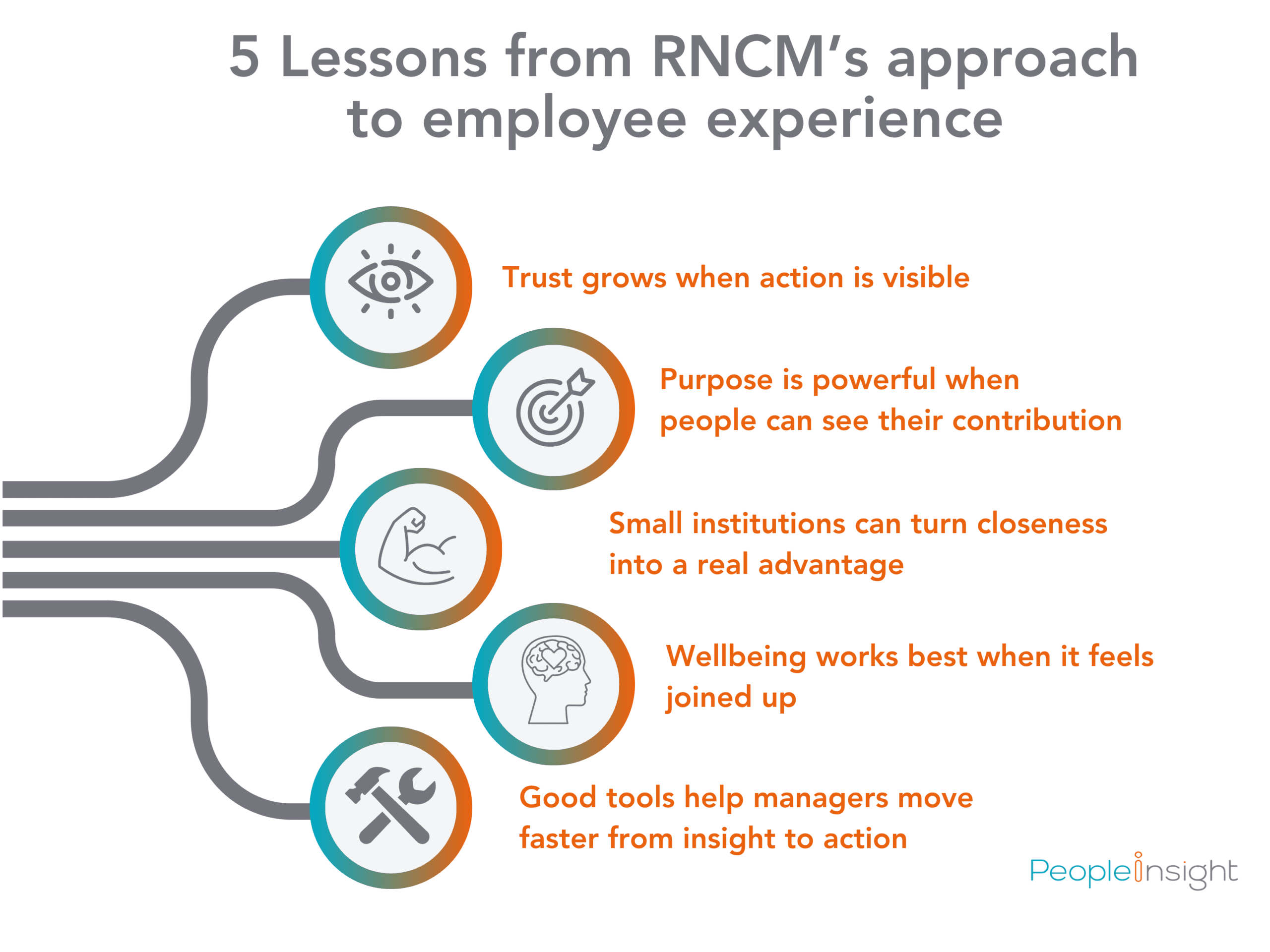
    Lessons from RNCM’s approach to employee experience 

    What lessons can we take from RNCM, its Inspire HE accomplishments and its wider approach to employee experience? 

    Lessons from RNCM’s approach to employee experience

    1. Trust grows when action is visible

    RNCM’s results show the value of making follow-up actions clear. Staff are more likely to engage with surveys when they can see that feedback leads to action over time. 

    1. Purpose is powerful when people can see their contribution

    A distinctive mission can be a major strength, but only when roles and teams are clearly connected to it. RNCM’s scores suggest that line of sight is strong. 

    1. Small institutions can turn closeness into a real advantage

    RNCM’s size helps it build collegiality, mutual respect and shared ownership. Those qualities are not accidental. They are reinforced through culture, leadership and open communication. 

    1. Wellbeing works best when it feels joined up

    A visible framework, dedicated activity and ongoing support make wellbeing feel real rather than symbolic. RNCM’s approach shows the value of treating wellbeing as part of the employee experience, not a separate initiative. 

    1. Good tools help managers move faster from insight to action

    RNCM’s use of dashboards, benchmarking and Prism shows how the right tools can help managers interpret feedback more confidently and build stronger action plans. 

    Work with us to create an inspirational culture in HE 

    RNCM’s story shows what can happen when a strong sense of purpose is matched by visible action, trusted leadership and a listening approach that staff believe in. 

    At People Insight, we help higher education institutions listen better, understand what sits behind the scores and comments and turn insight into meaningful improvement. Whether you are looking to strengthen credibility, support managers with action planning or build a more joined-up listening strategy, we can help. 

    See how we support higher education institutions in the UK and around the world, or get in touch to find out how we can help you create an inspirational culture in HE. 


    Related case studies

    Exeter College, Oxford: Building a more connected, responsive employee experience

    The University of Manchester: Listening at scale

    Inside the University of Sunderland in London’s four day work week

    Shared ownership of engagement at the Royal College of Physicians

    Royal Northern College of Music: turning trust into action in a specialist HE environment