

















Blogs:

How to interpret your 360 feedback results 

A practical guide to reading your 360 feedback results, understanding what they mean and turning them into focused development.

Interpret your 360 results 

    A quick insight: 360 feedback results are only useful if you understand how to interpret them. The real value comes from understanding the patterns behind the scores, the gaps between self-perception and others’ experience, and the behaviours that will make the biggest difference going forward. A good interpretation process helps turn feedback into clearer self-awareness, stronger development priorities and more meaningful action. 

    Getting your 360 feedback results can feel affirming, surprising, uncomfortable or all three at once. That’s completely normal. 

    A 360 report gives you a rounded picture of how your behaviours are experienced by different people, usually including your line manager, peers, direct reports and your own self-assessment. The aim is not to catch you out, but to help you understand your strengths, spot patterns you may not have seen before and focus your development where it will have the greatest effect. 

    At People Insight, this fits naturally with Sharper listening. Smarter action. In a 360 context, that means listening clearly to how your behaviours are experienced by others, then turning that insight into focused, practical development. 

    This guide explains how to interpret your 360 feedback results in a way that is constructive, grounded and genuinely useful. 

    Related: What is 360 feedback? 

    What 360 feedback results should include 

    A good 360 feedback report should give you more than one overall score. 

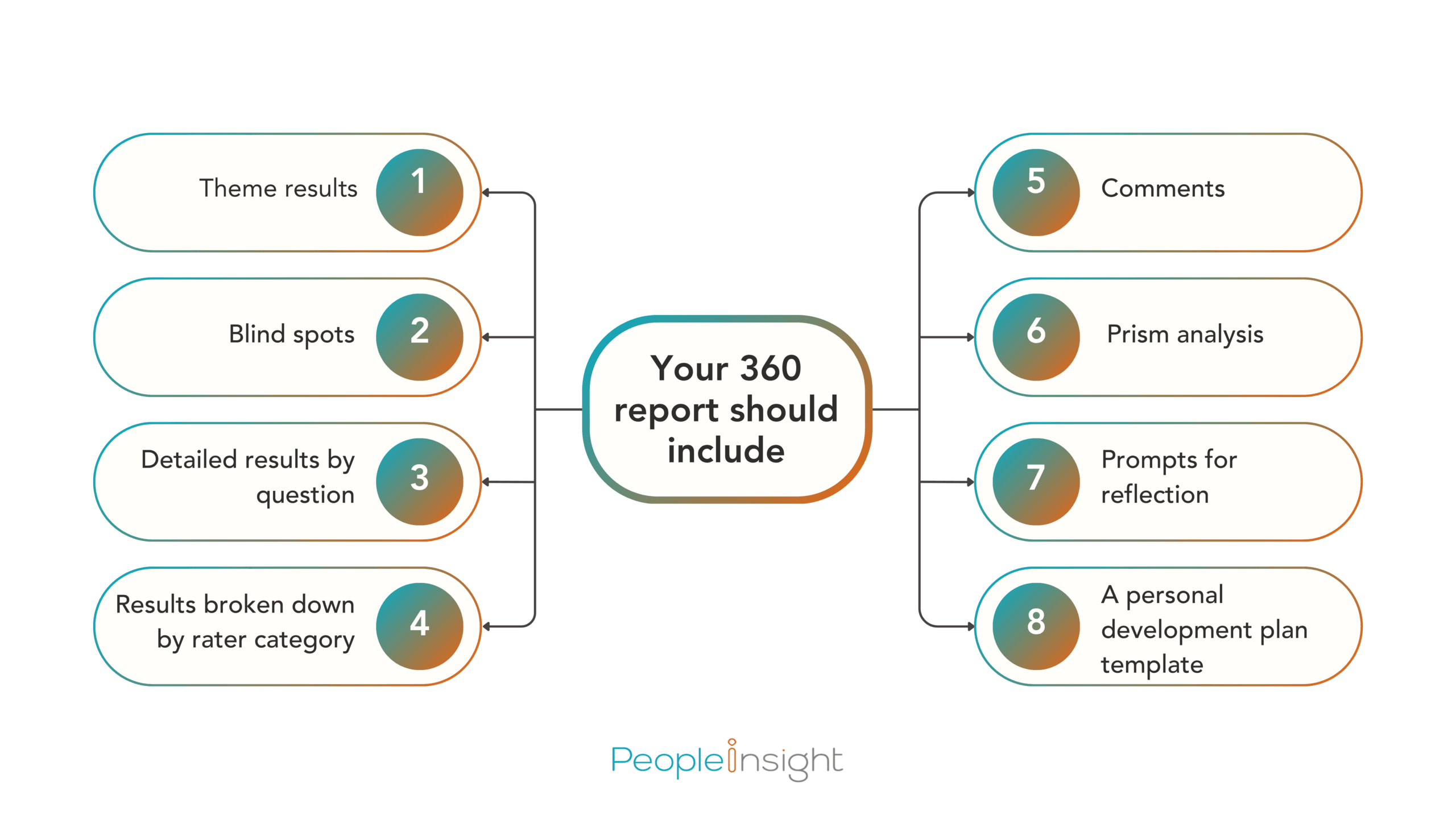
    A strong 360 report from People Insight will usually include: 

    Your 360 report should include

    • theme results 
    • blind spots 
    • detailed results by question 
    • results broken down by rater category 
    • comments 
    • Prism analysis 
    • prompts for reflection 
    • a personal development plan template 

    Related: Advantages of 360 feedback 

    Start with the right mindset 

    Before you jump straight into a 360 report and get into the detail, it helps to approach your 360 feedback results in the right way. 

    A few principles matter here: 

    • constructive feedback is there to help you improve 
    • a lower score is not a personal attack 
    • even highly rated leaders still have room to develop 
    • the goal is not to defend every score, but to understand the pattern 
    • the most useful development plans focus on two or three priority areas, not ten 

    It’s worth keeping in mind that 360 feedback results are much easier to use well when you treat them as insight rather than judgement. 

    What to look at first 

    A common mistake is to jump straight to the lowest score and panic. A better approach is to work through your 360 feedback results in a sequence.

    1. Theme results

    Start with the theme-level scores. 

    A typical 360 report may group results into themes such as: 

    • Strategy 
    • Agility 
    • Performance 
    • Engagement 
    • Influencing 
    • Integrity 
    • Development 

    This is useful because theme scores give you a quick sense of where your strongest and weakest areas sit overall. 

    The question is not just “Which theme scored lowest?” It is also: 

    • Which themes are relatively stronger? 
    • Which themes show the biggest gap between self and others? 
    • Which themes matter most for your role? 

    That helps you avoid overreacting to one number and instead start with a more balanced view. 

    2. Blind spots

    Next, take a quick look at your ‘blind spots’ section. 

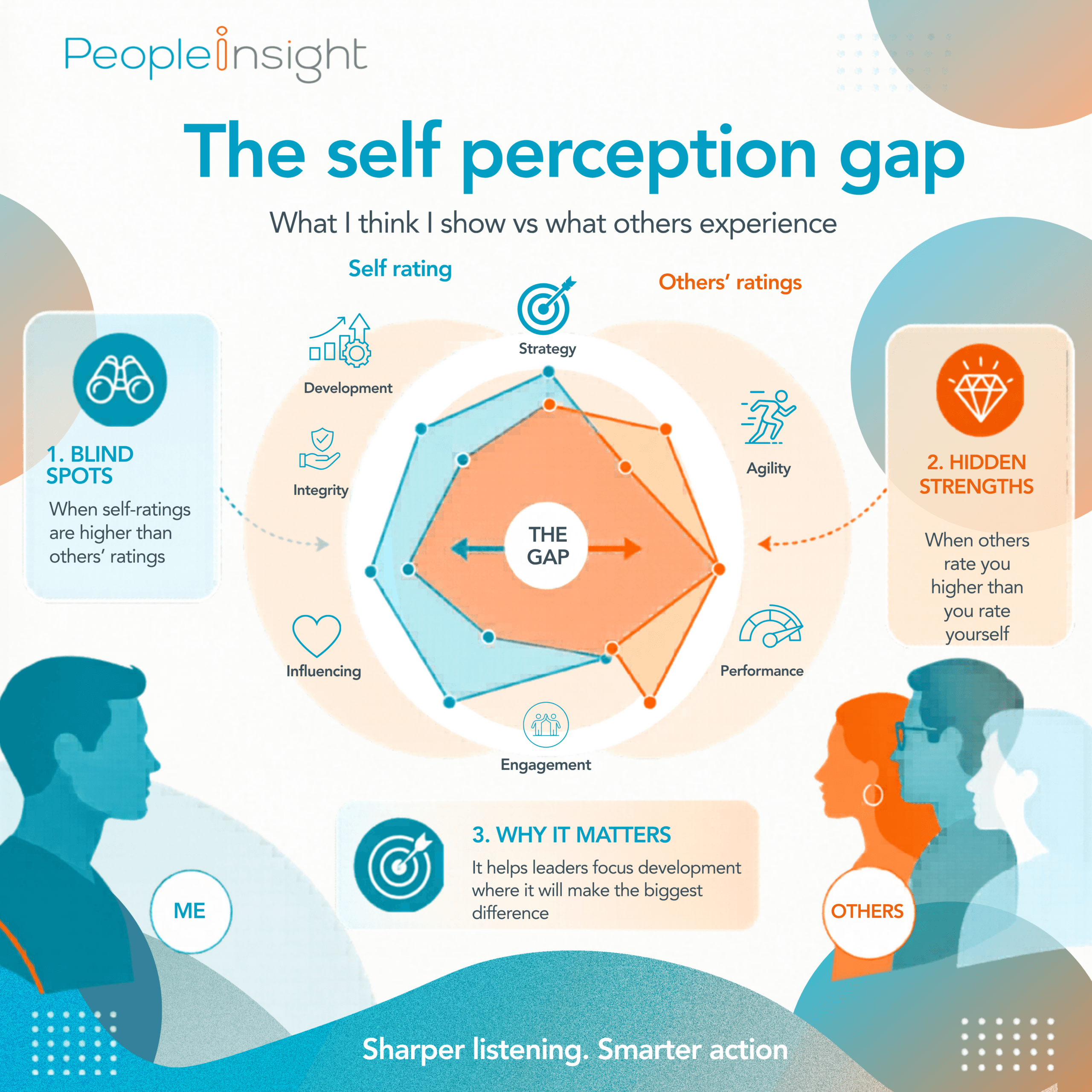
    Blind spots are the areas where your perception of your own performance differs most from your raters’ experience; which can happen more often than you think. In fact, this is one of the most valuable parts of any 360 report. 

    A blind spot does not automatically mean you are doing badly. It means there is a meaningful perception gap. That gap is often where the richest development opportunity sits. 

    blind spots 360

     3. Detailed question results

    Once you understand the theme scores and the largest gaps, you can then move into the more detailed results, which will help you move from broad themes to specific behaviours. That is important because development becomes much more useful when you can name the exact behaviour that needs attention. 

    How to read self vs others 

    One of the most important parts of interpreting 360 feedback results is understanding the gap between your self-assessment and the scores from others. 

    A gap can mean a few different things: 

    • you may be overestimating how consistently a behaviour is visible 
    • you may be underestimating a strength others value more than you realised 
    • the intention behind your behaviour may not match its impact 
    • different groups may be experiencing you in different ways 

    The key is not to treat every gap as a problem. Instead, ask: 

    • Is this gap repeated across multiple themes? 
    • Does it show up in comments too? 
    • Is it especially important for my role? 
    • Does it affect the people I lead most directly? 

    What to make of rater group differences 

    A strong 360 report does not just show overall averages. It also lets you compare how different groups experience you. Different groups will often see different things. 

    For example: 

    • your manager may see strategic judgement 
    • peers may see collaboration and influence 
    • direct reports may see support, communication and trust 
    • you may see your intent, effort and internal reasoning 

    If one rater group scores you lower than the others, that does not mean they are wrong. It means their day-to-day experience of you may be different, and that difference deserves attention. 

    That is especially important in leadership roles, where direct reports and peers often give the clearest view of your day-to-day impact. 

    How to use comments well 

    The comments section often contains the richest insight in the whole report. 

    Scores tell you where something is strong or weak. Comments help explain why. 

    That is why many 360 reports include prompts such as: 

    • what this person should continue doing 
    • what this person should start doing 
    • what this person should stop doing 
    • what would have the biggest impact over the next six months 

    When reading comments, avoid focusing too much on the most dramatic phrase. Look for: 

    • repeated themes 
    • similar examples phrased in different ways 
    • differences between praise and challenge 
    • comments that reinforce the score patterns 
    • comments that point to behaviours you can actually change 

    A good question to ask is: 

    What are colleagues consistently experiencing from me, whether positively or negatively? 

    That gets you much closer to practical development than simply collecting comments you agree or disagree with. 

    Where Prism adds value 

    Prism, our integrated AI, is especially useful in helping people interpret 360 feedback results more quickly and more clearly. 

    Prism helps by: 

    • surfacing key patterns in the results 
    • summarising large volumes of comments 
    • highlighting relative strengths and development areas 
    • suggesting prompts for reflection 
    • giving clearer starting points for action planning 

    This is especially valuable when a report contains a lot of data and you need help seeing the big picture before going deeper into the detail. 

    It is important to remember that Prism is there to support interpretation, not replace your own judgement. It helps you see patterns more quickly, but it still makes sense to read the full report carefully and reflect on the findings yourself. 

    What to do if the feedback is hard to hear 

    Many people feel defensive when they first read their 360 feedback results. It’s completely normal. 

    A good response is to pause and ask: 

    • What feels most uncomfortable here? 
    • Is it the score itself, or what it might mean? 
    • Does this feedback appear in more than one place? 
    • Which part of this feels fair, even if I do not like it? 
    • What would be most useful to explore further? 

    The aim is not to agree with every single point, but rather to understand what the data is pointing to overall. 

    How to turn 360 feedback results into action 

    360 feedback only becomes useful when it leads to a practical development plan. 

    A strong response usually includes: 

    1. Identifying two or three priorities 

    Do not try to work on everything. 

    Focus on: 

    • the biggest repeated patterns 
    • the behaviours that matter most for your role 
    • the areas most likely to improve your impact
    2. Translating themes into behaviours

    Move from broad ideas to clear actions. 

    For example: 

    • “Be more visible” becomes “Join the weekly team meeting and communicate priorities clearly” 
    • “Improve openness” becomes “Ask for input earlier and respond more constructively” 
    • “Coach more” becomes “Use fortnightly one-to-ones to develop direct reports, not just review tasks” 
    3. Discussing the results

    If possible, talk through your 360 feedback results with: 

    • your line manager 
    • a coach 
    • HR 
    • or another trusted senior colleague 

    This helps you test your interpretation and avoid jumping to the wrong conclusions.

    4. Getting the right support around the results

    Interpreting 360 feedback results is often easier and more productive with the right support around the process. 

    That support can take different forms. Some leaders benefit from one-to-one coaching after receiving their report, helping them reflect on the feedback, sense-check their interpretation and turn it into a focused development plan. In other cases, workshops can help managers understand what to expect before a 360 process begins, so they feel better prepared to give, receive and work with feedback well. 

    Support after the report matters too. Post-360 workshops can help managers and leadership groups interpret results more confidently, while HR teams may value expert support in facilitating feedback conversations and helping individuals turn insight into practical next steps. 

    This kind of support helps make 360 feedback results more constructive, more consistent and much easier to act on.

    5. Reviewing progress over time

    Development is not one conversation. It is a process. 

    That is why 360 feedback works best when it links into coaching, one-to-ones and wider leadership development. 

    What good interpretation looks like 

    You are probably interpreting your 360 feedback results well if: 

    • you understand the biggest patterns, not just the biggest surprises 
    • you can explain the main strengths and development areas clearly 
    • you have noticed the most important self-versus-others gaps 
    • you can see how different rater groups experience you 
    • you have identified two or three meaningful priorities 
    • you are using the report to support action, not just reflection 

    That is the real goal. 

    360 feedback is not there to create an interesting document. It is there to help you grow. 

    How People Insight helps with 360 feedback results 

    At People Insight, we help organisations make 360 feedback more useful through: 

    • intuitive report design  
    • clear theme and question-level reporting  
    • blind spot analysis  
    • rater group comparisons  
    • Prism-powered summaries and prompts  
    • coaching support for leaders after feedback  
    • workshops before and after 360 processes  
    • expert support for debriefing, facilitation and development follow-through

    That is important because interpreting 360 feedback results well often takes a combination of: 

    • strong data 
    • clear reporting 
    • thoughtful reflection 
    • and practical support afterwards 


    360 feedback results are most useful when they lead to clearer self-awareness, better conversations and focused action. 

    The report itself is only the starting point. The real value comes from understanding the patterns in the feedback, noticing where perceptions differ and choosing a small number of meaningful development priorities to work on. When approached well, 360 feedback results can help leaders build on their strengths, address blind spots and improve the way they lead day to day. 

    At People Insight, we help organisations turn 360 feedback results into practical development through clear reporting, Prism-powered insight and expert support that helps people move from reflection to action. 

    Want to help leaders get more value from their 360 feedback results? Get in touch to learn how People Insight can help. 

    FAQs about 360 feedback results 

    What are 360 feedback results?

    360 feedback results are the scores, comments and patterns collected from multiple feedback sources, such as managers, peers, direct reports and self-assessment, to help someone understand how their behaviours are experienced by others. 

    What should you look at first in a 360 feedback report?

    Start with the theme results, then review the biggest self-versus-others gaps, the blind spots and any major differences between rater groups before moving into detailed question-level data.

    What is a blind spot in 360 feedback?

    A blind spot is an area where your own view of your performance differs noticeably from how others experience you. It often points to a useful development opportunity. 

    How should you interpret comments in 360 feedback results?

    Look for repeated patterns and practical examples rather than focusing too much on one standout line. The most useful comments usually reinforce what the score patterns are already telling you. 

    What if my self-scores are much higher than others’ scores?

    That usually means there is a perception gap worth exploring. It does not automatically mean you are performing badly, but it does suggest that others may be experiencing your behaviour differently from how you intend it. 

    How many development areas should come from 360 feedback results?

    Usually two or three. Trying to work on too many things at once often weakens follow-through. 

    How does Prism help interpret 360 feedback results?

    Prism helps summarise patterns, surface strengths and development opportunities, compare self-ratings with others’ scores and support reflection and action planning. 

    How can People Insight help with 360 feedback results?

    People Insight helps organisations get more value from 360 feedback results through clear reporting, Prism-powered insight and practical, expert support that turns feedback into focused development.