

















A quick insight: Accidental managers are people who take on leadership responsibility without formal preparation or support, often promoted for technical skill rather than leadership readiness. Without training in communication, feedback and people management, they can struggle to guide, motivate and retain their teams. Intentional development, coaching and clear expectations help accidental managers become more confident, capable and effective leaders.
It’s no secret that when employees leave jobs, they often cite their manager as the reason. But what if that manager never wanted the role in the first place?
Accidental managers, those promoted due to technical ability but without leadership training, are incredibly common. And the uncomfortable reality is that they are quietly eroding employee engagement, motivation and employee wellbeing across the board.
According to the Chartered Management Institute’s report Better Managed Britain, an incredible 82% of people in management roles in the UK are accidental managers. That means millions of employees are being led by people who are underprepared, unsupported and often unaware of the impact they are having.
Our own benchmark data shows that 68% of employees across sectors feel they are given regular feedback by their managers, and 65% feel their manager takes the time to coach them and develop their skills. There’s still plenty of work to do, and managers need to be given the tools and training to support their teams in the right way.
A lack of management capability contributes to low productivity, absenteeism, stress and declining employee sentiment. So what can you do if accidental managers are putting your culture, performance and people at risk?
Related: Check out these 50+ employee engagement statistics
Accidental managers are people who are promoted into management roles based on their technical skills or performance in a non-leadership position. They have little to no formal training in how to lead people, and (and here’s where the problem presents itself) often do not receive the support needed to develop those skills once they step into the role.
They may have been outstanding engineers, analysts or marketers. But leadership demands more than expertise. It requires the ability to build trust, listen, guide others, make tough decisions and communicate clearly under pressure.
The issue is not that these individuals are incapable. The problem is they were never properly prepared to manage people. As a result, many accidental managers struggle with delegation, giving feedback, resolving conflict or even recognising the emotional tone of their teams.
This gap between job expectations and leadership capability affects not only the manager but everyone they lead. It creates confusion, frustration and disengagement across the team. Over time, it impacts employee sentiment and performance outcomes.
Recognising who your accidental managers are is the first step toward turning them into confident, capable leaders. Using 360 feedback and development tools early can help them build the self-awareness and people skills they were never given the chance to develop.
Related: What’s your leadership style? [quiz!]
Most accidental managers are promoted because they were excellent in their previous role. A top-performing sales consultant becomes a sales manager. A brilliant developer is asked to lead a team. You can see the logic. But the thing is, managing people demands a completely different skill set from executing tasks.
Without proper training, feedback and support, new managers often fall back on micromanaging, poor communication and reactive behaviour. It is no surprise that many employees say that poor management contributes to their stress at work, according to a report by CIPD.
These managers did not ask to fail. They just were not given the tools to succeed.
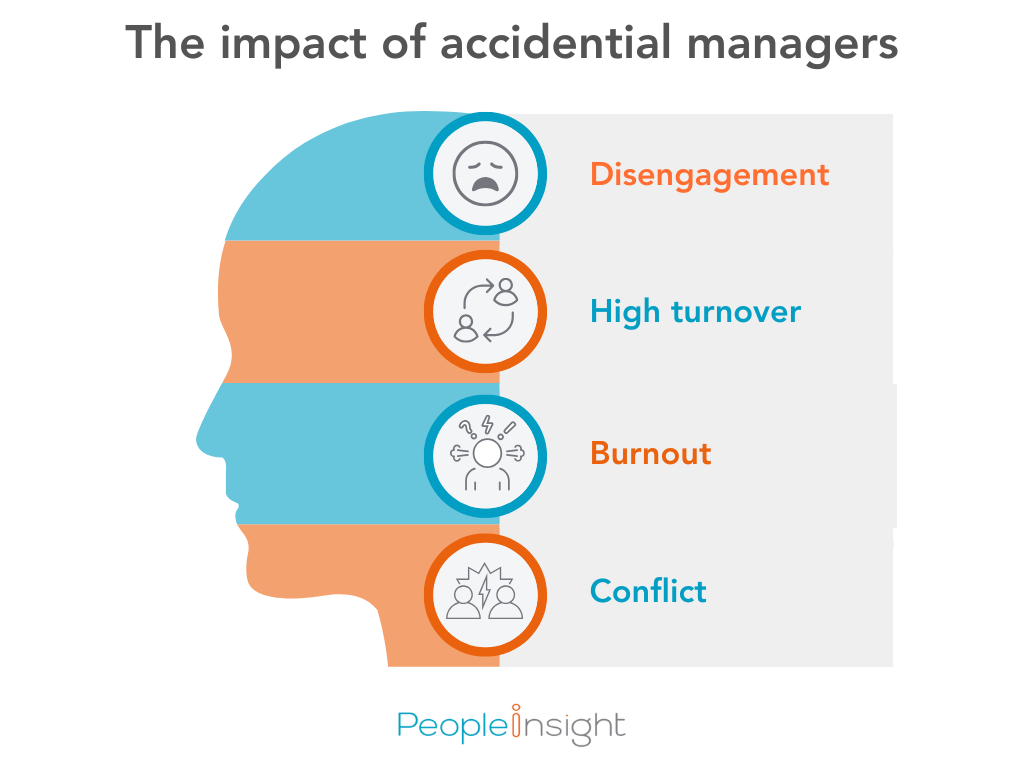
Poor leadership has a ripple effect. When accidental managers do not know how to coach, communicate or build trust, morale inevitably plummets. Employees feel unsupported, undervalued or confused about expectations.
This leads to:

The longer these issues go unaddressed, the more they damage culture and performance.
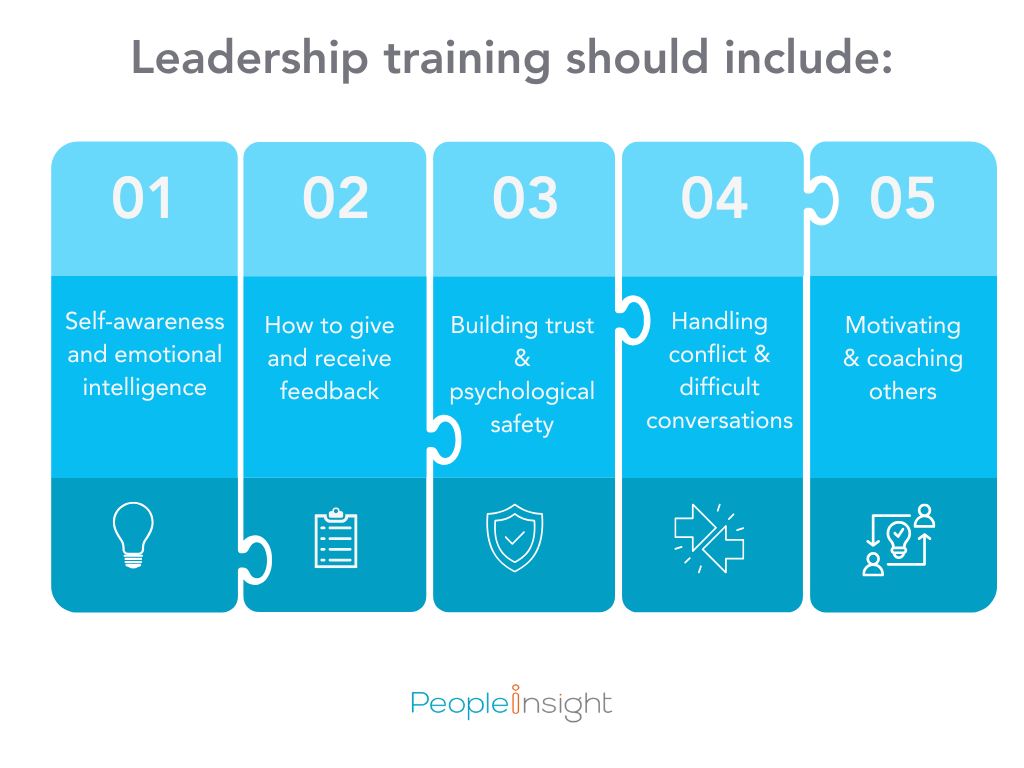
So what’s the solution? Well, it’s not to stop promoting high performers. But we do need to give them the tools they need to lead effectively. After all, leadership is not intuitive; it is learned. Organisations that embed leadership training into promotions see significant improvements in employee engagement and retention.
Training should cover:

This is not a one-off workshop. Ongoing development through peer learning, mentoring and structured support is important for lasting impact.
Even with training, accidental managers may not see how their behaviour affects others. That is where a 360 feedback tool is valuable.
Unlike traditional appraisals, 360 feedback gathers input from a range of colleagues including direct reports, peers and line managers. It highlights blind spots, strengths and development areas in a constructive way.
Using a 360 feedback platform as part of a broader leadership development programme gives accidental managers actionable insights they might never receive otherwise. And when delivered through an actionable employee experience platform, this feedback becomes part of an ongoing journey, not a one-time event.
Research shows that self-awareness is strongly linked to better leadership. When managers understand how their actions affect morale, they are more likely to adapt, improve and build stronger relationships with their employees.
Avoiding the problem is not an option. It is already costing you in morale, productivity and attrition. But the good news is that with the right structure and tools, accidental managers can become some of your strongest leaders.
Here is what to do:
Look for people who have recently transitioned into management but have not received formal training. Use employee surveys and employee sentiment data to flag teams where engagement is dipping.
Invest in hands-on learning, not just theory. Combine engagement workshops, real-world practice, coaching and peer support. Use impactful survey results to track development over time.
Normalise regular, honest feedback through tools like 360 feedback. Make feedback developmental, not punitive. A 360 feedback platform helps managers see their progress, areas to improve and how they are perceived.
Management is not a side task. Set clear expectations, include leadership behaviours in performance reviews and link progress to measurable outcomes like engagement scores and retention.
Use an employee survey platform to assess changes in engagement, morale and trust. Share insights with managers and give them the chance to act on actionable feedback. This helps close the loop and drive meaningful change.
No one sets out to be an accidental manager. But when people are promoted without support, the consequences are hard to ignore. Untrained managers undermine morale, block career growth and damage trust.
At the same time, managers who are self-aware, supported and continuously learning have the power to lift engagement across entire teams. That is where 360 feedback plays a defining role.
Self-awareness is the foundation of good leadership. When people understand how they are perceived and how their actions affect others, they can shift from accidental managers to intentional, effective leaders.
Do not let accidental managers drag your people down. Start building better leadership with honest, helpful feedback.
Ready to support your managers the right way? Help your accidental managers become confident, capable leaders with 360 feedback. Discover how our 360 feedback tool supports growth, self-awareness and meaningful change. Get in touch to talk about our 360 feedback platform and to book a demo.