Increase profitability by 23%
 Boost productivity by 21%
 Increase profitability by 23%
Boost productivity by 21%
Increase profitability by 23%
Boost productivity by 21%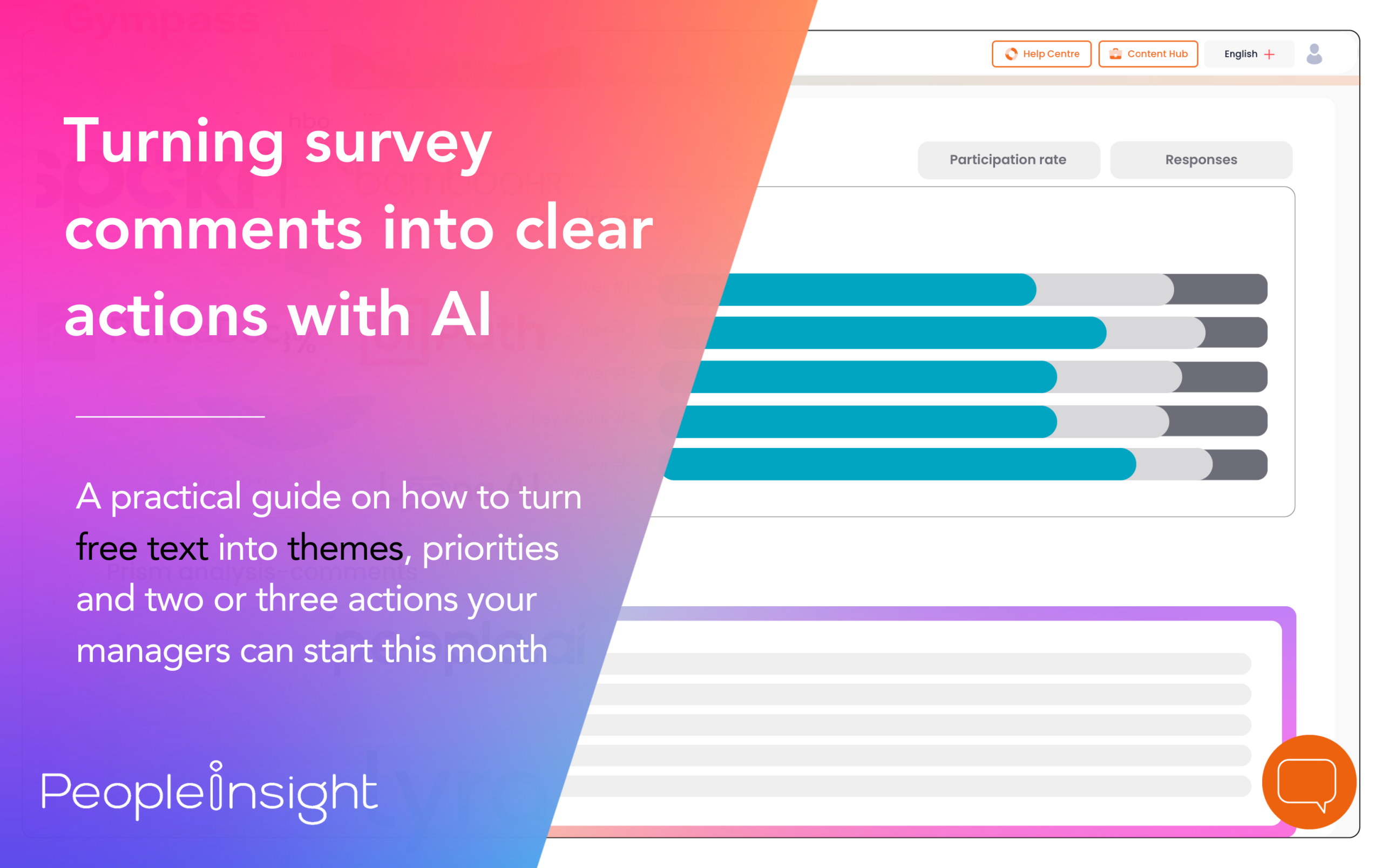
A quick insight: Survey comments are the open text responses employees leave in your employee surveys. They add context and emotion to the numbers, which is why they matter. This guide shows a simple path from theme finding to manager-ready actions, with a preview of how agentic AI can help you move faster.
The comments tab opens. A long list appears on screen. Some lines are thoughtful, a few are cutting, many repeat the same themes in different words. You are looking for patterns you can trust and actions managers can take without launching a six-month project. You also need a way to share progress back to employees so they see movement, not silence.
That is the promise of a better route from survey comments to change. Start with a clear workflow, let agentic AI do the heavy lifting on analysis and keep the human touch in the conversations that follow. When you close the feedback loop and employees see results, belief grows
That is the promise of a better route from survey comments to change. Start with a clear workflow, let agentic AI do the heavy lifting on analysis and keep the human touch in the conversations that follow. When you close the loop and employees see results, belief grows. Across our benchmark data, 68% of employees say senior leaders make the effort to listen, yet only 59% believe action will be taken as a result of surveys, showing why visible follow up matters.
Let’s take a more comprehensive look at how you can tackle survey comments and turn these insights into meaningful action.
Related: AI and employee engagement: 7 game-changing integrations
Survey comments are a treasure trove when it comes to context, but they can be hard to sift through at speed. You’ll encounter duplication, sarcasm, useful critique and the occasional outlier that can skew interpretation. For reasons like this, if you only sample a few pages, you risk a narrow view. But if you read everything, momentum slows and progress can come to a grinding halt.
The answer is a light structure that respects qualitative feedback while making it usable for action.
A good approach is to begin with the end in mind, while remembering to be realistic. Attempt to change too much and you’ll likely encounter overwhelm, which will result in no improvements at all. The goal is two or three actions per team and a short story employees recognise as fair.
Here is a workflow that works in busy organisations.
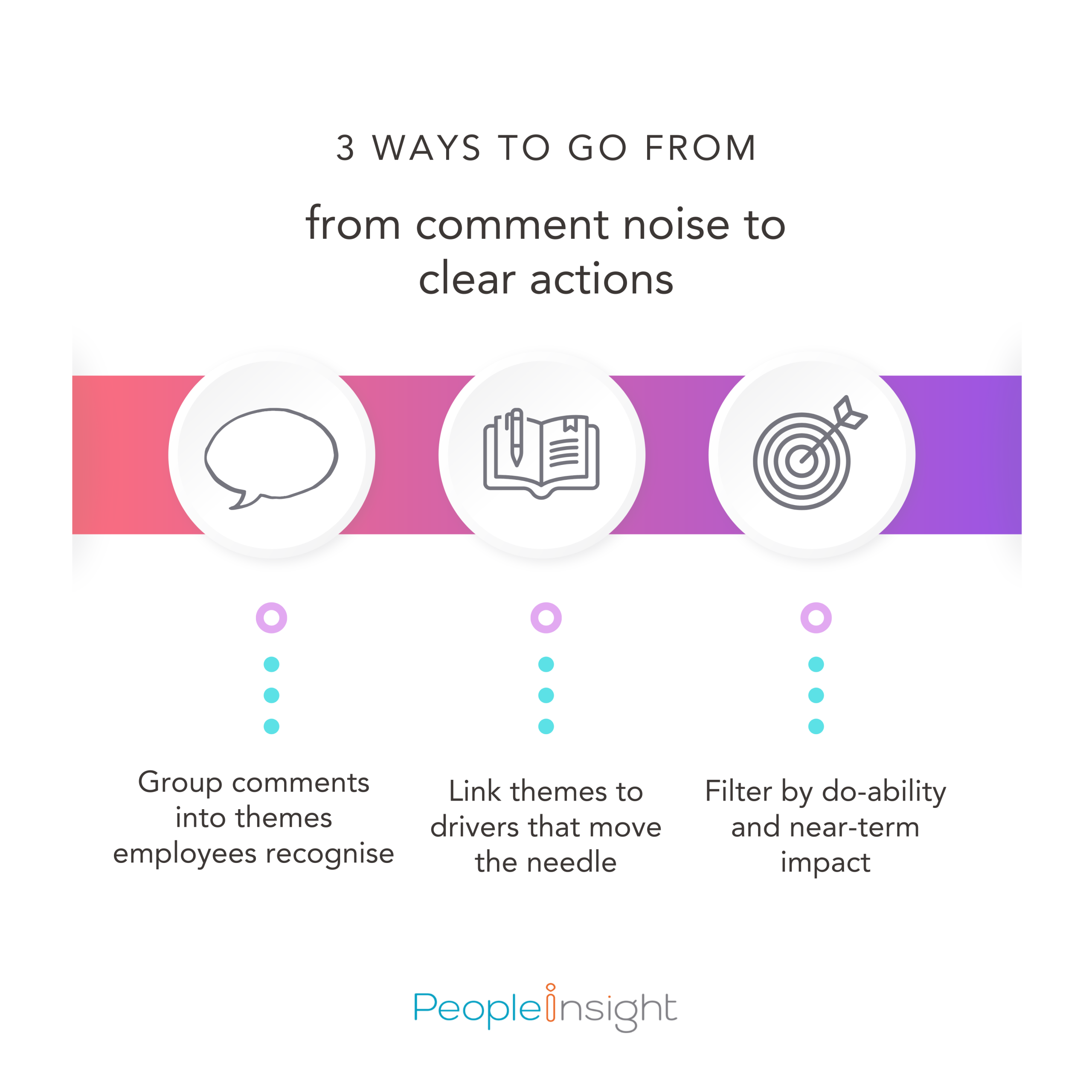
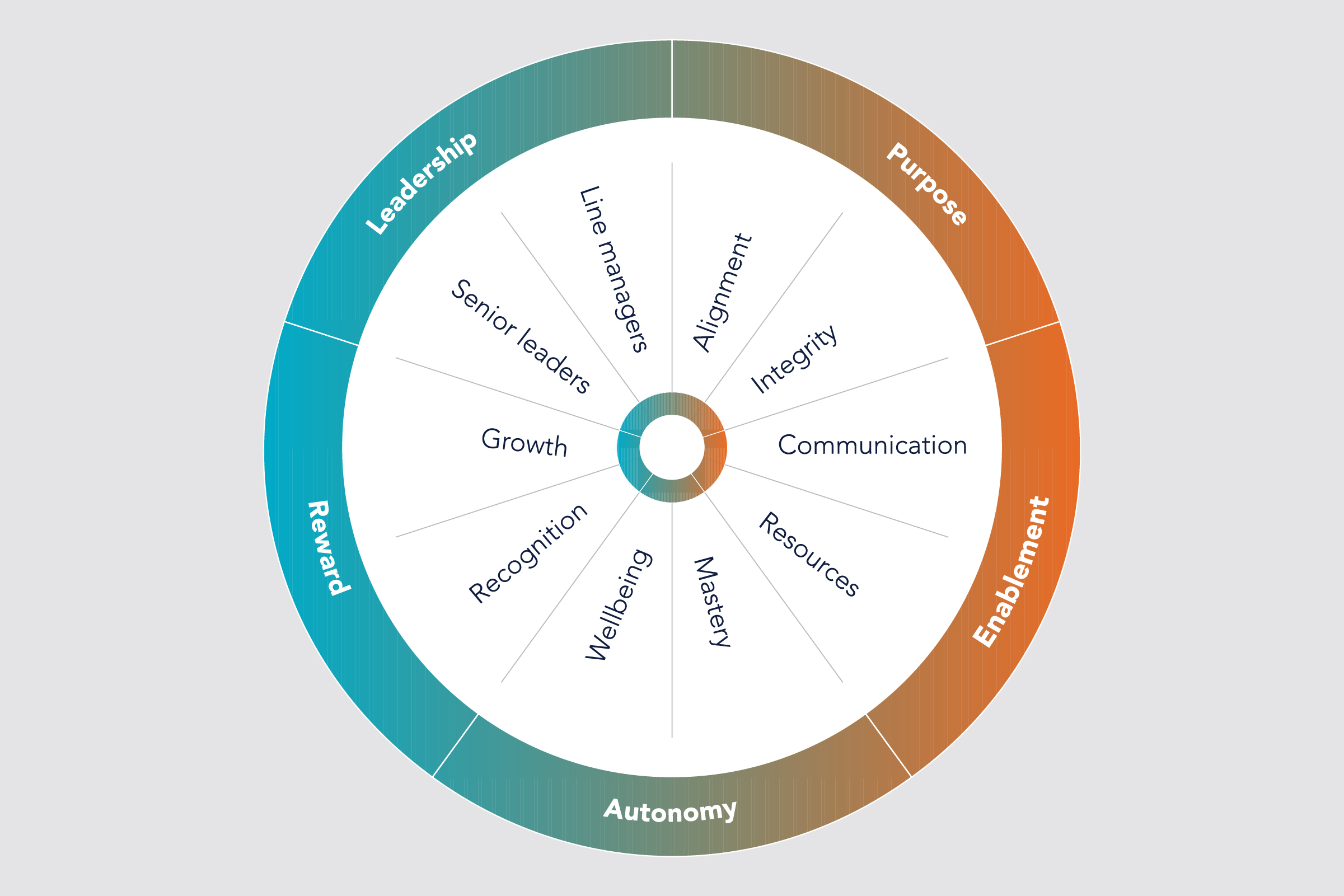
Cluster free text into themes that mirror everyday work, such as workload, recognition, tools, leadership visibility and ways of working. Avoid creating too many labels. Fewer, clearer themes help managers talk about what people actually experience.
Not every theme has the same effect. Use driver analysis or simple correlations to connect themes to outcomes you track, such as engagement, retention or wellbeing. When survey comments cluster around meetings, for instance, check whether “I can comfortably cope with my workload” or “I am able to strike the right balance between my work and home life” are low scoring drivers. This is where qualitative feedback and quantitative data inform each other.
Managers need a short list they can act on this term. Use a quick matrix: high impact and feasible now, high impact and longer term, lower impact. Pick one or two actions in the “feasible now” box and set a review date for the longer items. Share both with employees so near-term steps are visible and larger goals stay on the radar.
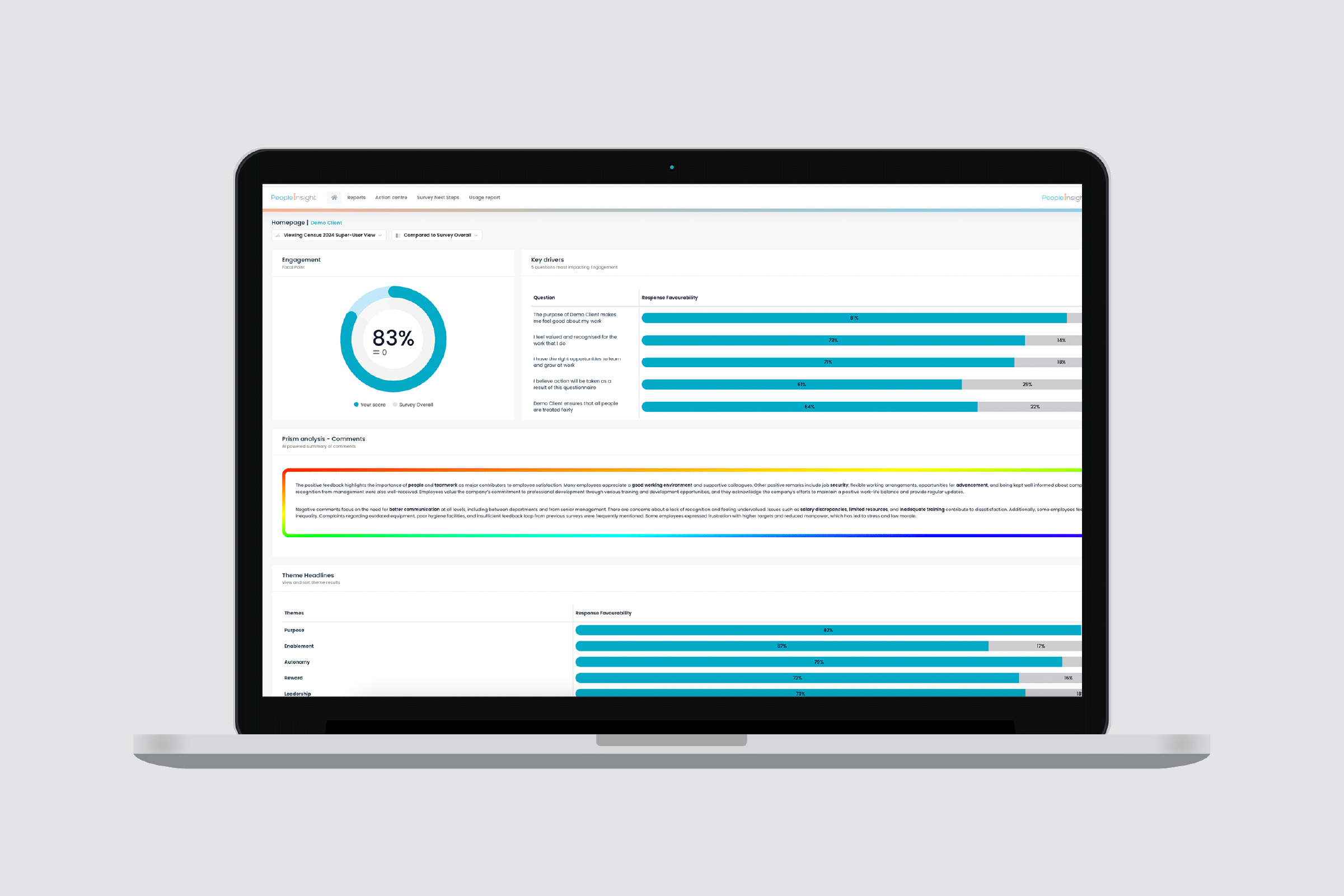
Agentic AI accelerates the heavy lifting while keeping judgement human. AI and natural language processing help sort open comments into themes and sentiment in minutes, then surface what sits underneath the numbers. This makes it easier to see where employees feel stuck and where small steps could help.
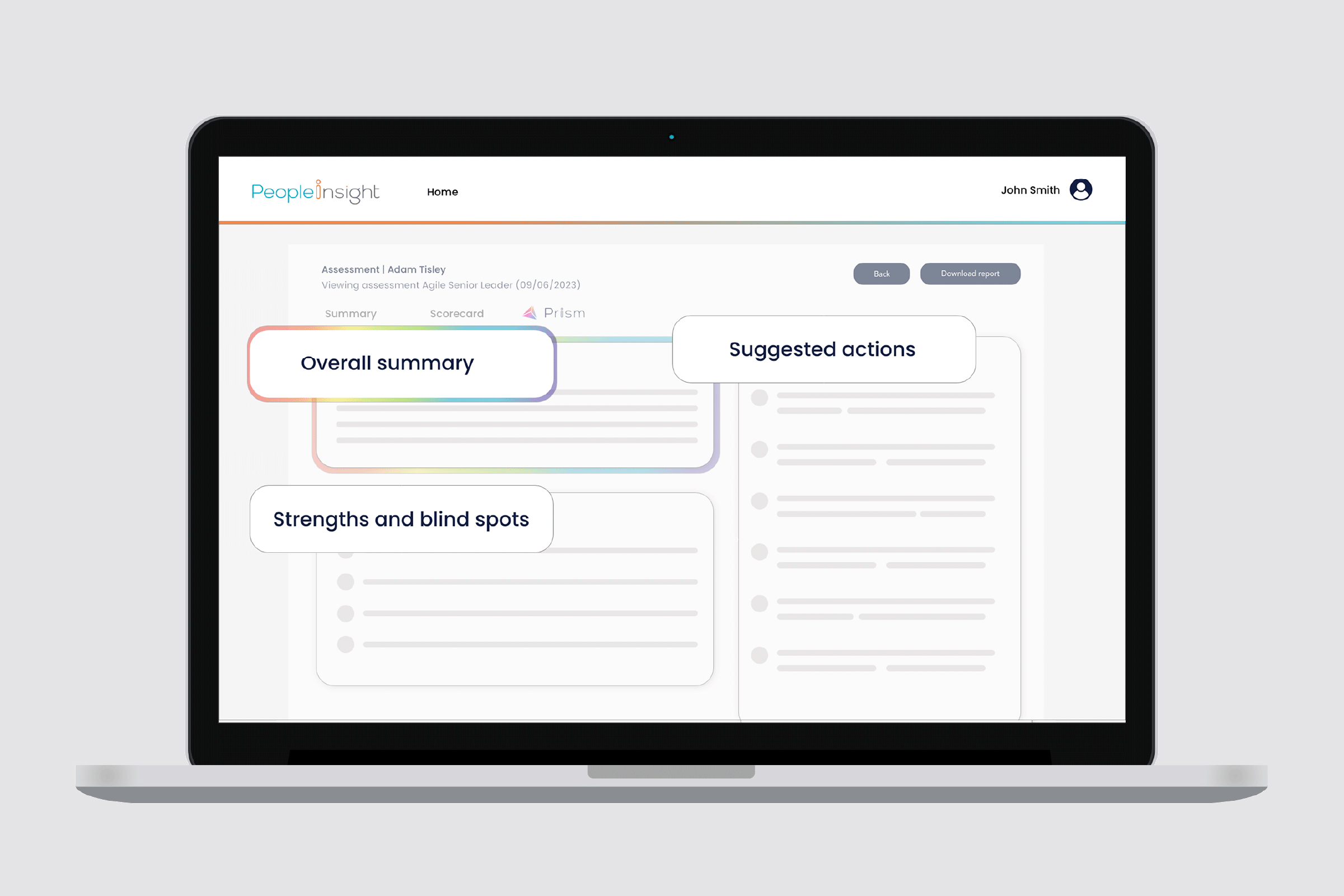
Our Insight Agent groups qualitative feedback, highlights sentiment and points to evidence excerpts so you can see what people said, not just a label. The Navigator Agent then creates a concise plan for each manager with priorities, suggested actions and clear language they can use with their teams. For large institutions or multi-site organisations, this saves time while keeping the human part where it belongs — in the conversation.
And you do not have to automate everything. Consultants and coaches can review outputs, tailor the plan to your context and rehearse the conversation with leaders who want a sounding board before presenting results.
Picture a faculty or business unit after a busy period. Survey comments mention long meetings, clashing deadlines and unclear priorities. Thematic analysis groups these into workload and meeting habits. Scores show pressure on time and energy. Here is how that moves to action.
First, the manager shares a short summary: “Many of you mentioned meetings and pressure points around deadlines. Here is what we will try for the next eight weeks.” They propose three steps:
Then they set dates. The change starts next Monday, with a review in four weeks and another later in the quarter. Employees are invited to share what helps and what does not, either in person or through a short pulse. A steady rhythm like this turns survey comments into visible progress that people notice.
Employees want to know that their words changed something. Keep the update brief and concrete. Summarise what you heard in plain English, list two actions and give a date for the next check-in. Thank people for the honesty, especially when comments were blunt. And say how you will continue listening … through focus groups, one-to-ones or an always-on feedback route.
When people see movement, participation and trust grow.
Pick a handful of signals you can track without launching a new project. Track action uptake, completion speed, a short pulse on the specific theme and a line on employee sentiment in manager check-ins. If you use an employee survey platform, roll up action progress by theme or department so leaders see where support is needed. Publish a short “you said, we did” update on your intranet each month to keep the work visible.
Here are some things to beware of when looking at survey comments:
Agentic AI helps you move from survey comments to a short, fair story faster, then gives managers an easy way to start. Insight Agent makes the analysis useful. Navigator Agent turns it into two or three practical steps. And where you want human support, our consultants and coaches help you set the rhythm, run listening sessions and build manager confidence.
Survey comments bring the lived experience into view. Numbers guide you to the where. Comments explain the why. And when you turn survey comments into timely action, you make work feel fairer — the ground where meaningful change can grow.
Ready to move from survey comments to clear actions in your organisation? Talk to us about an employee survey with agentic AI support. We will show how your survey comments become an action plan managers can use this month, with a light rhythm of updates that builds belief.