















A quick insight: Diversity, equity and inclusion are connected but distinct ideas that shape how people experience work. Diversity is about representation. Equity focuses on fair access and opportunity. Inclusion is about how people feel and contribute once they are part of the organisation. This post explains the difference between each and why all three matter for performance, belonging and fairness.
Times have changed, workplaces have evolved and when it comes to D&I, it’s no longer enough to rely on broad commitments or well-intended policies. To create workplaces where people genuinely feel respected and heard, equality, diversity and inclusion need to show up in the small, everyday moments. These moments influence how decisions get made, who feels comfortable speaking up, who progresses and who stays.
Whether you’re leading a multinational organisation or a small business, creating an environment where people feel they belong makes a measurable difference. It affects employee sentiment, the quality of internal relationships and how confident people feel that they can succeed.
To begin to make a difference, though, it’s important to get definitions right. So let’s explore equality, diversity and inclusion. What are the differences between these concepts and why do they matter?
Related: How to manage age diversity in the workplace
Equality means providing fair access, opportunity and support to every employee, regardless of their background, identity or circumstances. It involves eliminating barriers that prevent people from reaching their potential and addressing historical and structural inequalities.
In the UK, the Equality Act 2010 legally protects people from discrimination in the workplace. But legislation alone is not enough. Our own comprehensive benchmark data, gathered from over 547,000 employee responses, shows that 69% of employees feel their company treats everyone fairly and equally. Looking at this, we can see that 31% of employees don’t agree that their company does so. When people perceive bias or unequal treatment, trust deteriorates and engagement drops.
Equality in practice is not simply about uniform policies. It’s about applying fairness with empathy, recognising when a standard approach disadvantages someone and adjusting appropriately. This could involve reviewing performance processes for hidden bias or auditing pay gaps across roles and demographics.
Diversity refers to the range of differences among people in an organisation. It includes visible characteristics such as age, race and disability, as well as less visible aspects like sexuality, gender identity, religion, socio-economic background and neurodiversity.
It’s important to understand that diversity is not just about ticking demographic boxes. It’s about valuing different perspectives, experiences and ways of thinking. Organisations that embrace diversity benefit from more creative problem solving and stronger decision-making. Research by McKinsey found that companies in the top quartile for ethnic and cultural diversity on executive teams were 36% more likely to outperform on profitability.
But increasing diversity without attention to inclusion can backfire. Without the right conditions, diverse voices are ignored, underused or silenced, creating disillusionment rather than engagement. That’s why diversity efforts must always be part of a wider strategy including meaningful listening and action.
Introducing a D&I programme? Read our article: Building the business case for diversity
Inclusion is about how people experience the workplace. It’s the sense that you can be yourself, your contributions matter and your ideas are heard and respected. It is closely tied to psychological safety, where people feel comfortable speaking up without fear of embarrassment or penalty.
Inclusion goes beyond policies or statements. It shows up in behaviours, norms and how people respond to each other. When we don’t feel we can be our authentic selves at work, that’s a significant barrier to performance, innovation and wellbeing.
True inclusion means more than having a diverse workforce. It involves ongoing attention to how meetings are run, how feedback is received, how opportunities are shared and how people are recognised. Inclusion is not a one-off initiative. It’s something that needs to be supported by data, checked against reality and embedded into everyday practices.
Related: What is an inclusive company culture? (&7 famous examples)
This is a distinction that often causes confusion. It’s important to remember that they are not interchangeable terms. Essentially, equity recognises that fairness does not always mean treating everyone identically. It is about giving people what they need to reach the same outcomes, such as blind recruitment or transparent pay audits.
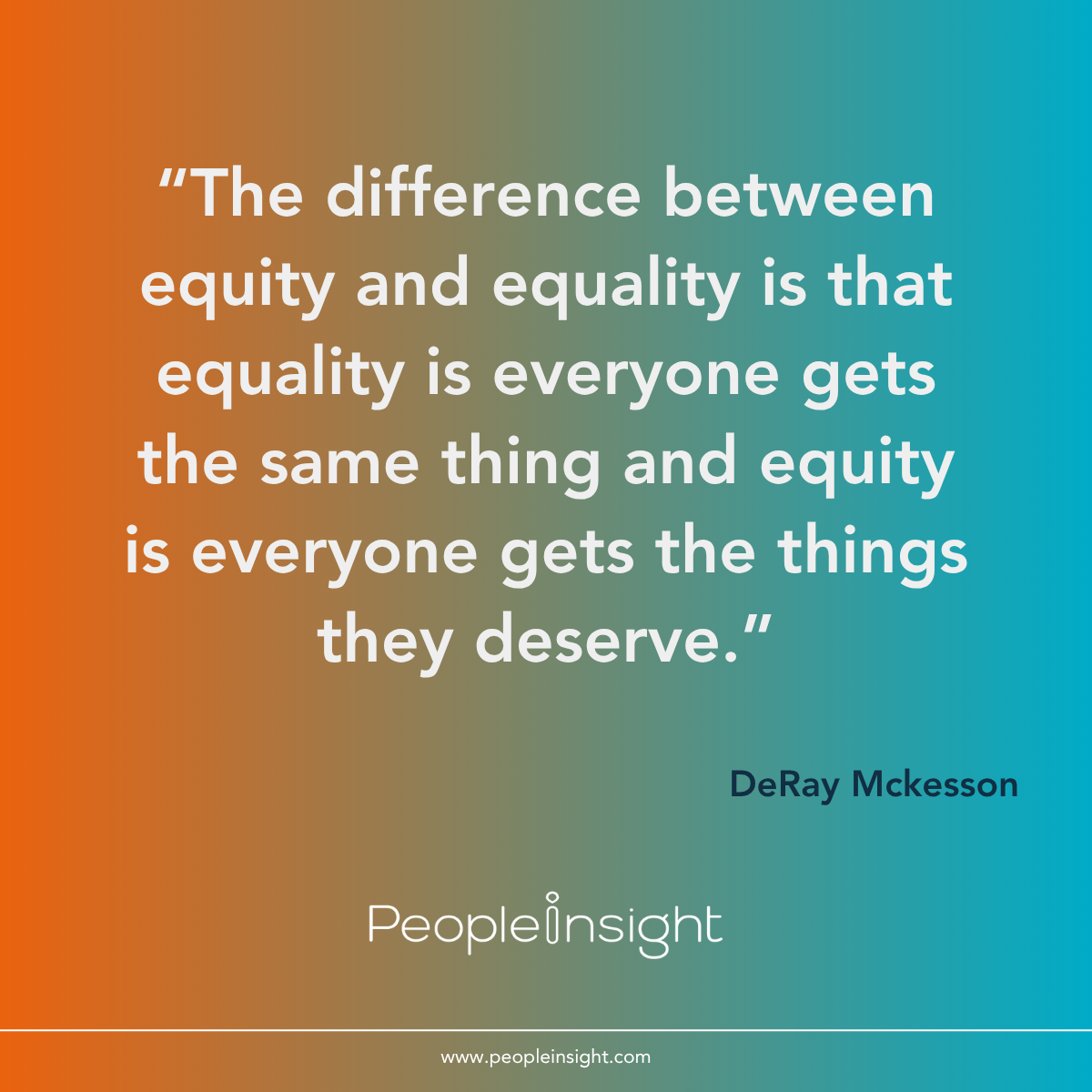
As DeRay Mckesson said, “The difference between equity and equality is that equality is everyone gets the same thing and equity is everyone gets the things they deserve.”

Equality, diversity and inclusion are interdependent: diversity brings people in, inclusion gives them a voice and equality treats contributions fairly. Together, they shape cultures where employees feel respected, safe and valued.
Measuring equality, diversity and inclusion effectively means going beyond basic tick-box exercises. It starts with collecting reliable data on how employees feel, how fairly they believe they are treated and where gaps exist across the organisation.
A well-designed employee survey platform can help you measure perceptions of inclusion, psychological safety and fairness. Segmenting responses by demographic groups helps identify differences in experience and flags areas where some employees may feel excluded or unsupported.
For example, you might discover that employees from a particular background feel less confident about promotion opportunities, or that neurodivergent employees report lower wellbeing scores. These insights can shape targeted actions rather than broad, generalised initiatives.
Using a diversity and inclusion survey that includes both quantitative and open-text responses gives people the opportunity to express what inclusion means to them. This qualitative feedback adds richness to the numbers and shows people that their voices are taken seriously.
Combining this data with tools like a 360 feedback platform makes it easier to support inclusive leadership development and track culture change over time.
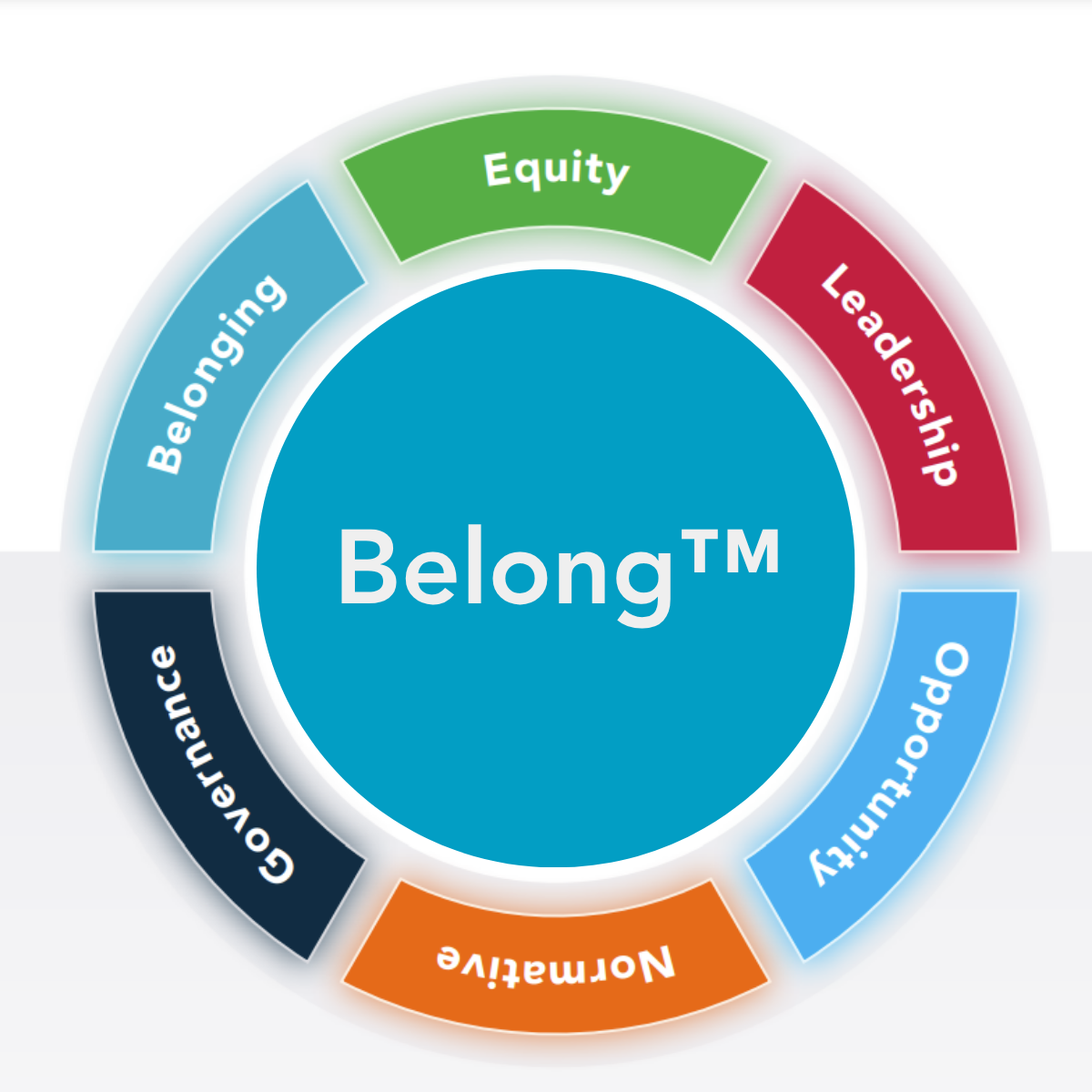
Picking a survey provider is an important, sometimes daunting, task. You want to make sure you find a provider that is trustworthy, reliable and communicative, while being on-point and ahead of the curve when it comes to tech. We offer all that and more. Our surveys are based on tried-and-scientifically-tested frameworks. When it comes to all things D&I, we use our Belong™ framework, which tracks six enablers of inclusive culture:
Surveying using this method allows you to really drill down into what matters. It leaves you with a wealth of information and data, so you can make the right decisions which drive meaningful, lasting change and show your employees you are fighting their corner at all times.
Surveys focused on diversity and inclusion can highlight:
The recent pressure on D&I from regulatory rollbacks to public debate shows that good intentions are not enough. Listening to employees, tracking trends in survey data and responding with targeted action are what make equality, diversity and inclusion meaningful and lasting.
Explore how our employee survey platform can help you measure equality, diversity and inclusion, understand employee sentiment and deliver impactful survey results.
To learn more about running a diversity and inclusion survey using our actionable employee experience platform, get in touch today. We are ready to help inspire meaningful change.