Increase profitability by 23%
 Boost productivity by 21%
 Increase profitability by 23%
Boost productivity by 21%
Increase profitability by 23%
Boost productivity by 21%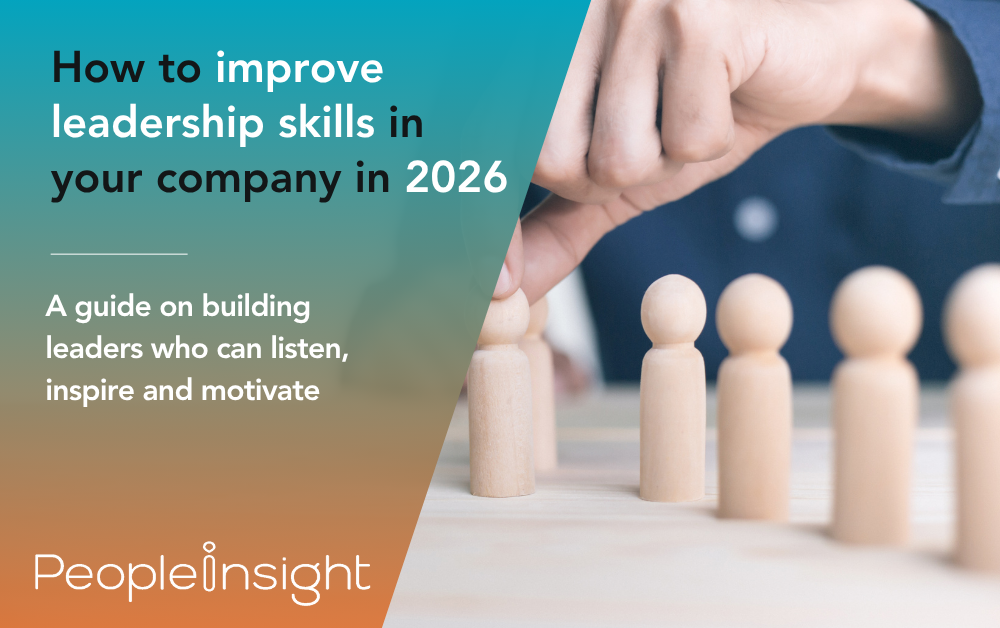
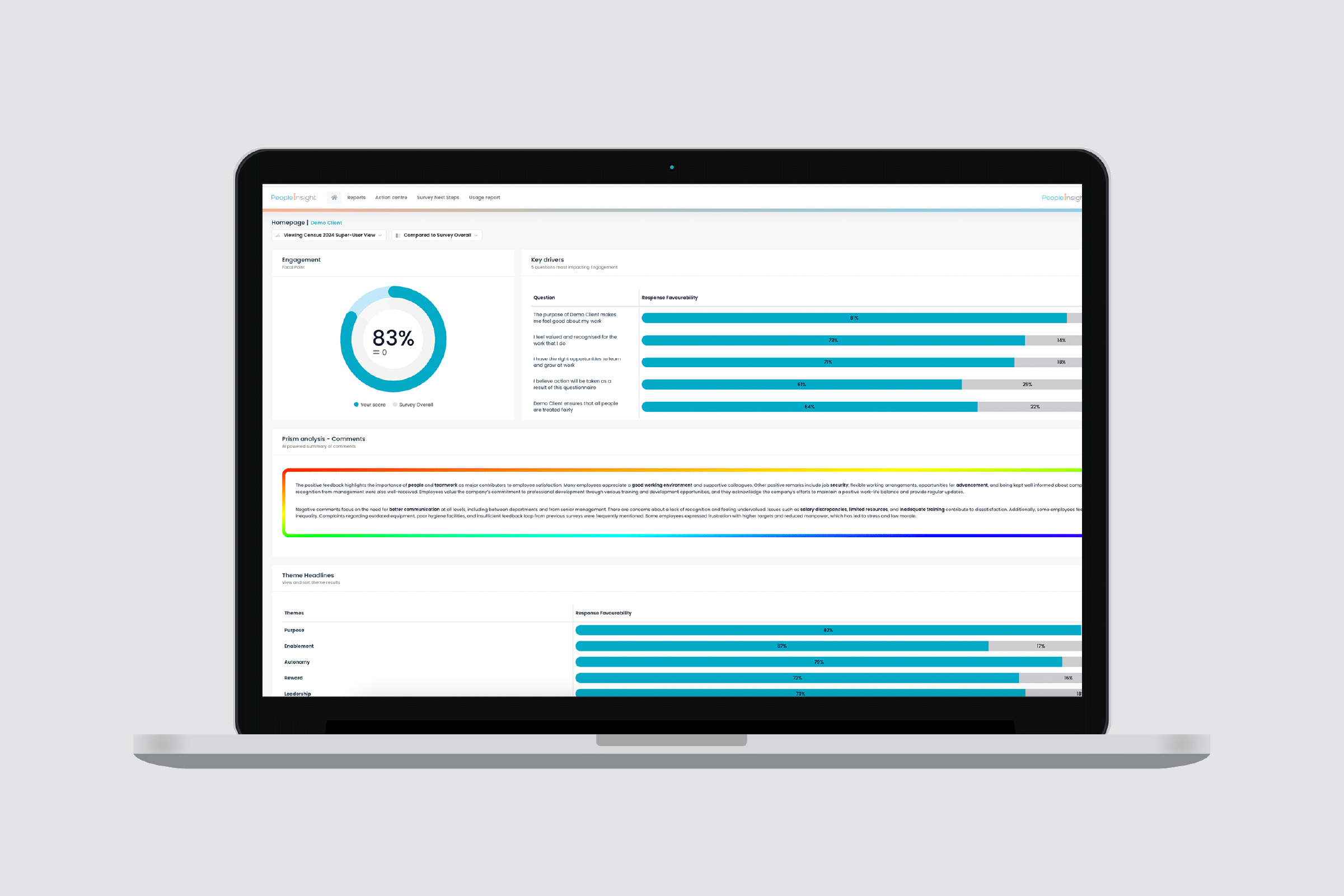
A quick insight: Leadership skills are under pressure in 2026. Our data shows only 59% of employees believe leaders act on survey feedback, 65% say managers coach them, and 68% say they receive regular feedback. This blog explores how to improve leadership skills through 360 feedback, coaching and everyday practices that make leaders more effective, trusted and inspiring.
The demands on leaders have never been more complex. Hybrid and flexible working, rising employee expectations around wellbeing and inclusion, and rapid organisational change are all part of daily life. Technical expertise is no longer enough. Employees want leaders who can listen, communicate clearly, support growth and create a sense of shared purpose.
Yet our People Insight data highlights worrying gaps:
These gaps show why leadership development must be a priority in 2026. Stronger leaders mean stronger engagement, better retention and higher performance.
Related: Leadership communication training for stronger teams (with free training exercices!)
Before developing leadership skills, organisations need clarity on what leadership looks like in practice. Leadership is not charisma or seniority. It is about creating conditions where employees feel valued, connected and motivated.
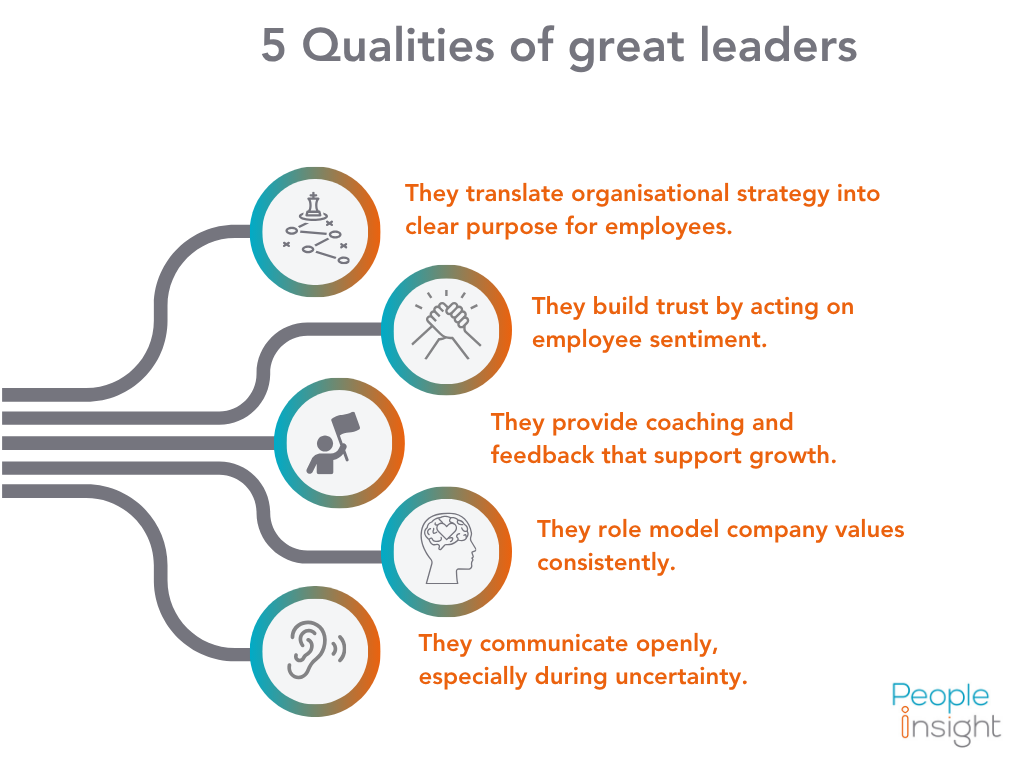
Good leaders:
This is where structured feedback and development tools come in.
Related: Discover your leadership style with our popular, short quiz
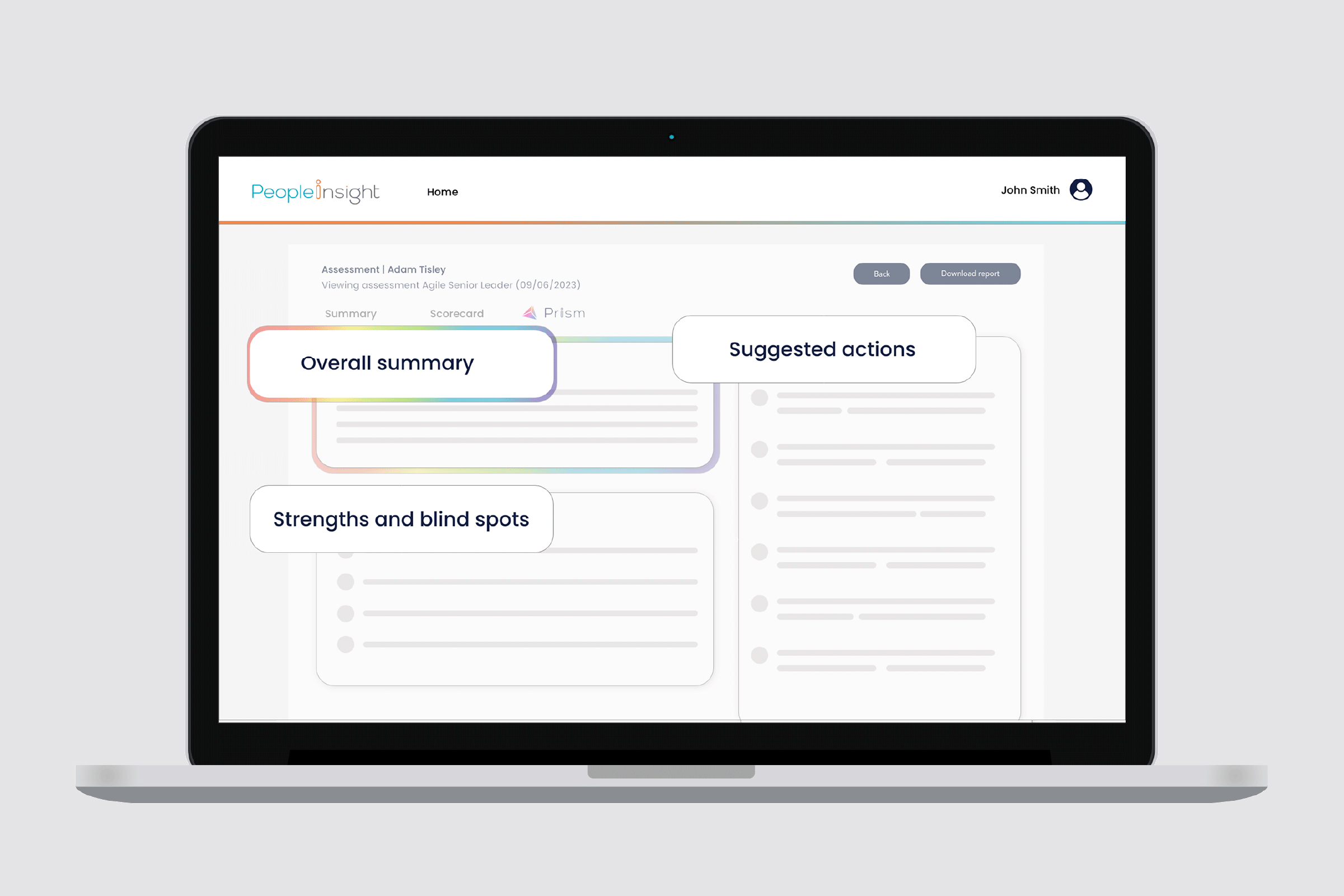
One of the most effective ways to develop leadership capability is through 360 feedback. Unlike traditional top-down reviews, a 360 feedback platform gathers input from a range of sources, which ultimately gives leaders a fuller, more complete and rounded view of their behaviours, skills and areas for growth.
Leaders often overestimate strengths and underestimate blind spots. For example, a leader may believe they communicate effectively, but feedback might show employees feel left in the dark. Seeing this gap is the first step to change.
At People Insight, our 360 feedback platform helps leaders identify patterns across themes such as communication, empathy, recognition and accountability. By showing leaders not just what others think but why, the data becomes actionable.
Feedback highlights the issues, but coaching turns insight into action. Our executive coaching service gives leaders the space to reflect, test new approaches and embed habits.
For example, a leader who scores low on recognition might work with a coach to design simple daily practices, such as starting meetings with positive feedback. A leader with low listening scores might practice leaving more space for employees to talk during one-to-ones. Over time, these small changes build trust and engagement.
Improving leadership is not only about formal tools. Everyday behaviours matter just as much. Here are practical approaches organisations can support:
Leaders should not only deliver messages but invite questions and dialogue. Town halls, drop-in sessions and online Q&As create space for open conversation.
Coaching means asking employees what they want to achieve, helping them explore options and supporting them in their goals. Leaders can build this habit through short, structured one-to-ones.
Feedback should be timely, specific and balanced. Leaders who wait for annual reviews miss opportunities to guide and motivate.
Employees watch what leaders do. If values include fairness or wellbeing, leaders need to demonstrate them through transparent decisions and healthy work practices.
Inclusive leaders give everyone a voice. They rotate who speaks in meetings, consult widely and act on diverse perspectives.
Leadership growth should not sit only with individuals. Organisations need to create environments where developing leadership is part of culture. This means:
This approach shifts leadership development from “one-off training” to a continuous journey.
Surveys remain one of the best ways to assess leadership impact, but only if they are designed thoughtfully.
In 2026, the most effective employee survey platforms include:
At People Insight, we also provide free downloadable lists of employee survey questions, giving organisations a head start in designing surveys that generate actionable feedback.
Too often, organisations invest in leadership development but fail to make it stick. Some of the most common mistakes we see are:
Avoiding these pitfalls is just as important as choosing the right tools.
We work across sectors to help organisations develop leaders who inspire, listen and act. Our expertise combines:
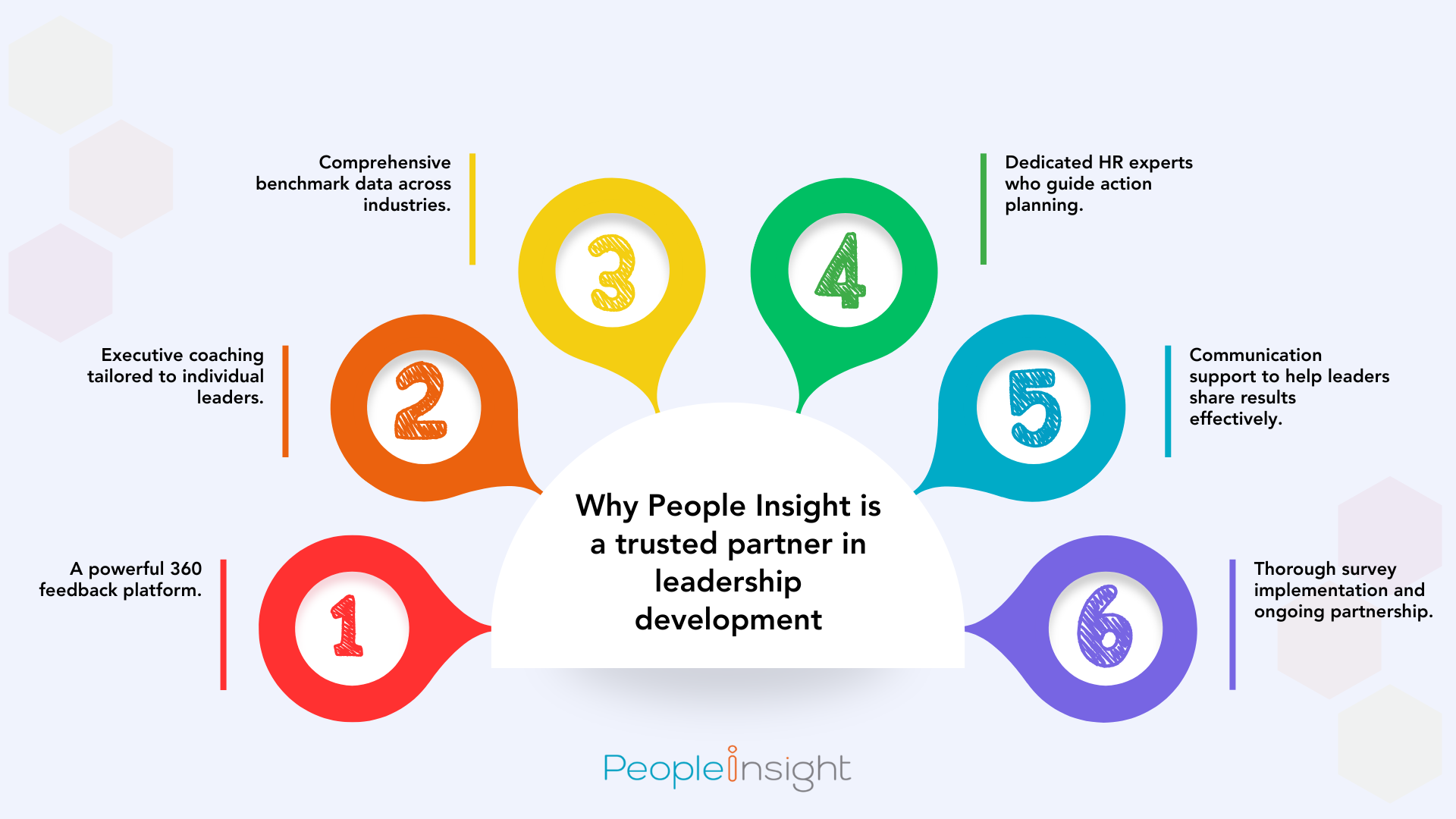
This combination means organisations not only gather insights but also build leaders who act with confidence and consistency.
Looking ahead, leadership will continue to be tested by hybrid work, employee expectations and global change. The leaders who succeed will not be those with the loudest voices, but those who listen, act and connect.
Developing these capabilities takes time, but the payoff is stronger engagement, improved wellbeing and lasting organisational success.
Ready to grow stronger leaders in your organisation? Discover how our 360 feedback platform and executive coaching can support your managers to develop the skills that matter. Get in touch today to explore how we can help you create leadership that drives meaningful change.