

















A quick insight: Employee listening is the structured practice of understanding what employees say, feel and experience at work. It brings together surveys, comments and everyday signals so leaders can see what really matters to their people. Strong employee listening supports clearer insight and smarter action, helping organisations to build trust and bring about change people will champion.
Employee listening is a structured approach to collecting, understanding and acting on employee feedback across surveys, conversations and everyday workplace signals.
You can learn a surprising amount about a workplace from small moments. A passing comment in a meeting that hints at frustration. A piece of positive feedback that shows someone feels valued. A line in an employee survey that reflects something people have been thinking for months. These signals are easy to miss when everyone is busy and focused on delivery.
Employee listening helps bring those moments into focus. It gives leaders a clearer picture of what employees are really experiencing so they can respond with intention rather than assumption. When organisations listen well, people feel heard and respected. Teams feel more connected. Leaders make better decisions. This is the very foundation of what we are all about here at People Insight: sharper listening and smarter action.
Employee listening matters. It helps organisations build trust, make informed choices and address issues before they grow into bigger problems.
Related: Our proven 4-step employee engagement strategy plan
Employee listening is the process of gathering and understanding employee views across an organisation. It includes employee engagement surveys, open comments, manager conversations, onboarding and exit feedback, pulse surveys and always on listening channels. In simple terms, it covers everything that helps you understand how people think and feel at work.
Employee listening typically includes:
But the value of employee listening does not sit in the data alone. Insight only becomes useful when it is interpreted well. Leaders need clarity rather than noise. Effective employee listening means understanding sentiment, context and patterns so decisions reflect what employees are actually experiencing. This is where strong survey design and intelligent comment analysis make a real difference.
Strong employee listening contributes directly to healthier workplaces. When employees feel heard, trust is able to grow naturally and meaningfully. Leaders spot concerns earlier, which makes it easier to act with confidence. Teams become more open and more willing to share honest feedback because they see that speaking up leads somewhere.
Employee listening is particularly valuable in public sector and mid-market organisations. These environments often involve complex structures, competing priorities and limited resources. A thoughtful and structured listening approach helps leaders navigate that complexity without overwhelming employees.
Employee engagement describes how people feel about their work and organisation. Employee listening is how organisations understand those feelings. Engagement is the outcome. Listening is the process that makes improvement possible.
Strong engagement depends on consistent and credible employee listening. Without it, organisations risk acting on assumptions rather than evidence.
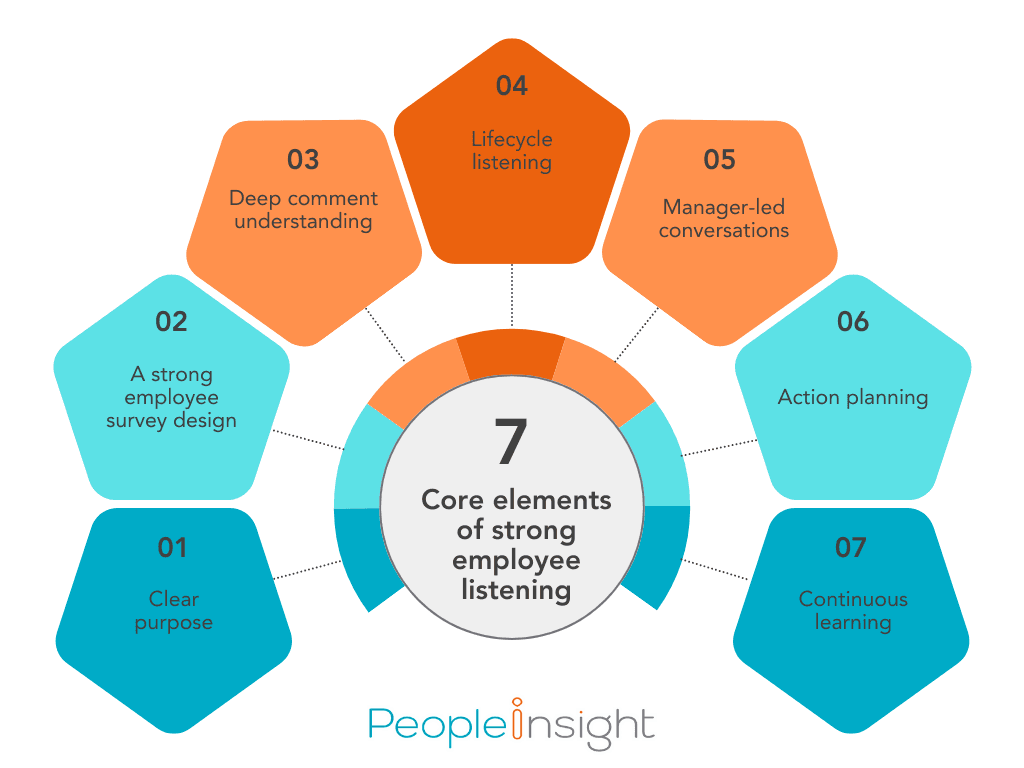
Employee listening works best when several elements work together. Each one adds a different layer of understanding.

A good listening approach starts with a simple question. What are we trying to learn? Clear purpose shapes better questions and helps leaders explain to employees why their feedback matters and how it will be used.
Well designed surveys unlock more meaningful feedback. They stay focused, avoid unnecessary length and ask questions employees can answer with confidence. Benchmarking adds helpful context by showing how experiences compare with similar organisations.
Comments explain the story behind the scores. They reveal emotion, nuance and lived experience. Prism powered interpretation helps leaders spot patterns that would otherwise take hours to uncover, highlighting the themes that matter most for action.
Employees share different insights at different stages of their journey. Joiners highlight how onboarding feels. Movers reflect the impact of change. Leavers explain why people decide to go. When these signals are brought together, organisations gain a much richer picture of employee sentiment.
Some of the most valuable listening happens in everyday conversations. Employees often trust their manager more than a survey tool. When managers feel confident talking about feedback and survey results, relationships strengthen and teams become more open.
Something we reiterate often here at People Insight is that Insight only becomes valuable when it leads to action. Action planning helps teams focus on what will make the biggest difference. It also builds trust, because employees can see that their feedback leads to progress rather than reports.
Employee listening should evolve over time. Organisations change, priorities shift and expectations grow. Regular review keeps listening approaches relevant, practical and credible.
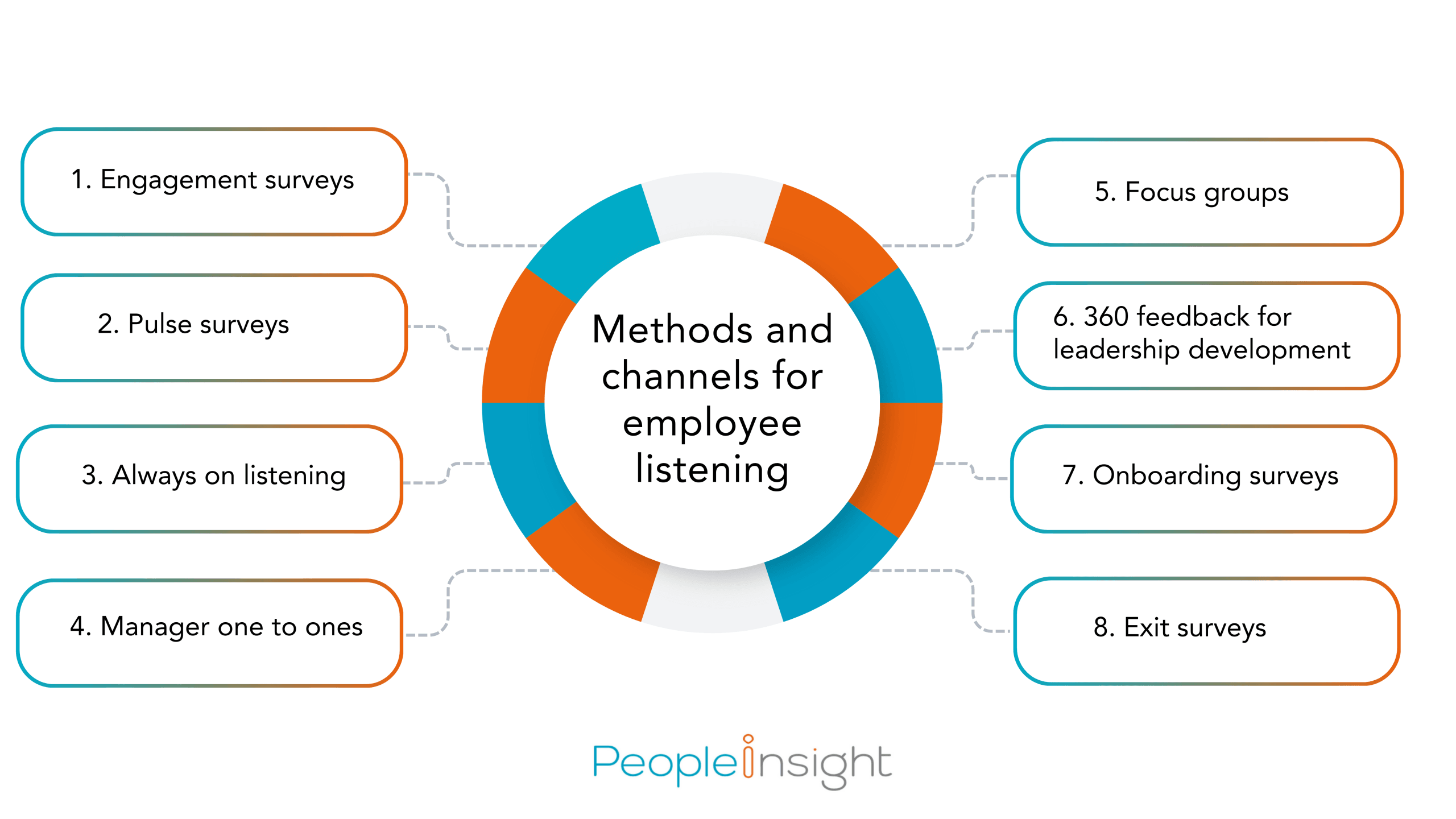
Most organisations use a mix of employee listening methods, because each one captures a different part of the employee experience. The strongest approaches blend channels in a way that feels natural rather than overwhelming.

These provide a broad view of how employees feel about work. They explore culture, leadership, wellbeing and performance in a structured and comparable way.
Short surveys used to check progress or explore a specific issue. Pulses help leaders understand whether actions are working and spot emerging concerns early.
Digital channels that allow employees to share feedback at any time. This works well in fast moving environments where priorities and pressures can change quickly.
Regular conversations often surface honest insights before they appear in survey data. They also help managers build trust and psychological safety within teams.
Small group discussions that explore key themes in more depth. These help leaders understand the meaning behind patterns in the data.
A powerful form of employee listening focused on leadership behaviour. It helps leaders understand how their actions support or limit team performance.
These reveal how new employees experience their first weeks and whether expectations are being met.
Exit feedback shows why people leave and highlights issues that may contribute to avoidable turnover.
Let’s address the elephant in the room. There is still a lot of caution surrounding AI and its impact on the way we live and work. We completely understand a degree of weariness; however, the reality is, AI can support sharper employee listening when used carefully and in the right way.
AI can process large volumes of comments quickly and highlight patterns that would be difficult to identify manually. This helps leaders understand complex sentiment while still relying on human judgement to decide what to do next. And that’s what’s so important to remember. The human element drives home change that AI points out as necessary.
Prism, our very own signature tool, uses AI in a grounded and practical way. It interprets comments, identifies themes and supports managers by providing clarity. This makes listening easier and action planning more confident. In fact, Prism can recommend actions and make them specific to your organisation, keeping in mind priorities and organisational objectives.
Employee listening can lose impact when approaches are not joined up. Common challenges include survey fatigue, too much data, unclear priorities and inconsistent follow through by managers.
Collecting feedback without acting on it damages trust and makes people less likely to engage in future listening activity.
Clear communication, thoughtful survey design and simple action planning structures help prevent these problems and keep listening credible.
Let’s look at an example of great employee listening in action.
Catalyst IT Europe regularly listens to its people through short surveys and acts decisively on what it hears. High participation and strong engagement scores showed employees felt heard and trusted the process. Feedback highlighted flexibility, communication and workload as key drivers of work-life balance.
Rather than stopping at insight, Catalyst used the findings to guide action. Managers held open team conversations, clarified priorities and adapted ways of working. The organisation also evolved its benefits, introducing greater flexibility and wellbeing support that reflected what employees said they needed.
As a result, work-life balance and workload scores improved year on year. This is employee listening done well. Clear feedback, thoughtful action and measurable impact.
Listening is only the first step. Insight needs to translate into movement. Leaders need to choose clear priorities, agree realistic actions and follow through consistently.
Many organisations use an employee survey platform to support employee listening. The real difference comes from how insight is interpreted and how confidently managers act on it.
People Insight supports this through practical consultancy and an employee survey platform designed for actionable insight. Clear plans give managers confidence and help teams stay focused on progress. When employees see action, they know their voice genuinely matters.
Employee listening helps organisations build trust, spot issues early and make better decisions. When employees feel heard, they are more likely to share honest feedback and engage with change. Over time, this supports stronger culture and more confident leadership.
Employee listening is supported by surveys, feedback platforms, manager conversations and structured action planning. Technology helps collect and analyse data, while managers play a key role in turning insight into action.
Employee listening often fails when feedback is collected but not acted on. Lack of follow through, unclear priorities and poor communication damage trust. Programmes work best when insight leads to visible and meaningful action.
Employee listening helps organisations understand how work is really experienced day to day. When leaders listen with clarity and act with purpose, they build trust, confidence and lasting change.
If you want to build an employee listening approach that leads to real progress, get in touch to start an employee survey with People Insight.