

















A quick insight: Authoritative leadership combines clear direction with trust and autonomy. While only 10.3% of people in our Goleman leadership quiz identified with this style, it remains one of the most effective approaches for inspiring confidence and aligning people behind a vision when used thoughtfully.
At People Insight, more than 15,000 people have taken our Goleman leadership quiz, revealing fascinating insights into how different leadership styles show up at work. Among all the styles, authoritative leadership is one of the least common, with only 10% of respondents identifying with it. Despite its rarity, it remains one of the most influential ways to lead.
Authoritative leaders are those who combine confidence, empathy and a sense of purpose. They set the direction, explain the “why,” and then give employees the freedom to figure out the “how.” When used effectively, this leadership style helps people feel connected to something meaningful, energised to contribute and trusted to make a difference.
Related: Leadership communication training for stronger teams
Authoritative leadership, sometimes called visionary leadership, is one of Daniel Goleman’s six emotional intelligence-based leadership styles. It focuses on uniting people around a shared goal and inspiring them to act with confidence and autonomy.
Rather than managing through rules or control, authoritative leaders use purpose as their compass. They explain what the organisation stands for and why the work matters, then empower employees to decide how best to deliver results.
The best authoritative leaders are clear about direction but flexible about methods. They hold their teams accountable while encouraging ownership, creativity and growth.
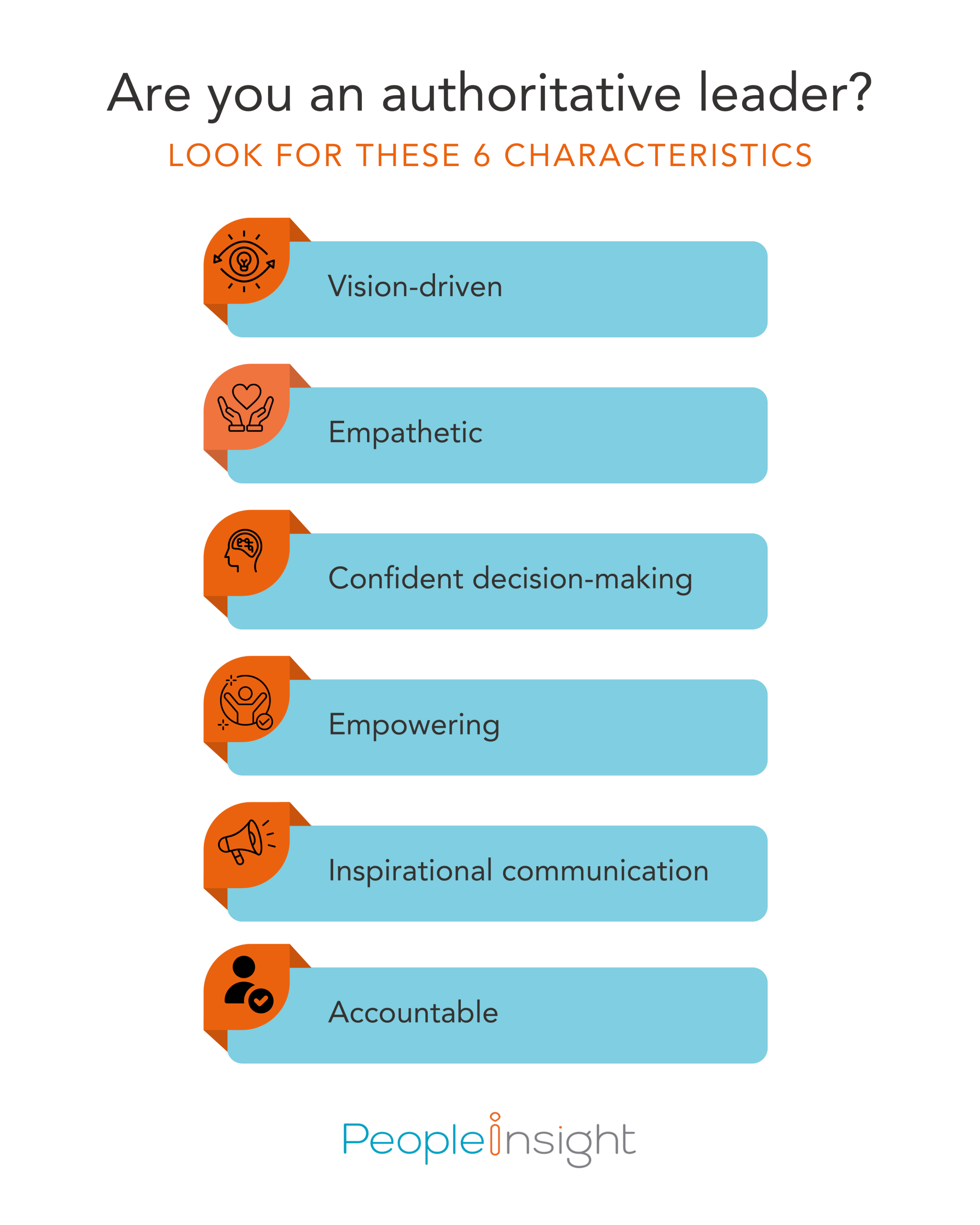
Here are six defining traits of the authoritative leadership style:

The authoritative leadership style has been embodied by many of the most respected figures in modern history:
Each of these leaders shows that authority, when grounded in empathy and trust, can be both visionary and human.
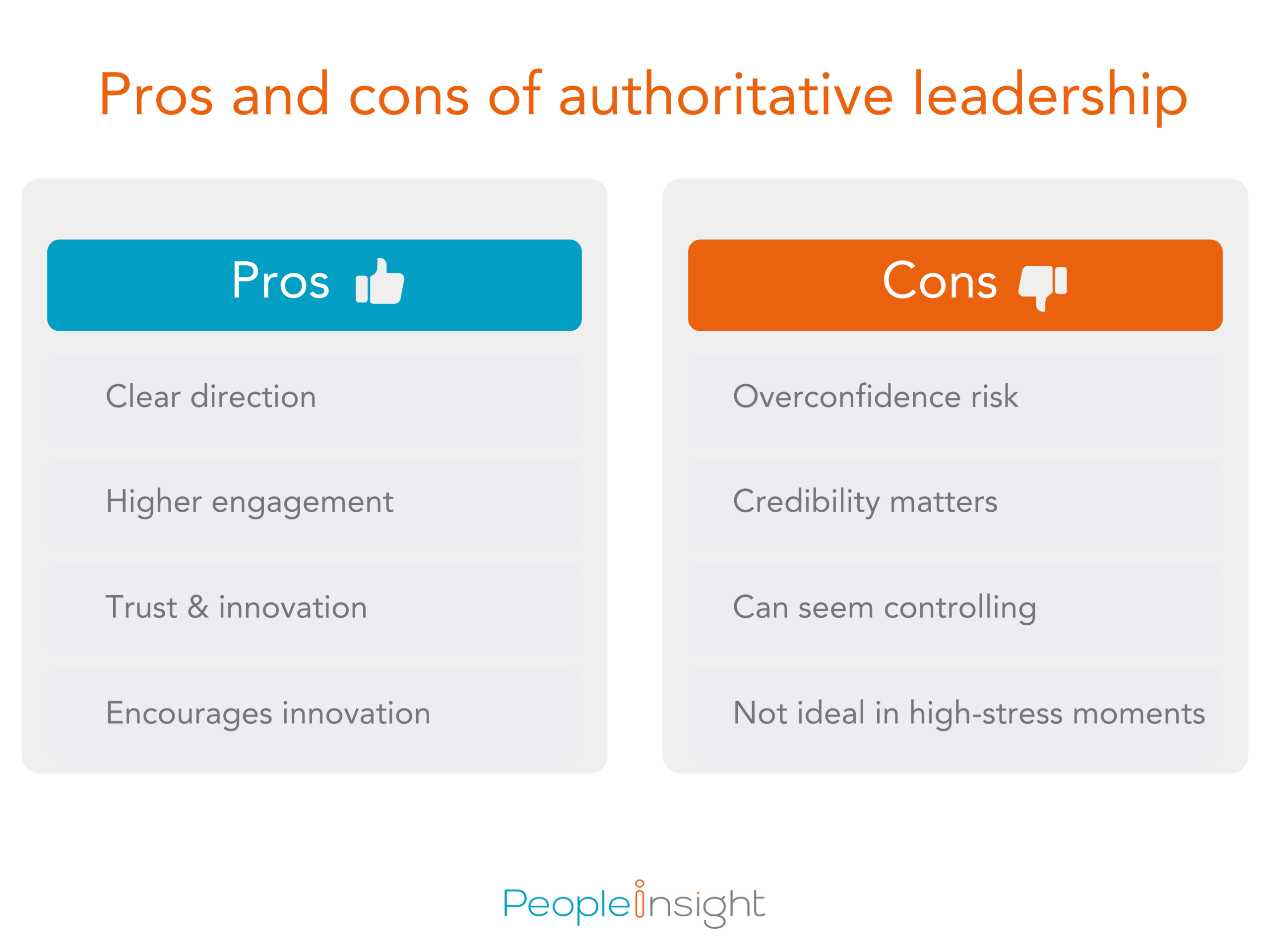
While authoritative leadership can be transformational, it also has potential pitfalls if overused or applied in the wrong setting.

When applied with balance and emotional intelligence, authoritative leadership becomes an anchor for clarity and confidence. But it must always leave space for collaboration and feedback.
Authoritative leaders tend to receive feedback that reflects both their inspiring qualities and the subtle areas that can trip them up.
Common strengths they hear:
Common areas for improvement:
These patterns are consistent with what our 360 feedback platform reveals across organisations. Authoritative leaders excel at painting the bigger picture, but can improve by inviting more dialogue, recognising achievements and supporting employees’ day-to-day experiences. Pairing 360 feedback with executive coaching helps leaders develop empathy, adaptability and communication skills that keep their teams engaged.
Being an authoritative leader does not mean being in control of everything. It means creating an environment where employees are motivated by shared purpose and feel trusted to deliver. Here are six practical ways to lead effectively:

The most effective authoritative leaders understand that clarity and compassion are partners, not opposites. They lead with purpose but make space for humanity, and that balance is what earns genuine followership.
Authoritative leadership might not be the most common style, but it is one of the most transformative when applied with self-awareness. It creates a sense of confidence, focus and meaning that drives both people and performance forward.
Want to discover your leadership style? Take our Goleman leadership quiz to find out where you sit and how to develop your approach. Or explore our 360 feedback platform to help your managers lead with clarity, empathy and purpose.