Increase profitability by 23%
 Boost productivity by 21%
 Increase profitability by 23%
Boost productivity by 21%
Increase profitability by 23%
Boost productivity by 21%
A quick insight: Employee experience and employee engagement are shaped by far more than internal culture alone. The UK Budget now plays a direct role in how secure, valued and motivated people feel at work. Here, we explore how recent fiscal changes affect pay, pensions, wellbeing and trust and what leaders can do to respond with clarity and care.
In a lot of ways, the recent and highly anticipated UK Budget announcement might feel distant and abstract. For many organisations, it can seem like something that happens in Westminster and barely touches the everyday reality of working life. But for employees, the Budget actually lands very close to home. Pay packets change. Pension expectations shift. Household costs rise or fall. Even confidence in the future strengthens or weakens.
All of these factors shape employee experience and employee engagement. Not in a neat, linear way, but through the day to day realities that sit around work. When life outside work becomes more pressured, focus, energy and motivation inside work tend to change too.
This year’s Budget introduces a mix of support and strain. It raises wages at the lower end of the labour market. It tightens the long-term incentives around pension saving. It keeps pressure on take-home pay through frozen thresholds. For leaders focused on building strong employee experience and employee engagement, that combination matters.
Let us explore what this means in practice and where organisations still have room to act.
Related: 7 Ways to support employee financial wellbeing
Employee experience is shaped by the full reality of working life. That includes workload, management, culture and development. But it also includes financial security, future confidence and fairness.
When economic conditions tighten, employee sentiment almost always follows. Pressure outside work becomes pressure inside work. Managers see it in rising stress. HR teams see it in absence data. Leaders often see it in productivity fluctuations and retention patterns.
When national policy shifts, household income or long-term financial security, employee experience and employee engagement shift with it. The impact is often uneven across demographics, job families and life stages.
This is why the Budget should not be seen as a purely finance issue, but rather, as a human one.
One of the most tangible announcements for employees is the further rise in the National Living Wage from April 2026. This brings meaningful uplift for thousands of people across retail, care, hospitality and early-career roles in many other sectors.
For employee experience and employee engagement, this matters in a few ways.
First, it directly improves financial wellbeing for those on the lowest pay. That often means less stress about bills, transport, food and heating. While work does not become magically fulfilling overnight, the daily anxiety attached to money can ease.
Second, it sends a broader signal about fairness. Pay is not just a transaction. It is a statement of value. When lower-paid colleagues see their work recognised in real terms, it can strengthen trust in the system as a whole.
Third, it forces organisations to look again at pay structures. Compression between bands can create tension if supervisory roles no longer feel sufficiently differentiated. That can create new engagement risks higher up the structure if not managed sensitively.
For employee experience and employee engagement, the opportunity here lies in how these changes are communicated and integrated into a wider reward story rather than treated as a regulatory inconvenience.
Less visible but just as important are the changes to pension tax advantages through salary sacrifice in the years ahead. For many middle-income and senior employees, pensions represent stability, security and a reward for long-term commitment.
When the perceived value of that benefit shifts, it changes how people think about staying, progressing and investing emotionally in their organisation.
For employee experience and employee engagement, pensions operate quietly in the background. Most people do not talk about them often. But they matter deeply when people think about loyalty and long-term planning.
If employees feel that long-term incentives are weakening, the psychological contract can fray. Trust can erode slowly rather than dramatically. Retention risk increases not because of immediate dissatisfaction but because future security feels less certain.
This is where communication is so important. Silence or vague explanations create space for distrust. Open explanation, education and alternative benefit design can preserve confidence even when the financial landscape changes.
Frozen tax thresholds mean that as wages rise, more employees drift into higher tax bands without real increases in spending power. On paper, people receive pay rises. In reality, many feel little difference in their take-home pay.
For employee engagement, this creates a subtle but powerful risk. People may rationally understand the tax system. Emotionally, however, a promotion that feels financially flat can dampen motivation.
This is particularly sensitive in professional services, education, public services and technical roles where progression through pay points is often carefully planned.
When effort rises faster than reward, engagement can slip. Not dramatically. Gradually. People still work hard but the emotional return weakens.
This is where total reward communication becomes essential. Leaders who only talk about headline pay increases risk missing the wider picture that employees experience in their bank accounts.
The 2025 Budget also touches energy costs, regulated prices and household expenses. While some pressures ease, many remain embedded in everyday life.
Employee wellbeing does not start and end with mindfulness programmes or flexible benefits platforms. It is built on whether people feel they can live with dignity on what they earn.
For employees, cost of living pressure manifests as fatigue, distraction, anxiety and sometimes resentment. Managers often see the behaviour without always understanding the root cause.
Financial wellbeing support, hardship funds, salary advance schemes and access to advice now play a much larger role in the lived employee experience than they did a decade ago.
Organisations that treat these as peripheral perks often struggle to sustain engagement in challenging economic cycles.
Across different sectors, the Autumn 2025 Budget is likely to play out in distinct ways.
In retail and hospitality, the wage rise improves frontline morale but raises cost pressure for owners. Some will respond by reducing hours, tightening rotas or slowing recruitment. That can offset the positive effect on employee experience if not handled carefully.
In higher education and the public sector, fiscal drag and pension uncertainty may deepen concerns around long-term career value. Engagement may remain purpose-driven but financial strain can increase quiet turnover.
In professional services and technology, pension changes may quietly reshape reward expectations among senior staff. Retention strategies may need to evolve beyond salary alone.
In all cases, employee experience will depend less on the policy itself and more on how leaders translate it into respectful, transparent and thoughtful organisational responses.
So what can leaders to, to be proactive and make worklife better and more engaging for employees? Let’s take a look.
Now is the time to re-evaluate how pay, pensions, benefits, flexibility, development and wellbeing come together in lived experience. What makes sense on a spreadsheet may not land emotionally in the same way.
Explain what is changing and why. Be honest about what you can control and what you cannot. Silence invites speculation and speculation erodes trust.
When pay growth feels constrained, development, recognition and purpose carry more weight. Career clarity and growth pathways become necessary when it comes to sustaining employee engagement.
Workshops, 1-to-1 advice, hardship schemes and clear signposting all play a role in stabilising employee experience during financially uncertain times.
Pulse surveys, focus groups and open feedback channels help leaders see how national policy is actually landing inside their organisation. Employee sentiment often shifts before behaviour does.
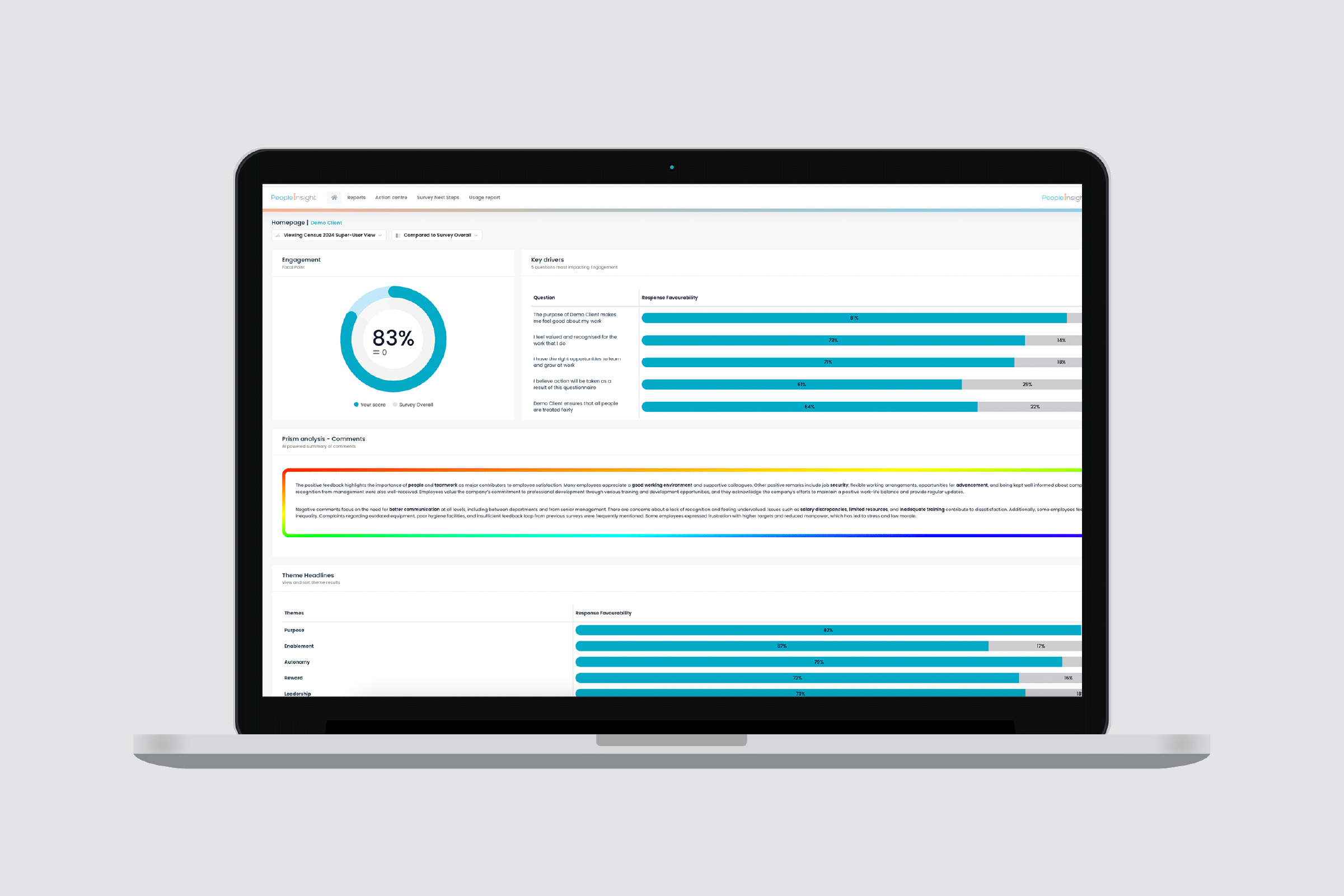
This is where an actionable employee experience platform and well-designed actionable surveys become central rather than optional.
The UK Budget does not dictate culture, but it reshapes the environment in which culture operates.
Employee engagement is always built at the intersection of internal reality and external pressure. Right now, that external pressure includes rising wage floors, shifting pension incentives and ongoing cost of living sensitivity.
Organisations that ignore these factors risk misdiagnosing disengagement as a purely internal issue. Those that integrate economic context into their people strategy are far more likely to sustain trust and energy through change.
In that sense, the Budget is less a threat than a test. It tests how well leaders understand their people. It tests how boldly they communicate. And it tests whether employee experience truly sits at the heart of strategic decision making or remains a secondary consideration.
Now is a great time to show your employees you care about their voice, their ideas and their experience. To measure what matters and bring about change your employees will care about, get in touch to enquire about an employee survey today.