Increase profitability by 23%
 Boost productivity by 21%
 Increase profitability by 23%
Boost productivity by 21%
Increase profitability by 23%
Boost productivity by 21%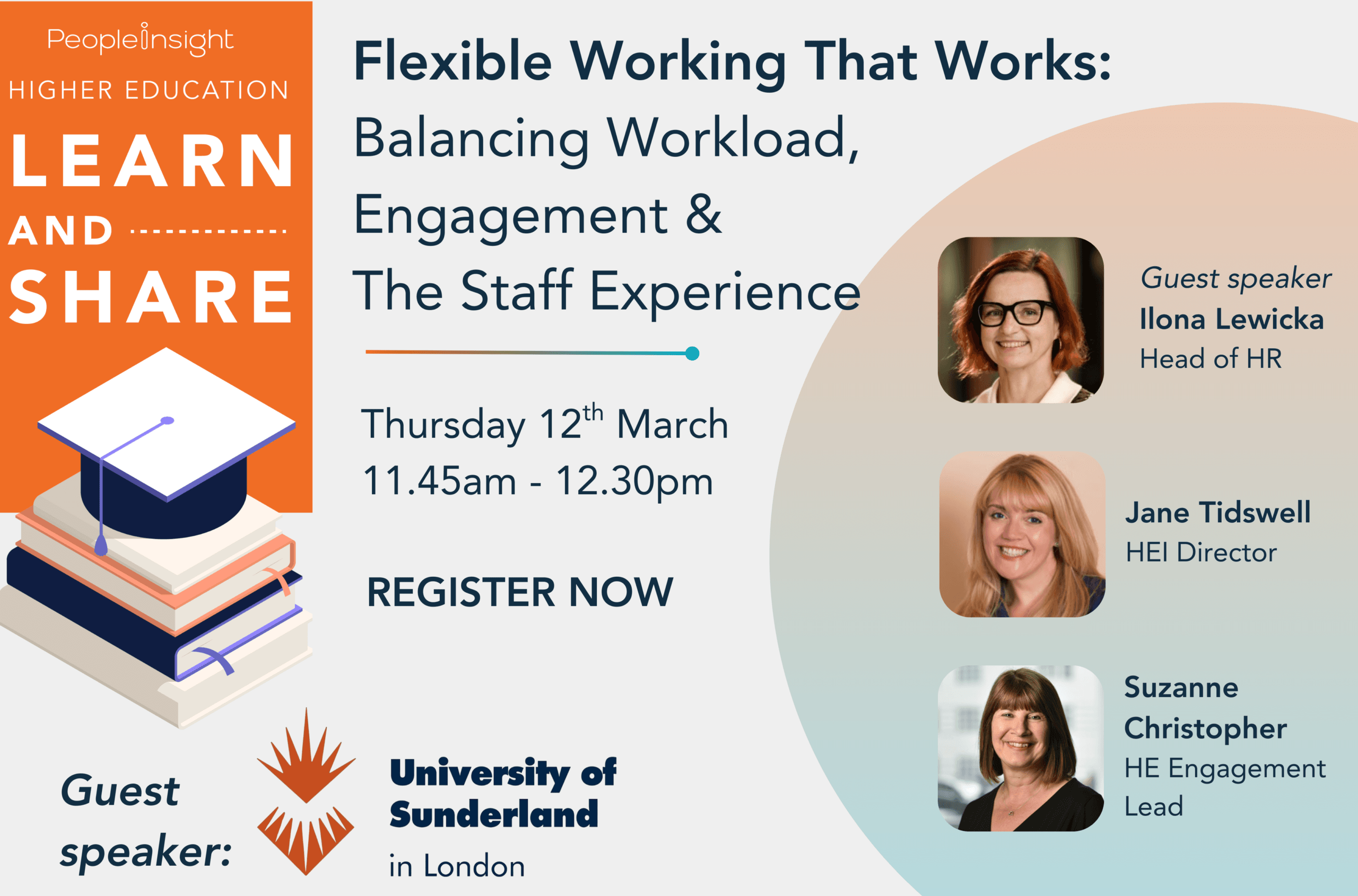
Flexible working is now central to how universities attract, engage and retain staff but what does it actually look like in practice?
Across Higher Education, institutions are balancing rising workload pressures, evolving staff expectations, and increasing competition for talent. The question is no longer whether to offer flexibility, but how to design it in a way that supports engagement, wellbeing and sustainable performance.
On Thursday 12 March, we’re hosting a Learn & Share session centred on a real-world Higher Education case study: University of Sunderland in London (UoSiL).
Joined by Ilona Lewicka, Head of HR at UoSiL, we’ll explore how the institution has embedded flexible working within its broader engagement strategy, including its four-day working week pilot.
How flexibility supports staff experience, culture and retention within a year-round academic setting, and how it contributes to attracting and retaining talent in a competitive HE market.
How flexible models influence workload, team dynamics, wellbeing and operational resilience.
Why it was introduced, how it was structured, and what early outcomes suggest.
Lessons from Iceland’s landmark four-day week trial and how those findings translate to Higher Education.
Hear directly from a Head of HR leading change in a live HE environment
Gain practical insight into designing flexibility within academic constraints
Understand how flexible working can influence engagement and retention
Learn what to consider before piloting similar models in your institution
This session is designed for HR leaders, People & Culture teams, and senior decision-makers across Higher Education.
📅 Thursday 12 March 2026
⏰ 11.45am – 12.30pm GMT
📍 Online