Increase profitability by 23% Increase profitability by 23%
Boost productivity by 21% Boost productivity by 21%
5 star Google reviews

Case studies:

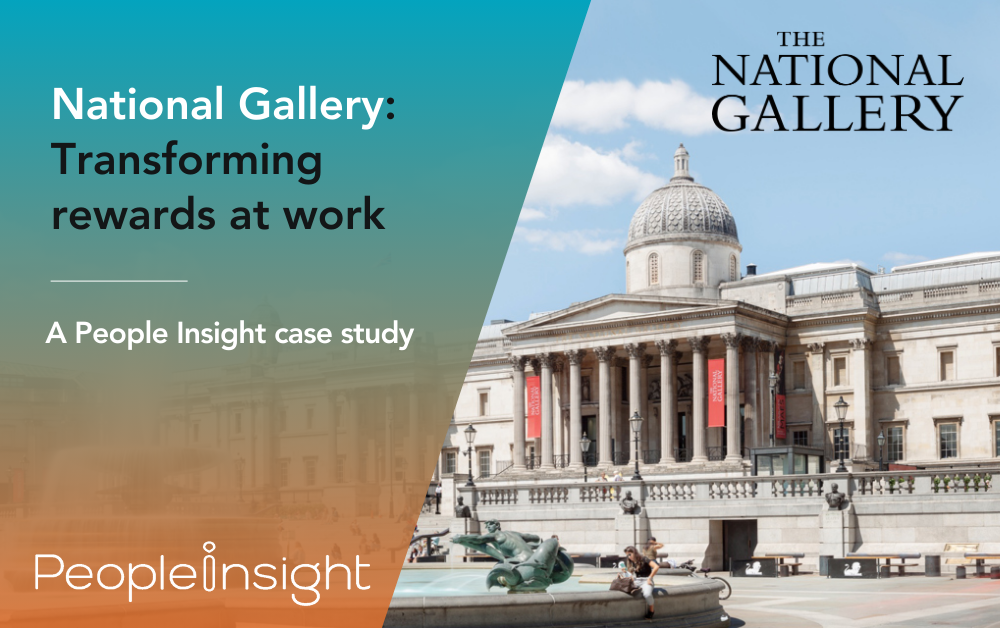
National Gallery: Transforming rewards at work 

A People Insight case study

national gallery case study

Watch the case study

How smarter benefits reshaped perceptions of reward at work

Ask employees what matters most and, let’s be honest, pay and rewards at work will almost always be near the top of the list. But the reality is, for many organisations, budgets make direct salary increases difficult.  

Public bodies, charities and even commercial businesses under financial strain often face the same dilemma: how do you respond meaningfully to pay concerns when pay itself is largely fixed? 

Too often, organisations stop at listening. Employee surveys highlight concerns about rewards at work, but leaders hesitate to act, fearing that without budget for pay rises, nothing can change.

We’re happy to tell you that this is simply not case. When handled thoughtfully, creative benefits and communication can shift perceptions, improve engagement and build trust without breaking the bank. 

Related: 10 non financial incentives that really motivate employees

Understanding the challenge of workplace rewards

Rewards are one of the most sensitive topics for employees. People compare their pay and benefits not only to colleagues but also to the wider market. Dissatisfaction can quickly lead to disengagement, higher levels of staff turnover or declining trust in leadership. 

Yet feedback about rewards at work is also one of the biggest opportunities. When organisations show they are listening and act visibly, even small changes can improve sentiment.

Transparency about what can and cannot be changed is powerful in itself. Employees want honesty and fairness, not silence. 

Using surveys to shape rewards at work

Employee surveys provide the foundation for smarter approaches to rewards at work. Using tools like People Insight’s Prism, organisations can identify specific areas where concerns arise, surface trends across different cohorts and highlight actions that will resonate most. 

Crucially, these insights must be followed by action planning and visible communication. A “you said, we did” approach can be an incredibly powerful tool. Employees need to see that their voices are shaping decisions, otherwise survey fatigue sets in.

In this way, rewards at work are about so much more than money. They’re about feeling valued. 

Transforming rewards at work at the National Gallery

Looking for an example of how companies have used this approach to revitalise their rewards system? The National Gallery shows us how it’s done. Be sure to check out our webinar with The National Gallery for more detail. 

The challenge

In 2023, the National Gallery ran its first ever staff survey. Feedback highlighted concerns about rewards at work, especially pay. Leadership were initially hesitant about what could be done. But the survey provided a clear mandate: employees had spoken, and visible action was needed. 

The actions

Rather than focusing solely on salaries, the Gallery introduced a series of targeted benefits designed around employee needs: 

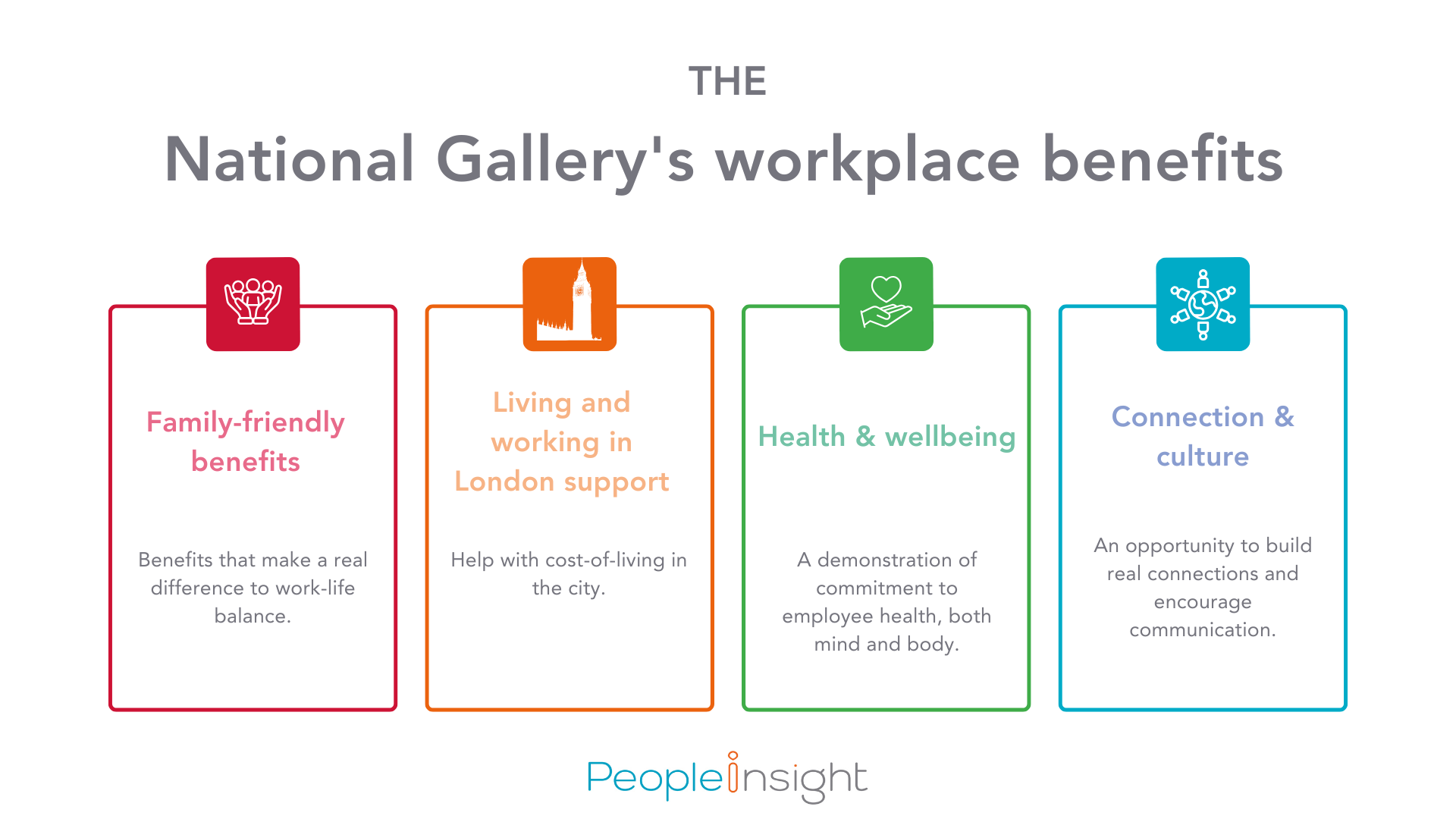
The National Gallery's workplace benefits

  • Family-friendly benefits. Employees gained access to Bubble for Work, offering 30 hours of childcare, elder care or pet care per year. Paternity leave was improved, and a Parents and Carers Network was launched to create peer support.
  • Living and working in London support. Recognising the pressures of city living, the Gallery introduced a rental deposit loan scheme, doubled the cycle-to-work loan limit to cover e-bikes and reinforced existing travel support such as season ticket loans.
  • Health and wellbeing. Employees received a new MediCash Level 3 healthcare plan, free sanitary products across staff and public areas, fruit baskets, yoga classes and massage sessions. Monthly wellbeing activities such as flu jabs and workshops were also added.
  • Connection and culture. “Coffee Roulette” was launched, randomised coffee meetups supported with vouchers, now including senior leaders. These moments built cross-team connections and made leadership more approachable. 

The results

The outcomes were striking. The benefits score rose by 29% to 81%, well above the sector benchmark. Perceptions of rewards at work also improved, even though salaries themselves had not changed. Employee engagement scores also rose as employees believed more strongly that survey results would lead to action. 
The Gallery built credibility, improved trust and showed that meaningful change is possible even without direct pay rises. Their efforts were recognised externally, with the Gallery being awarded Outstanding Workplace status. 

Lessons for improving workplace rewards

The National Gallery example demonstrates that rewards at work are about more than money.

For other organisations, the lessons are clear: 

  • You don’t always need pay rises. Creative benefits can improve perceptions significantly.
  • Visibility matters. Communicate changes clearly and repeatedly, linking them back to employee feedback.
  • Quality over quantity. A single, well-targeted initiative may resonate more strongly than multiple generic ones.
  • Peer networks add credibility. Staff-led groups like the Parents and Carers Network enhance authenticity.
  • Context is everything. Benefits that respond directly to employees’ lived experience deliver the biggest impact.

4 Common mistakes with rewards at work

When addressing feedback on rewards at work, some common mistakes can undermine progress: 

  1. Doing nothing. Ignoring concerns damages trust and increases turnover.
  2. Failing to link benefits to survey feedback. Without clear communication, employees may not connect actions to their own voice.
  3. Overloading employees with small initiatives. Too many minor actions can confuse rather than reassure.
  4. Not tracking impact. If improvements aren’t measured, momentum is lost.

How to take action on rewards at work

Building stronger approaches to rewards at work starts with employee voice. Here are steps organisations can take: 

  1. Listen carefully. Use employee surveys to identify specific concerns about pay, benefits and recognition.
  2. Prioritise with context. Focus on actions that match employees’ lived reality, such as commuting, housing, wellbeing or family support.
  3. Involve employees. Engage staff networks or focus groups to test ideas before launch.
  4. Communicate clearly. Use “you said, we did” updates to show how feedback translates into action.
  5. Review and reinforce. Track impact in follow-up surveys and refine benefits as needs evolve.

Takeaways

At work, rewards are not simply about pounds and pence. They are about showing employees that they are valued. When organisations act visibly on feedback, they send a powerful message: your voice matters. 

Creative benefits, transparent communication and honest follow-through can transform perceptions of rewards at work, boost engagement and build trust. The National Gallery proved that it can be done. Other organisations can do the same. It all starts with listening. 

Start your next employee survey today

At People Insight, we help organisations turn survey results into meaningful change. From Prism analysis to action planning and comms support, we partner with you to strengthen approaches to rewards at work and employee sentiment. Want to see how we can help? Get in touch today. 

People Insight logo
Privacy Overview

We use cookies to improve your experience while you navigate through the website. Out of these cookies, the cookies that are categorised as necessary are stored on your browser as they are essential for the working of basic functionalities of the website. We also use third-party cookies that help us analyse and understand how you use this website. These cookies will be stored in your browser only with your consent. You also have the option to opt-out of these cookies. But opting out of some of these cookies may have an effect on your browsing experience.